







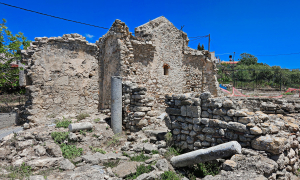
The ruined church of the Holy Trinity (Agia Triada) is located within the boundaries of the settlement of Ligortynos in the province of Monofatsi. Its use is placed from the post-Byzantine period to the Venetian period, and more specifically between the 11th and 15th centuries, with most findings dating to the 12th and 13th centuries.

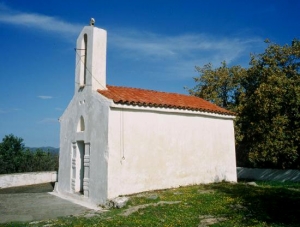
The church of Saint Isidore (Agios Isidoros) is built on a small plateau atop a hill in the small settlement Tzinaliana in Kakodiki, province Selino. It belongs to the architectural type of the one-room arched-roofed temples. At the entrance we can see two parts of an ancient Doric architrave.
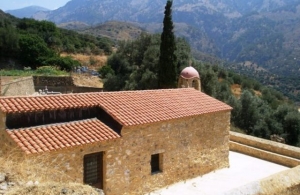
The church of Saint Nicholas (Agios Nikolaos) is built in a rural area northeast of the village Moni, province Selino. Its oldest eastern section was built in the architectural type of a single-storey arched temple with blind arches on the side walls.

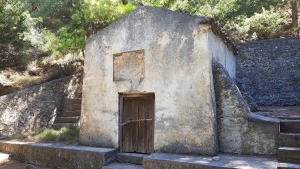
The small single-nave arched temple of Mary of Egypt is located in the Samaria deserted settlement, inside the imposing gorge of Samaria, accessed by a short path. According to one option, the name of the Samaria Canyon derives from the corruption of the name of Osia Maria (Saint Mary). The church celebrates on April 1st, when several mountaineering clubs of Crete participate in the festival.

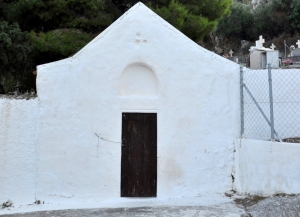
The church of Zoodochos Pigi is located at the position Sfakias and serves as the cemeterial church of the village Kavoussi. It is dedicated to the Theotokos and has the name of the Life giving Spring (Zoodochos Pigi), referring to the Marian pilgrimage of the same name in Constantinople.

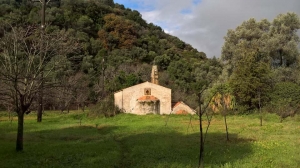
The church of Saint Basil is located to the north of the village of Vavouledo, province Kissamos, which is one of the many neighborhoods of Palea Roumata. The current church is the extension in the 19th century of the initial smaller single-nave arched church of the Savior Christ, dating back to the 15th century.
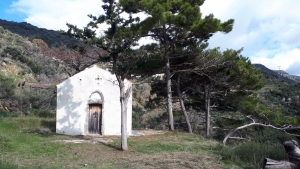
The church of Saint Athanasius (Agios Athanasios) is located just outside the village Kefali of the area called Nine Villages in Kissamos province. The single-nave arched temple is surrounded by a beautiful piney park and its interior has a reinforcing arch.

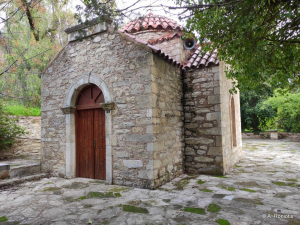
The church of Agia Paraskevi of Meritis is located within the boundaries of the Agricultural School of Messara at the entrance of the village of Ambelouzos. The church is the only surviving remnant of the small monastery that functioned as part of the Monastery of Saint Fanourios in Valsamonero.

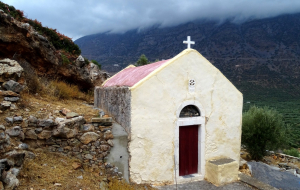
The church of Agios Antonios (Saint Anthony) is located at position Vrysidia, above the beach of Tholos, in Kavousi, Ierapetra province. The church was a katholikon (main temple) of a small monastery that is placed chronologically at the end of the 14th century. In fact, there is a visitor inscription with the year 1390.

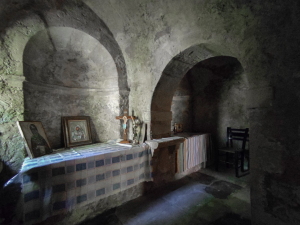
The cavernous church of St. Anthony (Agios Antonios), maybe a former monastery, is located above the starting point of the gorge of Kato Asites, at a beautiful green location with plane trees and springs.

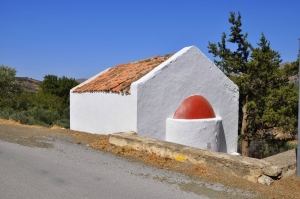
The church of Agios Georgios is located in the plane of Ano Viannos, on the road that leads to the Monastery of Agia Moni. It is a small vaulted and single-aisled church with its interior bearing frescoes of Ioannis Mousouros, dating back to the beginning of the 15th century (there is the date 1401). The temple was built at the expense of Georgios Damoro.
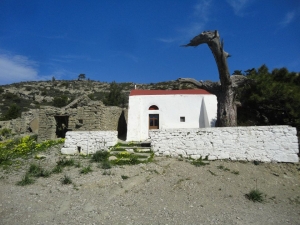
The church of Christ the Savior is located at Pano Karkassa, at the outskirts of the village of Anatoli in province Ierapetra and is dedicated to the Transfiguration of Christ. The temple was part of the ruined monastery Karkassia, the cells of which were later rebuilt into the residences we see today.
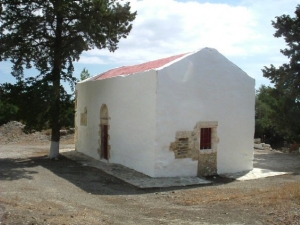
The church of the Holy Apostles, Saints Peter and Paul, is located at Kato Karkasa on the outskirts of the village Anatoli, province Ierapetra. The temple near the fountain was the cathedral of today's ruined Monastery of Karkassia, from which few traces of buildings to the south of the temple are preserved.
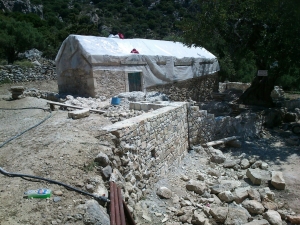
The small single-nave church of Saint Mammes (Agios Mamas) is located north of the village Kapistri, currently named Stavros, in Ierapetra province, very close to the monastery of Panagia in Gourni and the church of Agia Sophia.
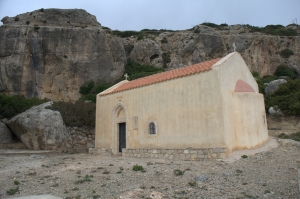
The church of Panagia (Our Lady) Keragrameni is located north of the village Stavros or Kapistri in the province of Ierapetra. The one-storey church is dedicated to the Birth of the Theotokos and is built near a spring that gives life to vineyards and orchards.
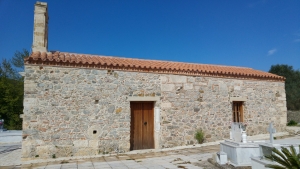
The cemeterial temple of Christ the Savior is dedicated to the Transfiguration of the Savior and is located in the village of Plemeniana in province Selino. It is built on the site of an Early Christian temple, as can be seen from the many marble architectural members that are embedded into the walls or are scattered around.
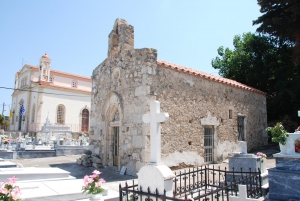
The cemeterial temple of Michael Archangel is located next to the church of the Holy Trinity (Agia Triada) in Kakodiki, province Selino, and is an elongated arched church with a pointed arch, reinforced by three reinforcing arches (sfendonia) supported by pillars.
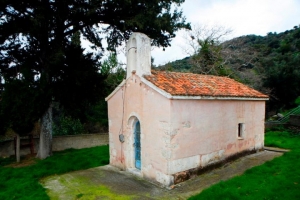
The Church of Panagia (Our Lady) Bitsiani or Pitsiani is located in the position Kaouriana of the small settlement Kadros in Kakodiki, province Selino, and is dedicated to the Nativity of the Virgin Mary (feast. September 8th).
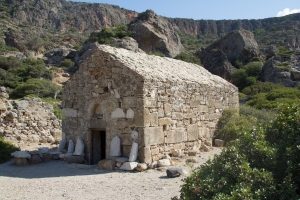
At the site of the ancient seaside town of Lissos, west of Sougia, there are the remains of two 6th-century triple-aisle wooden-roof basilicas with a slightly protruding transverse aisle, which were discovered in 1955 by archaeologist N. Padouvas.
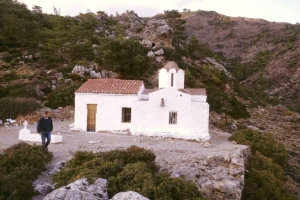
To the north of the Sougia settlement, the church of Saint Irene (Agia Irini) is preserved in the architectural type of the single-nave church with a dome, to which an arched-roof narthex was added in a second stage, which survives as a late reconstruction of its dome.
Also read:
- Home
 Beaches
 Nature
 Past
Past Destinations
 Highlights
 West Crete
- Central Crete
- East Crete
- Towns
- Chania Prefecture
- Chania
- Paleochora
- Kissamos
- Georgioupolis
- Chora Sfakion
- Loutro
- Rethymnon Prefecture
- Rethymnon
- Agia Galini
- Plakias
- Spili
- Anogia
- Heraklion Prefecture
- Heraklion
- Hersonissos
- Malia
- Matala
- Agia Pelagia`
- Archanes
- Kokkinos Pirgos
- Lassithi Prefecture
- Agios Nikolaos
- Elounda
- Sitia
- Ierapetra
- Makrigialos
- Palekastro
- Zakros
- Lassithi Plateau
- Get Prepared


