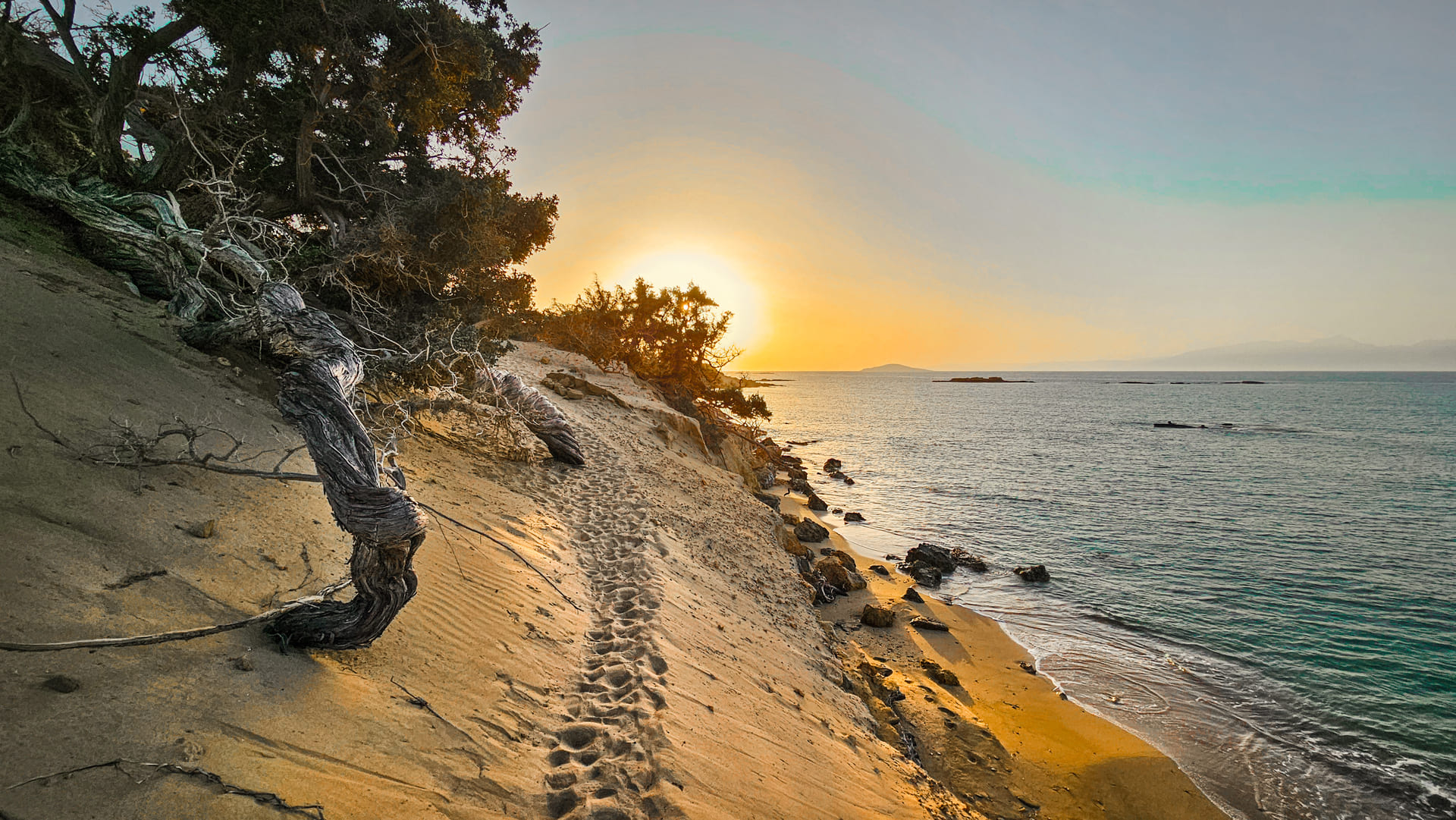
The land of Calypso

Gavdos

Calypso's Paradise

With emerald sandy beaches, dense piney and juniper woods and rugged seascapes
the southernmost point of Europe is where memories are recorded forever.

Beaches | Agiannis | Sarakiniko | Tripiti | Korfos | Potamos | The Lighthouse

The Southernmost Ground of Europe

Tripiti

Explore

Beaches

Agiannis

Explore

Save the

Junipers

Learn

Gavdos Islet

Gavdos lies in the South Cretan Sea, approximately 22 nautical miles south of Chora Sfakion, and forms the southernmost point of Greece and Europe. It has a triangular shape, an area of approximately 29.6 square kilometres and a permanent population that increases considerably during the summer months. The uninhabited islet of Gavdopoula lies northwest of Gavdos.

Tradition identifies Gavdos with Homeric Ogygia, the island of Calypso where Odysseus remained before returning to Ithaca. Human presence on the island dates back to prehistoric times, while numerous archaeological remains testify to its long history. In more recent times, Gavdos was used as a place of exile for political prisoners during the Metaxas dictatorship. Its best-known landmarks include the restored old lighthouse, the scattered chapels, the traditional rural farmsteads and Cape Tripiti, with its characteristic natural arches and the large chair marking the southernmost point of Europe.

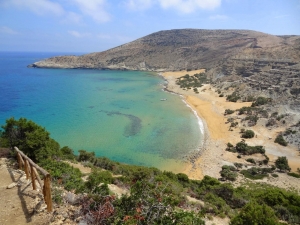
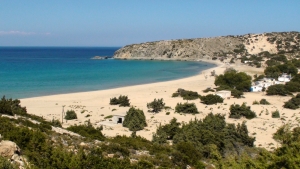
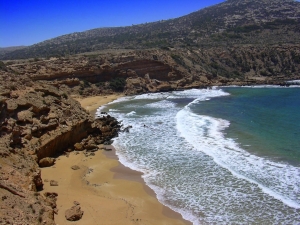
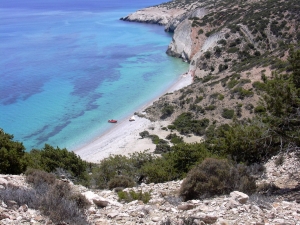
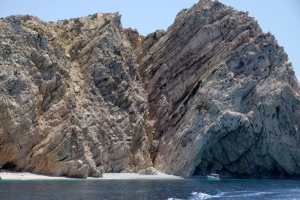
The landscape of Gavdos combines pine forests, junipers, sand dunes, rocky shores and extensive sandy beaches. Sarakiniko and Agiannis are the best-known beaches, while Korfos, Tripiti, Lavrakas, Pirgos, Potamos and the island’s smaller secluded shores are also particularly beautiful. Karave is the main port of Gavdos and the arrival point for ferries.

The entire islands of Gavdos and Gavdopoula belong to the Natura 2000 network. The coastal dunes with junipers at Sarakiniko, Agiannis and Lavrakas are of particular ecological importance, while the islands also provide valuable resting grounds for migratory birds. An extensive network of footpaths connects the small settlements, beaches and the most important sites of natural and historical interest.

Ferry connections operate from Chora Sfakion, Paleochora, Sougia, Agia Roumeli and Loutro, depending on the season and the current timetable. As strong winds can cause cancellations, travellers should always check the schedule before departure.

Nearby places of interest

Straight-line distances

Gavdos beaches

Gavdos beaches

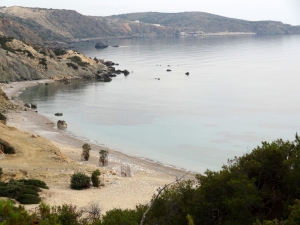
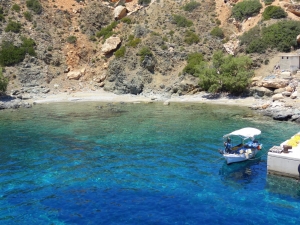
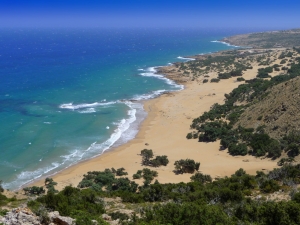
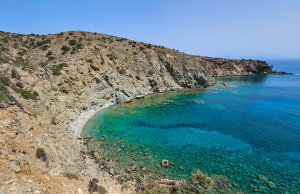
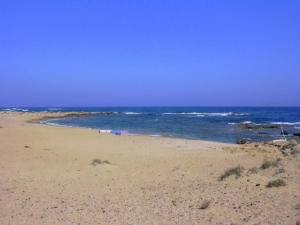
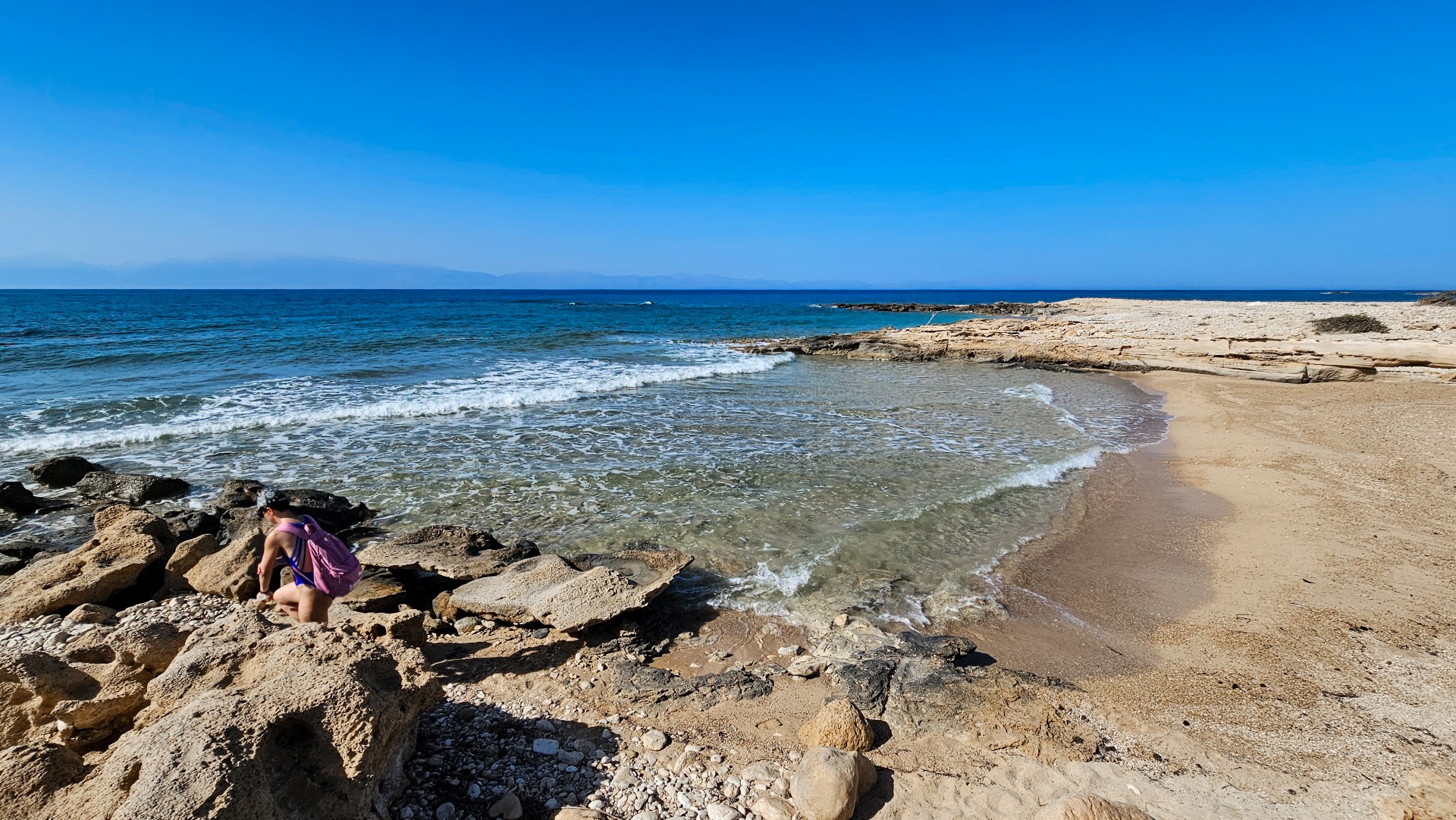
The beaches of Gavdos stand out for their clear waters, extensive sandy shores, dunes and junipers growing close to the sea. Sarakiniko and Agiannis are the best-known and most easily accessible beaches, while Korfos, Tripiti, Lavrakas, Pirgos and Potamos are also particularly beautiful. Many of the smaller shores remain secluded and can only be reached on foot or by boat. Their limited development and protected natural surroundings preserve the distinctive character of the coastline of Gavdos.

Read more ...

General information about Gavdos

General information about Gavdos

1 1 1 1 1 1 1 1 1 1 Rating 3.53 (38 Votes)
lighthouse at Ambelos A few residents live on the island throughout the year and the infrastructure for tourists is very basic. According to the census of 2001, Gavdos has 98 permanent residents. The truth is that fewer than 50 live permanently here, but when the census was done, 98 people were on the island. In summer, the total population reaches 3500, most of whom are campers. The port of Gavdos is Karave. It’s capital village is Kastri, while the southernmost inhabited village is Vatsiana with 23 residents. Gavdos is a fishing place, with few but good-hearted people who with patience wait for better days of summer to see their island swarmed with visitors.
Read more ...

Gavdos Lighthouse

Gavdos Lighthouse

1 1 1 1 1 1 1 1 1 1 Rating 3.75 (4 Votes)
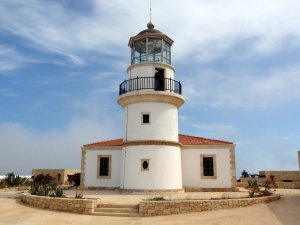
The lighthouse of Gavdos is built a few meters south of the village Ambelos at an altitude of 368m, at the west coastline. Constructed in 1880 by the French Company for Lighthouses and was visible at a distance of 42 miles (the second longest distance in the world since then, after the lighthouse of Tierra del Fuego).

Read more ...

Gavdos folklore museum

Gavdos folklore museum

1 1 1 1 1 1 1 1 1 1 Rating 4.00 (5 Votes)
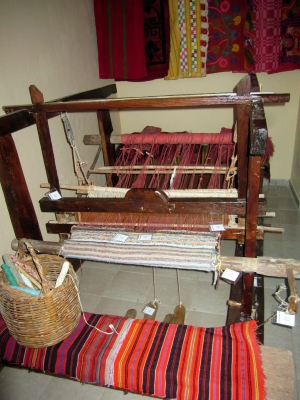
The folklore museum of Metohi - Sgoudiana is located near Korfos beach at Gavdos Island and was founded by the priest Emmanouel Bikogiannakis, who collected all Gavdian day life tools, agricultural and shipbuilding equipment, traditional costumes, household items, etc.

Read more ...

Potamos gorge in Gavdos

Potamos gorge in Gavdos

1 1 1 1 1 1 1 1 1 1 Rating 5.00 (3 Votes)
Potamos beach in northwestern Gavdos is formed at the outlet of various small streams. Their soils are mainly clay, which makes them create special formations as they are dissolved by rain and wind. Some of the formed streams pass through harder rocks, creating deep canyons with waterfalls of amazing beauty, which, however, can be seen by someone with water even in winter relatively rarely.

Read more ...

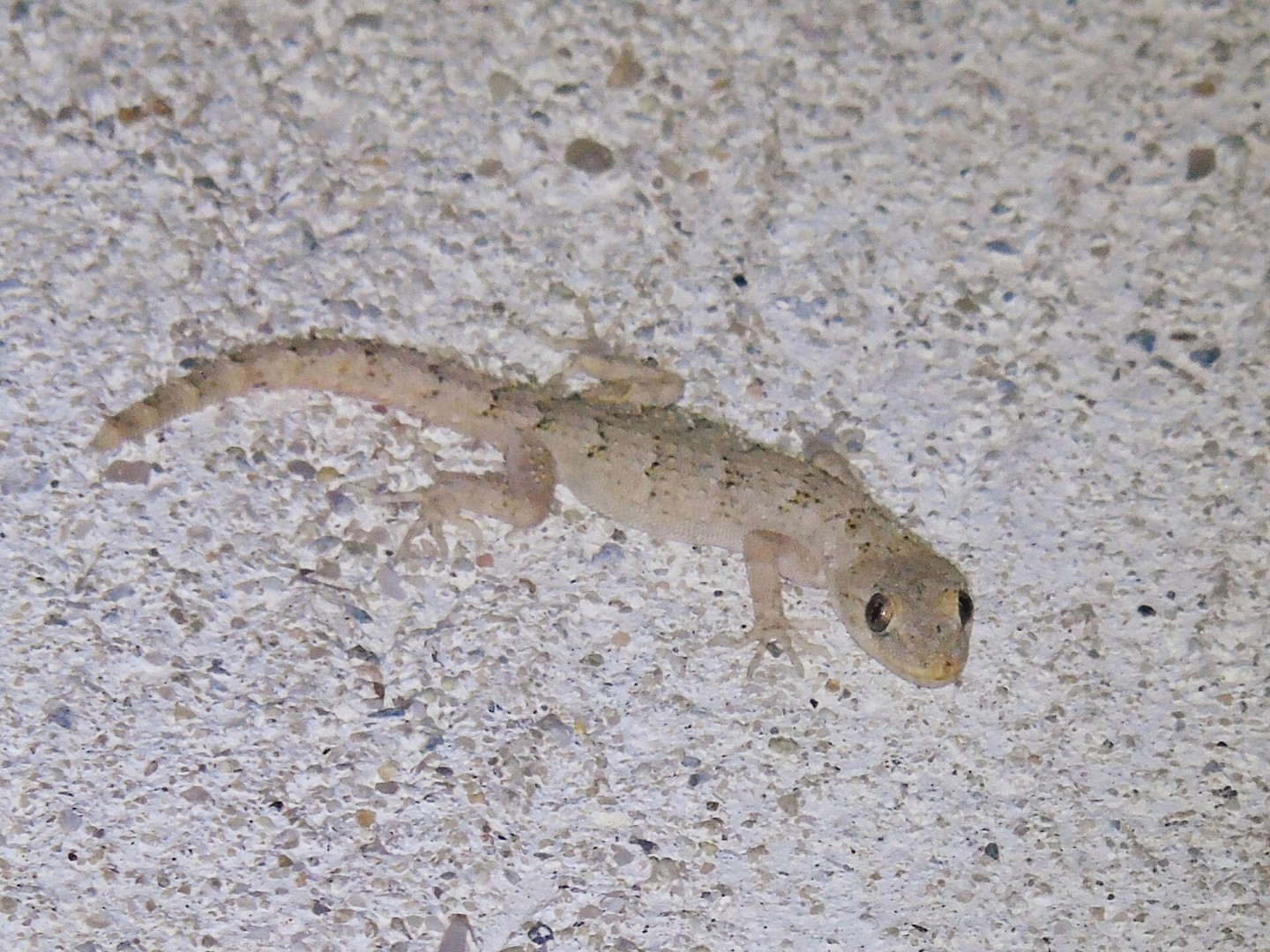
Mediterranean thin-toed gecko

Mediterranean thin-toed gecko

1 1 1 1 1 1 1 1 1 1 Rating 5.00 (1 Vote)
The Mediterranean thin-toed gecko (Mediodactylus danilewskii) is a small gecko found on Gavdos. The local population belongs to the subspecies Mediodactylus danilewskii kalypsae, associated with this isolated island south of Crete.

Read more ...

Download Free Premium Joomla Templates • FREE High-quality Joomla! Designs BIGtheme.net