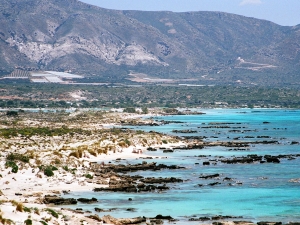
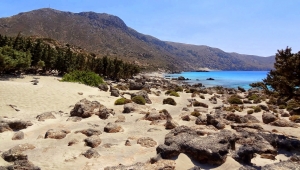
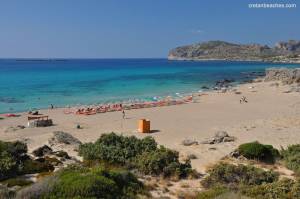
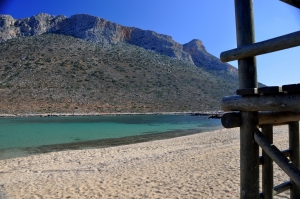
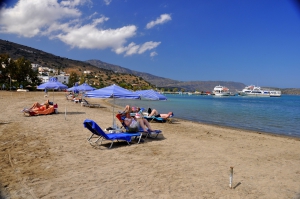
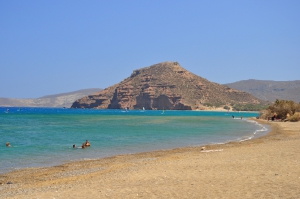
Crete’s long coastline, clear water and varied local conditions make the island an excellent destination for sea activities. Sheltered bays are suitable for relaxed kayaking and stand-up paddleboarding, while exposed and windy shores offer opportunities for windsurfing, kitesurfing and wave surfing.
Licensed water-sports centres, schools and equipment-rental businesses operate at many organised beaches. The activities available depend on the region, season, weather and operating licences of each centre.
Diving and snorkeling
Crete is a popular destination for scuba diving, with clear waters, rocky underwater landscapes, caves, reefs and shipwrecks. Certified diving centres offer introductory experiences, training courses and excursions for qualified divers.
Snorkeling is more accessible and can be enjoyed in many calm, rocky coves. A mask, snorkel and fins are sufficient for observing marine life, although swimmers must remain aware of currents, boat traffic and sea urchins. Marine organisms, shells and archaeological objects must not be removed from the seabed.
Sea kayaking and canoeing
Sea kayaking is one of the most rewarding ways to explore the Cretan coast. In suitable conditions, paddlers can travel beside rocky shores, small beaches, sea caves and isolated coves that are difficult to reach from land.
Longer routes should be undertaken with a guide or organised group. Wind, waves and currents may make the return considerably harder, even when the outward journey appears easy.
Stand-up paddleboarding
Stand-up paddleboarding, usually known as SUP, is particularly popular in sheltered bays with calm water. It can be used for short coastal trips, exercise or simply relaxing on the sea.
Despite its apparent simplicity, SUP requires careful weather assessment. Offshore winds can quickly carry a board away from the coast. A suitable leash and buoyancy aid are essential, especially outside supervised beaches.
Windsurfing and kitesurfing
Windsurfing and kitesurfing are among the most popular water sports in Crete. Kouremenos near Palekastro is the island’s best-known windsurfing location, where the summer meltemi is strengthened by local thermal conditions and the water inside the bay often remains relatively flat.
These sports are also practised around Falassarna, Elafonissi, Kedrodasos, Amoudara near Heraklion, Hersonissos and Mirabello Bay. Conditions differ considerably, and a location suitable for experienced riders may be dangerous for beginners.
Surfing and wing foiling
Wave surfing depends mainly on swell and is most likely to find suitable conditions on exposed western and northern coasts, particularly from autumn to spring. Falassarna is one of the best-known locations when wave height and direction are favourable.
Wing foiling has also become increasingly popular. The rider stands on a hydrofoil board while holding an inflatable wing. Professional instruction is strongly recommended, as the speed, equipment and distance travelled from shore increase the potential risks.
Water skiing, wakeboarding and jet skiing
Water skiing, wakeboarding, inflatable rides and personal watercraft such as jet skis are available at several organised tourist beaches. These activities should be used only within designated zones and through legally operating providers.
Motorised craft must remain away from swimmers, divers, marker buoys and protected shores. Participants should check age limits, licence requirements, insurance coverage and operating rules before taking part.
Sailing and boat excursions
Sailing lessons, day trips and private excursions by sailing boat or catamaran depart from ports and marinas around Crete. Routes may include swimming and snorkeling stops at secluded bays or nearby islands.
Before departure, passengers should check the vessel’s licence, safety equipment, permitted passenger capacity and expected weather conditions. The skipper always has the final responsibility for deciding whether a trip can proceed safely.
Safety at sea
Safety does not depend only on wind strength. Wind direction, gusts, waves, currents, rocks, water temperature, boat traffic and distance from the coast must all be considered.
Beginners should use qualified instructors and legally operating water-sports centres. Buoyancy aids, suitable equipment and sun protection are essential, while flags, lifeguard instructions and local restrictions must always be respected.