








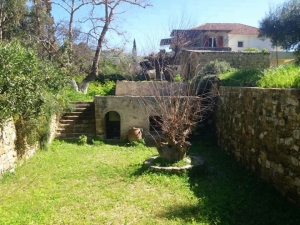
In the village Potamida, province Kissamos, lies the Kalogridis family watermill. The watermill was restored in 2013 by the locals and became operational again. The locals in the past used to bring their cereals to the watermill. Then, with the help of water, the millstones turned the mill, producing the precious flour.

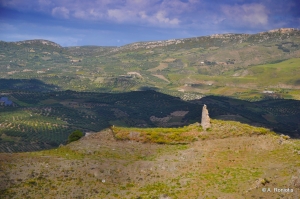
xxxxxxxxxxxxxx

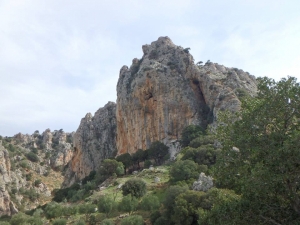
Above the steep gorge of Adrianos in the province of Mirabello rises the rocky outcrop of Fortezza. This inhospitable, steep and naturally fortified rock was chosen by the deposed Minoans to form a small town during the so-called Dark Period.
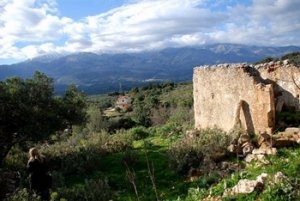
The tower of Aga at Tsifliki is located in a privileged position in Elounda lagoon, on the road leading to Plaka. In fact, the settlement Tsifliki owes its name to this residence, which was the base of the chiftlik (Turkish system of land management) of the region.

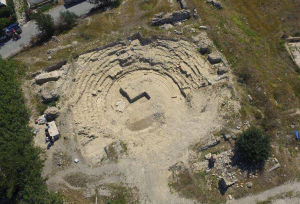
The current city of Ierapetra is built on the site of the ancient city of Ierapytna. Its current name Ierapetra was preceded by other names such as Kyrva, Kamiros, Pytna, and Ierapytna.
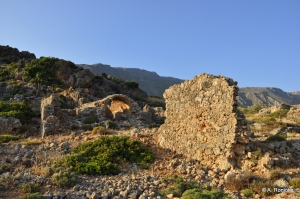
The bay where today's Loutro settlement is built was the port of ancient towns Anopolis and Aradena. This port is mentioned in ancient texts as Phoenix or Katopolis. The gods Zeus and Apollo were worshiped in Phoenix.
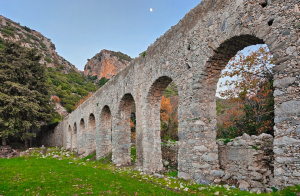
The watermill of Agia Fotia is located below the church of Saint Photini (Agia Fotia), at the exit of the Agia Fotia Gorge at the foot of Mount Vorizis and very close to Spili.

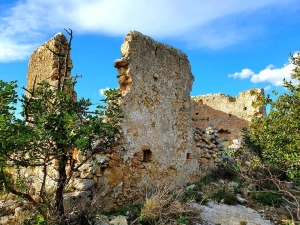
The koule of Kalonyktis is located on the hill of Agiasmatsi on the outskirts of the village of Kalonyktis in the province of Rethymno. This large tower was built by the Ottomans after the Great Cretan Revolution of 1866, being part of the large network of towers - koules - for the control of the Cretan revolutionaries.

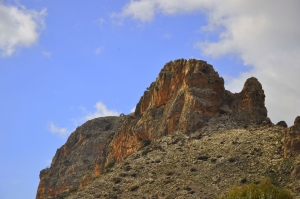
Above the seaside settlement of Keratokambos rises the steep hill of Kerato, also known as Kastri or Vigla, on which the ancient city of Kerea is believed to have been built. Vigla also hosts the impressive cave Nychteridospilios (meaning Bat cave), which was used as a sanctuary during the antiquity.

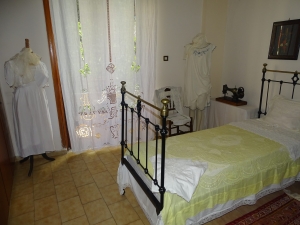
The Museum - Research and Study Center of the Asia Minor Culture in Chania was inaugurated in 2019 by the Association of Asia Minor of Chania "Agios Polykarpos" in memory of Anna Nikolidaki, in a building granted by the monastery of Agia Triada Tzagarolon.

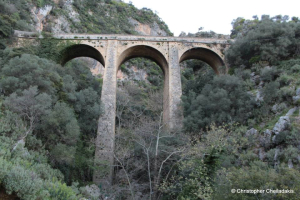
The bridge of Simas in Prasses, Rethymnon is the highest stone built bridge in Crete and is a construction miracle for the time it was built. It is located on the south side of Vrysinas Mount.

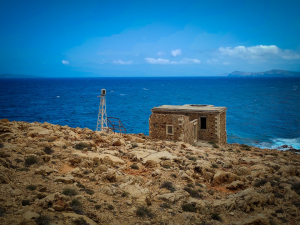
The Lighthouse of Sitia, also known as Exo Fanari, is located on the cape Vamvakia north of Sitia airport. It belongs to the network of lighthouses built by the French Lighthouse Company at the end of the 19th century throughout Crete and was put into operation in 1892.
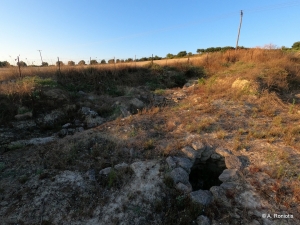
The ancient city of Eltynia, Eltyna or Eltynea was dispersed in the present plain of Peza, but its main core was probably located in the current site of the village Kounavi. The main occupation of its inhabitants was viticulture and winemaking, which is still a key sector of the local economy.

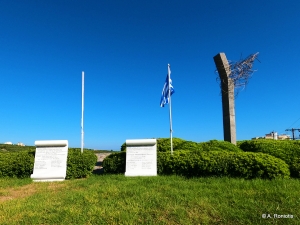
This weird memorial column commemorates the kidnap of General Kreipe, maybe the most important military operation in Crete in 1944. The kidnappers stopped the car of the General at this point and started their timely course till reaching the south coasts of Crete and deliver the General in Egypt.

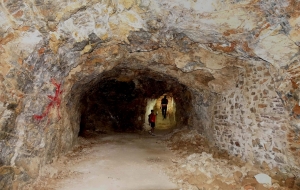
Like dozens of places in Crete, also the area of Kokkino Horio was chosen by the German Nazis during the Second World War to construct several tunnels. The location they chose for the most important of these tunnels was the hill of Drapanokefala that offers panoramic inspection of the entire bay of Souda.
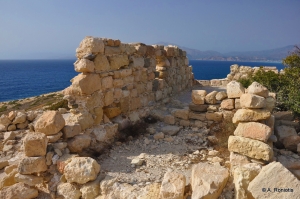
Koules of Matala is located on the hill Kastri above the famous beach of Matala. The access is very easy, as its very close to the path that heads to the Red Beach.

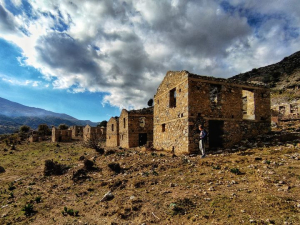
Just before reaching the village Vorizia and below Vrondissi Monastery, we come across a weird abandoned settlement with ten identical stone houses, without roofs. This settlement is linked to the history of Psiloritis massif.
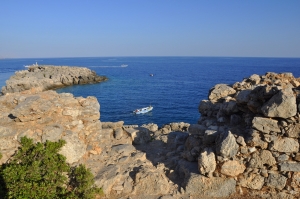
Most visitors of Loutro know about the fortress of Koules, which even today dominates over the village.However, they are unaware of the existence of a second fortress which is very easily accessible. The fortress of Kastella is located south of the village and next to the harbor where the big ships from Chora Sfakion stop.
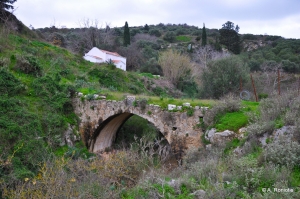
This is a small stone bridge that connects the two sides of a small canyon that locals call Sambathiano Chavgoudaki (small gorge of Sambas). Next to the bridge there is the church of Agios Mamas.

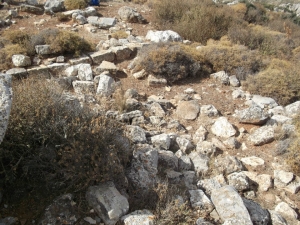
West of the village Tylisos in Malevizi province rises the mount Pirgos with its peak reaching an altitude of 684m. In this steep peak the archaeologist Stylianos Alexiou in 1963 identified one of the most important Minoan Peak Sanctuaries of Central Crete. Religious figurines and stone horns were found, and a rectangular building measuring 13m x 4.50m came to light. It can be reached by walking about 20 minutes from the nearest parking area that is reached by a rural road.
Also read:
- Home
 Beaches
 Nature
 Past
Past Destinations
 Highlights
 West Crete
- Central Crete
- East Crete
- Towns
- Chania Prefecture
- Chania
- Paleochora
- Kissamos
- Georgioupolis
- Chora Sfakion
- Loutro
- Rethymnon Prefecture
- Rethymnon
- Agia Galini
- Plakias
- Spili
- Anogia
- Heraklion Prefecture
- Heraklion
- Hersonissos
- Malia
- Matala
- Agia Pelagia`
- Archanes
- Kokkinos Pirgos
- Lassithi Prefecture
- Agios Nikolaos
- Elounda
- Sitia
- Ierapetra
- Makrigialos
- Palekastro
- Zakros
- Lassithi Plateau
- Get Prepared


