








 Fountain of the Janissary Agha in Heraklion

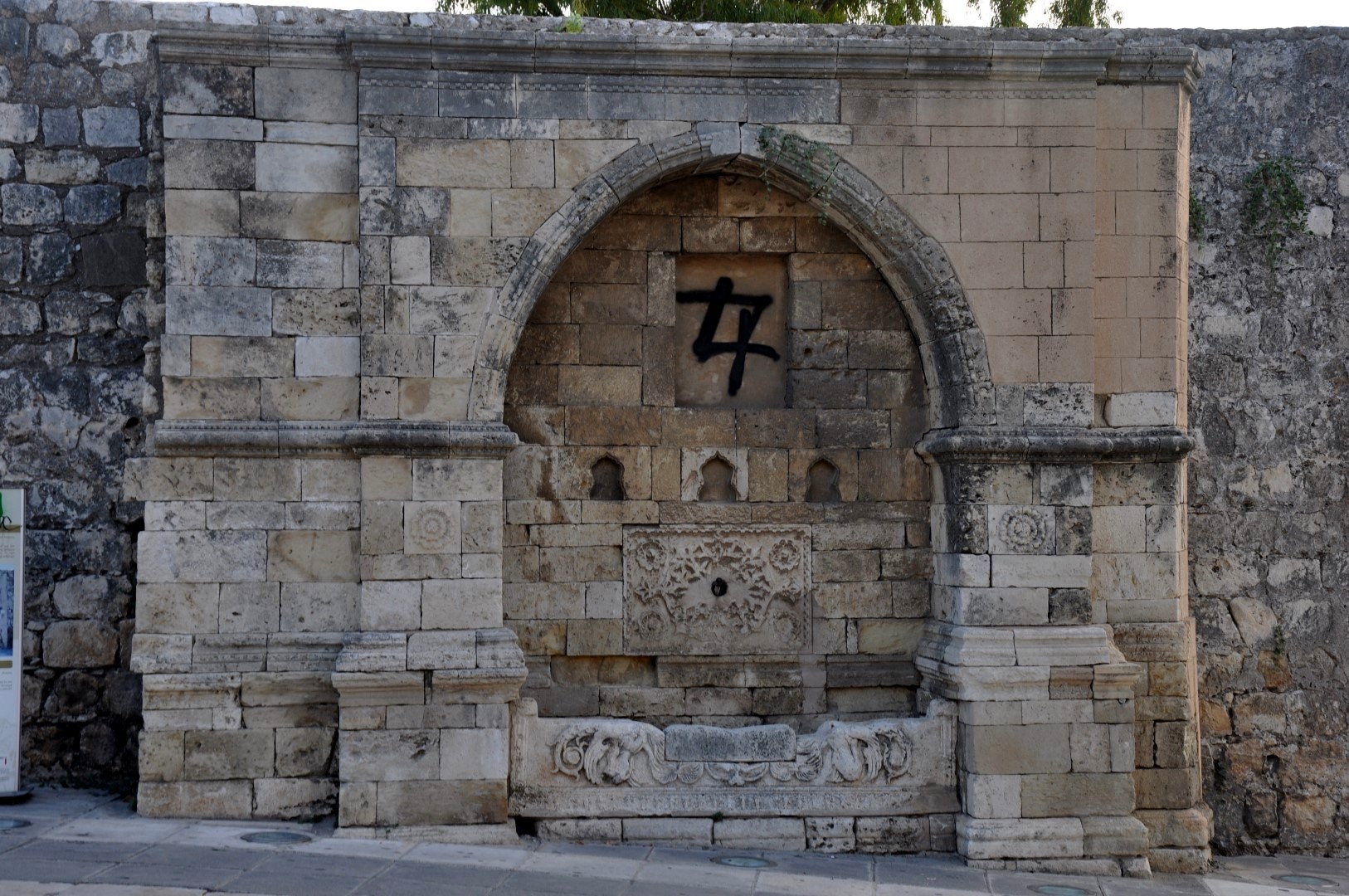
The Fountain of the Janissary Agha, also known as the Yenitsar Aga Fountain, stands at the upper end of Ikarou Avenue, next to the Epigraphic Collection and opposite the Archaeological Museum of Heraklion. It is one of the few surviving Ottoman fountains in the city and has been transferred from its original location.
Its name refers to the Janissary Agha, the Ottoman official who commanded the Janissary corps. The fountain was originally incorporated into the exterior of his konak, an imposing Ottoman mansion that stood elsewhere in the city and was demolished during the 20th century.
Historical sources do not fully agree on the modern street names corresponding to its original position. The most frequently cited location is the junction of Markou Avgeri and Konstantinou Palaiologou streets. After the mansion was demolished, the fountain was dismantled and reconstructed beside the Epigraphic Collection.
According to an Ottoman inscription studied by the historian Nikolaos Stavrinidis, the fountain was erected by a Muslim agha in the late 17th century. The inscription is no longer preserved in its original form, but the proposed date places the monument in the first decades after the Ottoman conquest of Candia.
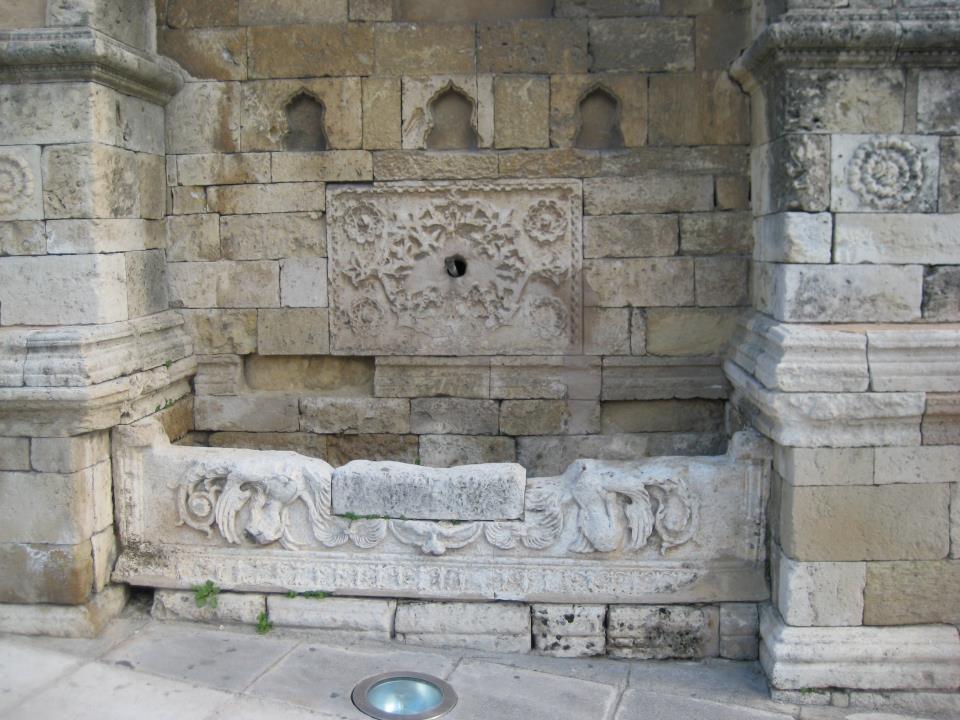
The carved water spout is set within an arched recess framed by two massive piers decorated with relief rosettes. This relatively restrained architectural composition contrasts with the richly carved marble basin in which the water was collected.
The basin is believed to be an older marble object reused for the fountain, probably a Roman sarcophagus. Its surface bears a carved female figure that the Italian archaeologist Giuseppe Gerola interpreted as a possible personification of Crete. The figure appears to have held a shield in one hand and a heavy tool or hammer in the other.
The reuse of ancient marble elements was common in public and private structures during the Ottoman period. At the Fountain of the Janissary Agha, the ancient basin was combined with the later Ottoman structure, creating a monument in which different periods of Heraklion’s history coexist.


What is near me?
Additional Info
- Location: Heraklion Prefecture
- Accessibility: Paved road
- Peak Period: Ottoman Era (1669 - 1898)


