








 Bembo Fountain at Kornarou Square

On the northern side of Kornarou Square stands the imposing Bembo Fountain, immediately beside the later Ottoman sebil of Haji Ibrahim Agha. Originating from two different historical periods, the monuments form one of the most distinctive architectural ensembles in the centre of Heraklion.
The fountain was constructed between 1552 and 1554 on the initiative of Gianmatteo Bembo, Captain of Crete. It marked the terminus of the first aqueduct to carry fresh spring water into Candia, relieving its residents from the city’s persistent water shortage. Until then, the fortified city had depended mainly on wells and rainwater cisterns.
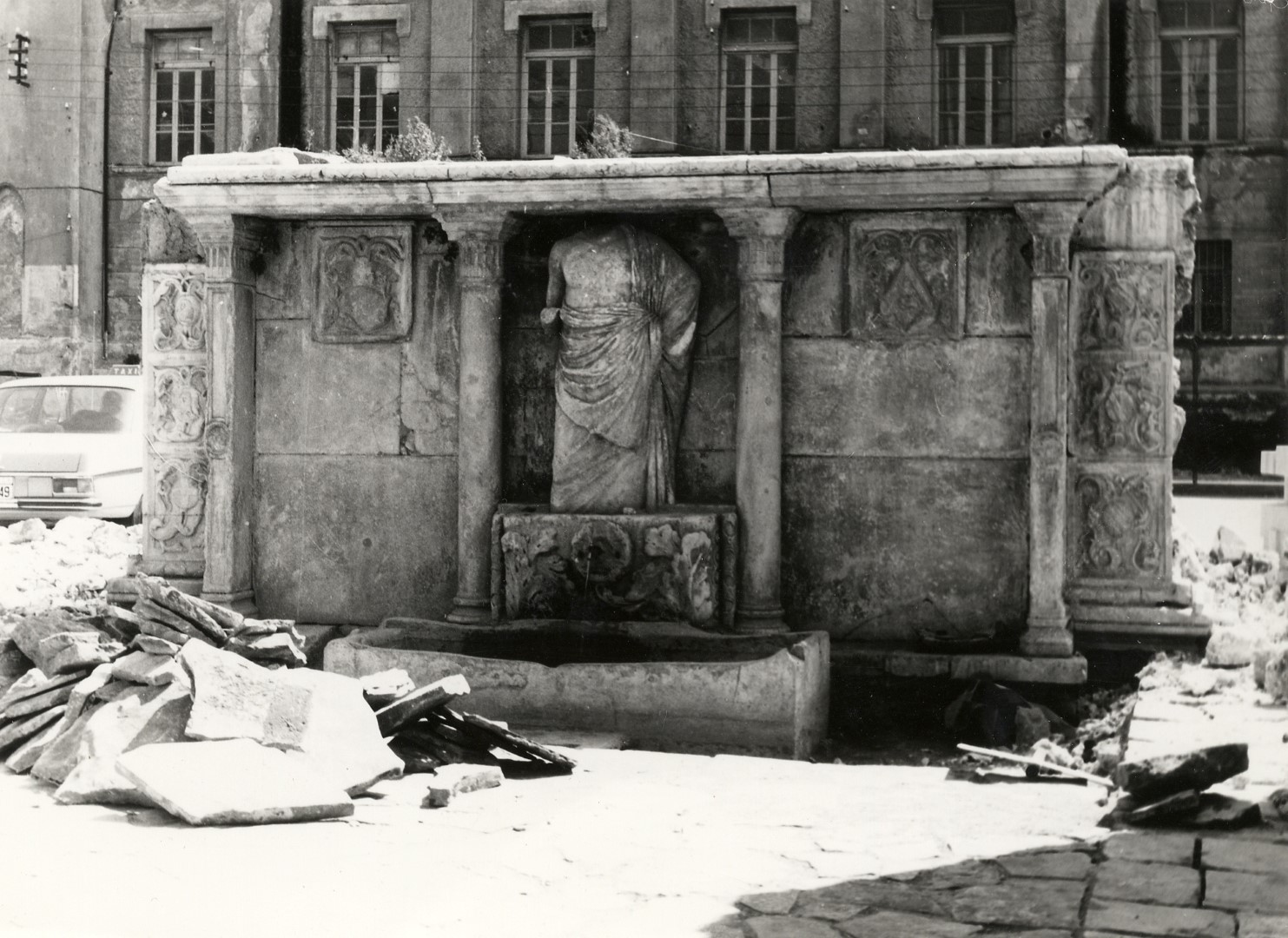
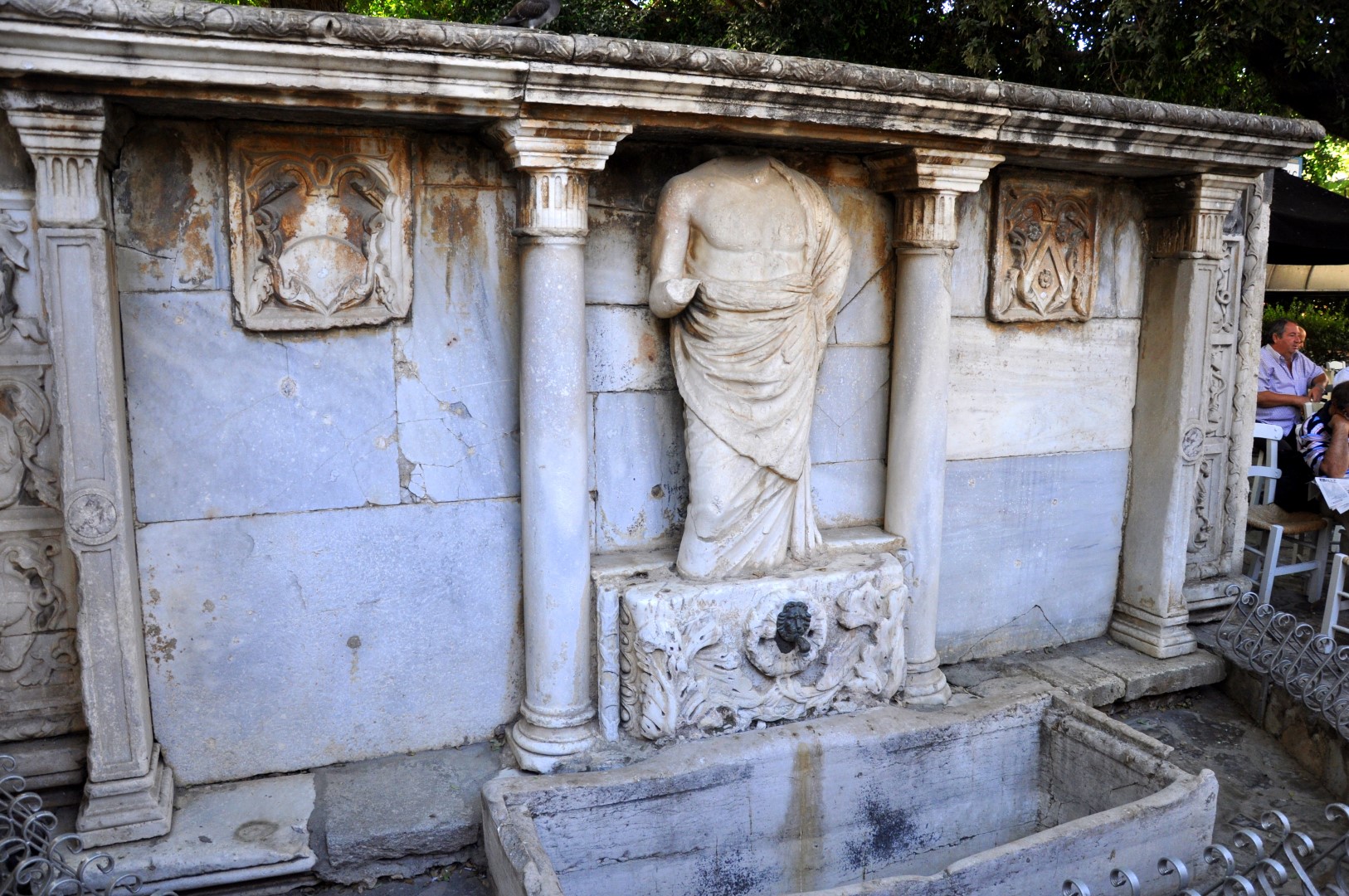
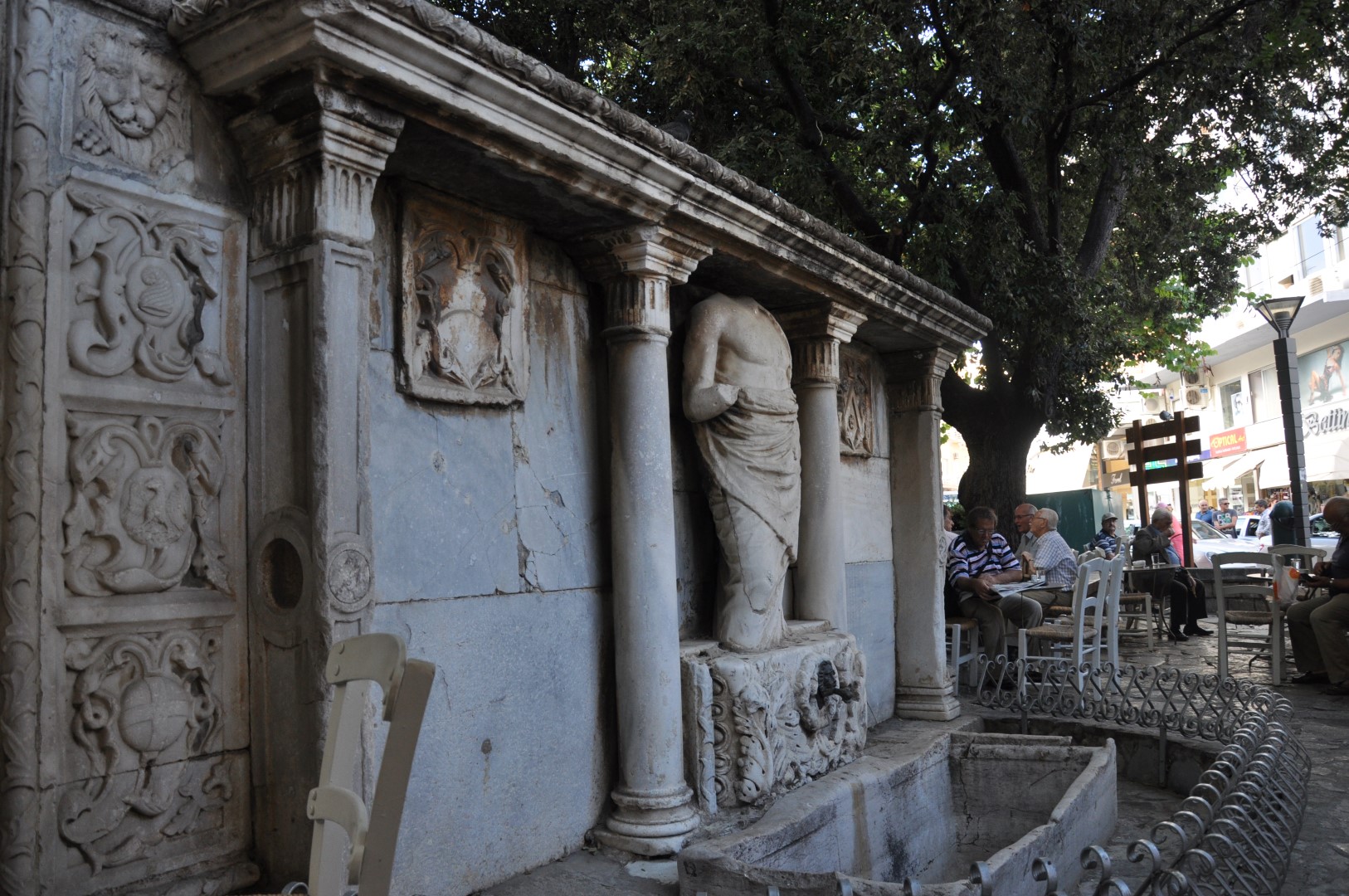
The façade combines Renaissance and Gothic architectural elements. It is decorated with columns, pilasters, carved floral motifs and the coats of arms of the Duke of Crete, Alvise Gritti, and his councillors Giovanni Tiepolo, Giorgio Emo and Pietro Marino. The water spout is surrounded by an elaborate relief frame with vegetal decoration.
A large headless male statue dating from the Roman period dominates the centre of the composition. It was transported from ancient Hierapytna, present-day Ierapetra, although the identity of the figure it represents remains unknown. The reuse of ancient sculpture and architectural elements in later public monuments was a common practice during the Renaissance.
Beneath the façade was a marble basin that collected the water. The basin was made from an ancient Roman sarcophagus reused for this purpose. The original composition was also crowned by a pediment, which was removed at a later date and no longer survives.
During the final decades of Ottoman rule, the Roman statue became associated with rituals practised by Heraklion’s African community. The statue was painted black and became the focus of annual gatherings held in May, accompanied by songs and dances. Accounts of this tradition survive in historical descriptions and early photographs of the fountain.
In 1938, during the redevelopment of Kornarou Square, the large reservoir supporting the façade of the fountain was removed. Despite later alterations and the loss of parts of its original composition, Bembo Fountain remains one of the most important Venetian monuments in Heraklion and a landmark in the history of the city’s water supply.


What is near me?
Additional Info
- Location: Heraklion Prefecture
- Accessibility: Paved road
- Peak Period: Venetian Era (1204 AD - 1669 AD)


