








 Sagredo Fountain at the Venetian Loggia
Sagredo Fountain is one of the historic Venetian fountains of Heraklion and is now incorporated into the northern wall of the Venetian Loggia, which houses Heraklion Town Hall. It was constructed between 1602 and 1604 on the initiative of the Duke of Crete, Giovanni Sagredo, primarily to serve the nobles and officials who gathered at the Loggia.
Its construction formed part of the efforts to improve the water supply of Venetian Candia. In 1602, the Captain General of Candia, Benetto da Ca’ Taiapiera, proposed extending the aqueduct from the area of Bembo Fountain towards the city centre and the harbour. Sagredo implemented the plan in 1603, conveying water to the new fountain through a network of clay pipes.
Sagredo also envisaged extending the aqueduct as far as the Venetian harbour, so that ships could be supplied with drinking water. He was unable, however, to complete this part of the project before the end of his term of office.
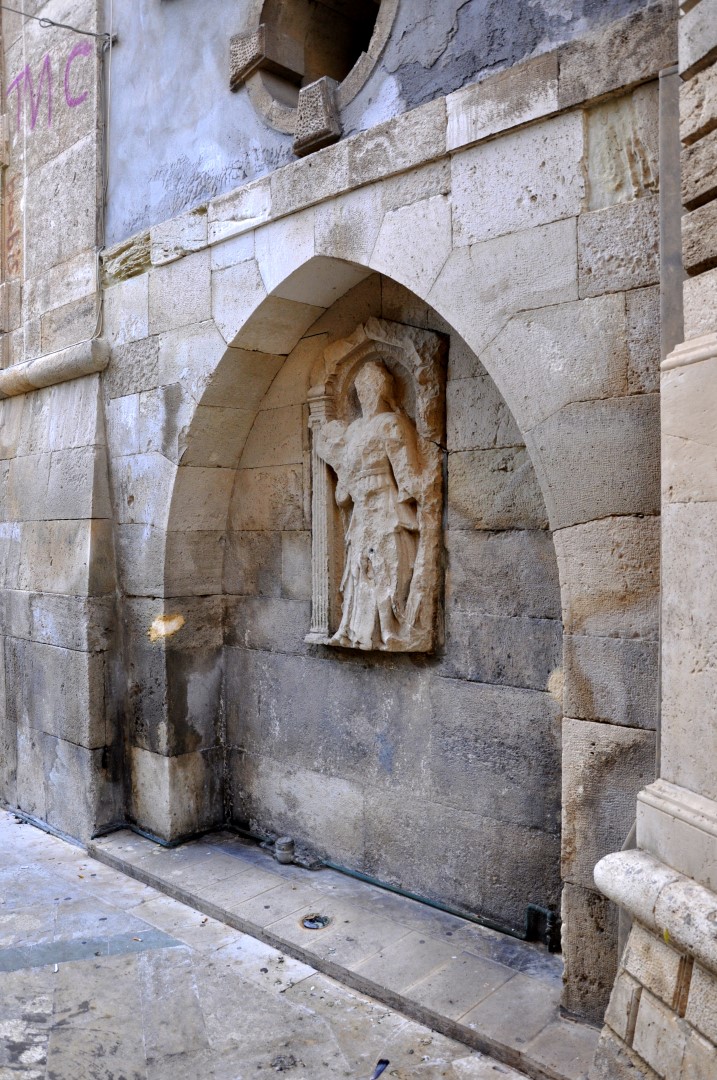
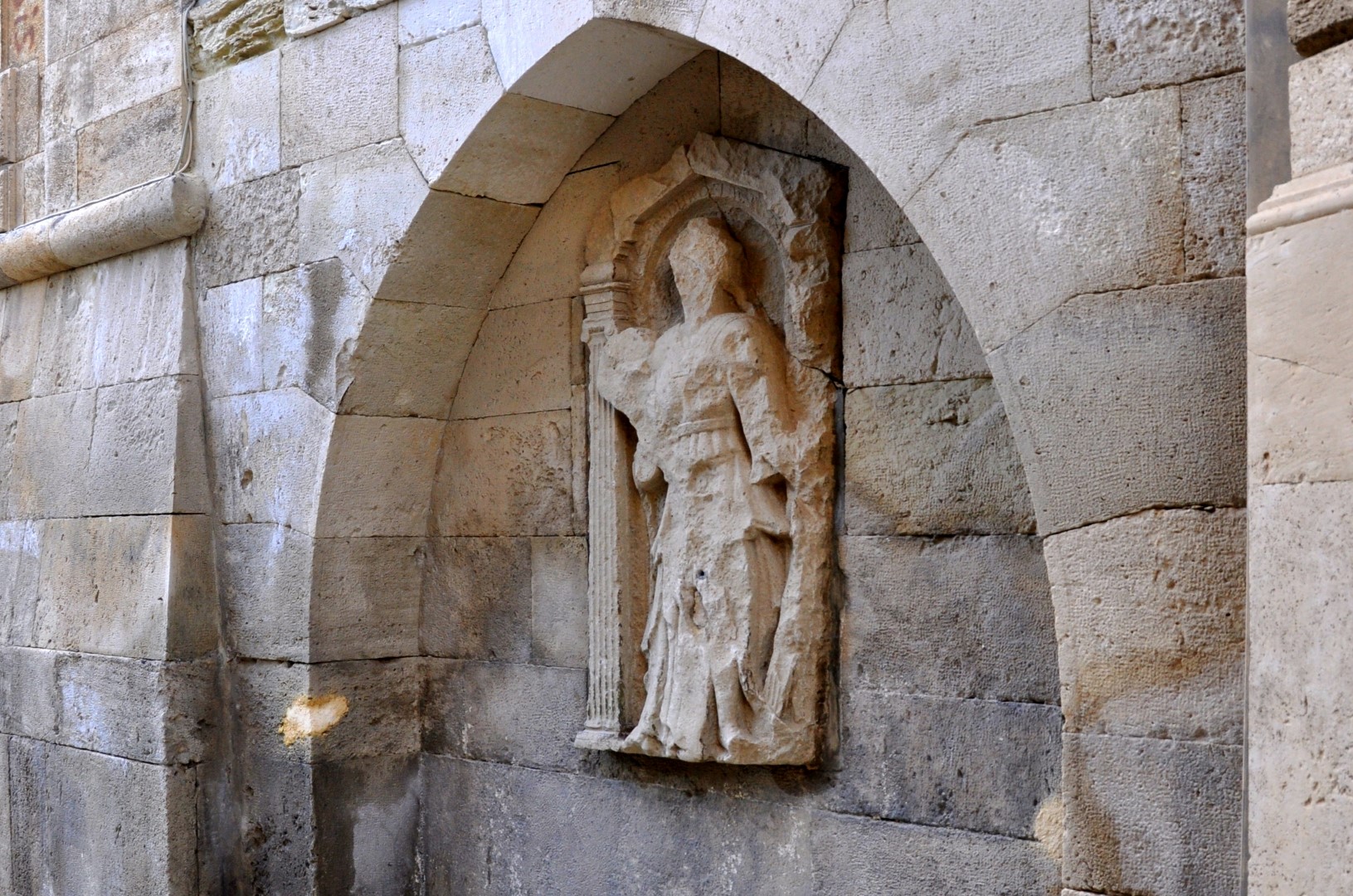
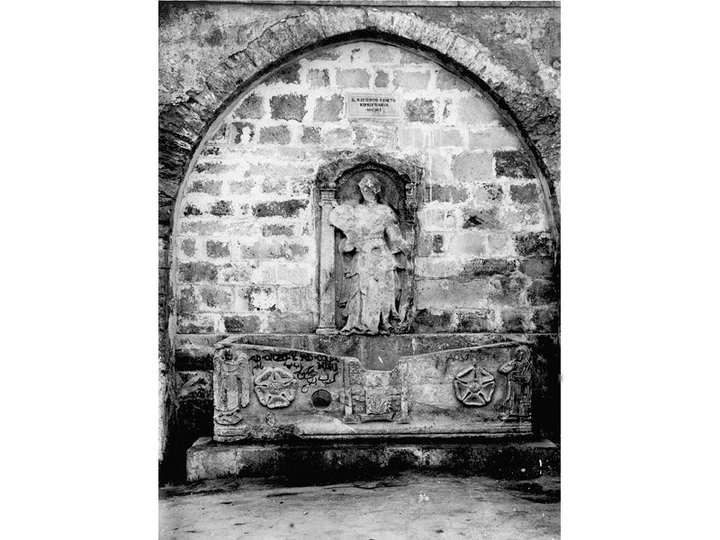
The fountain originally stood at the northwestern corner of the Loggia, on the side facing Saint Titus, and formed an impressive Renaissance monument. Its most important surviving element is the relief of a female figure, set within a decorated niche framed by two small columns and crowned by a semicircular arch.
According to the description by Italian archaeologist Giuseppe Gerola, the female figure probably represents the personification of Crete. She is depicted in classical attire and appears to have held a shield in her left hand and a large hammer or club in her right, symbolising the strength and importance of the island.
Following the curve of the arch is the Latin inscription “Cura Sagredi profluit ista ducis”, which can be translated as “Through the care of Duke Sagredo, this water flows”.
The original fountain also included an elaborate stone basin made from part of an earlier sarcophagus. Its façade featured two large relief rosettes with representations associated with the Annunciation and, in the centre, an enthroned figure against a surface decorated with lilies. An earlier inscription dating from the 16th century ran along the rim of the basin.
The basin was destroyed during the German bombing of Heraklion in the Second World War, and much of the original composition has not survived. During the restoration of the Venetian Loggia, the surviving relief was incorporated into its present position. Despite its fragmentary preservation, Sagredo Fountain remains an important testimony to Renaissance art and the history of Heraklion’s water supply.
Sources: Giorgos P. Stamatakis, “I Krini Sagredo”, Kritiko Panorama, November–December 2006, pp. 18–20; Stergios Spanakis, “I Ydrefsi tou Irakliou”.


What is near me?
Additional Info
- Location: Heraklion Prefecture
- Peak Period: Venetian Era (1204 AD - 1669 AD)


