







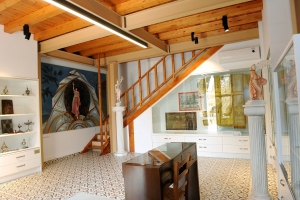
The History of Burial is a very special venue in Heraklion city. It is housed in the two-storey ossuary of the old cemetery of Saints Constantine and Helen in Heraklion, which was built in 1890.

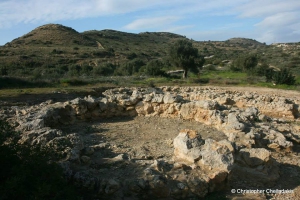
The historic Monastery of Odigitrias on the way to Agiofaraggo hides many treasures. Beyond the monastery itself with such great history and the tower of Xopateras, it conceals another surprise north of the monastery. This is the prepalatial necropolis of Odigitria, named after the monastery, as we still don’t know the name of the town it belonged to.
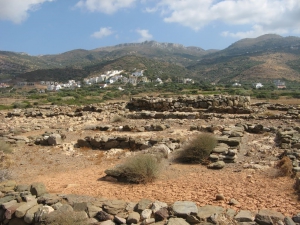
The ruins of the largest Minoan cemetery in Crete have been discovered in this area with 252 graves from the early Minoan period, 1800 vases and many artefacts buried with the dead.
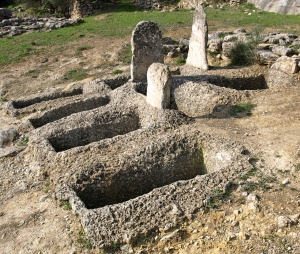
The archaeological site of Fourni is located on the homonym wooded hill, 17km south of Heraklion and west of Kato Archanes. To get there (the site is not open, but you could contact the guard), you could walk along the Minoan path starting from Kato Arhanes or drive to the beautiful artificial grove of Fourni.
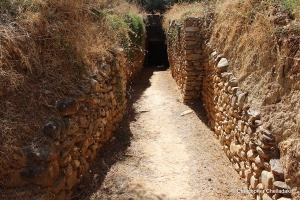
The Late Minoan vaulted tomb of Maleme is located very close to the German military cemetery and the historical airport of Maleme. The tomb was already been looted since the early 20th century and was badly damaged by a bomb during the Battle of Crete.
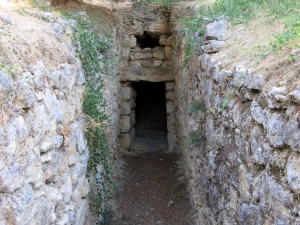
South of Aptera we meet the domed tomb of Stylos that came to light in 1961 (looted) by the archaeologists N. Platon, and K. Davaras. This monumental tomb was of a local lord and has a circular stone chamber and long, road corridor (20,80 m long).
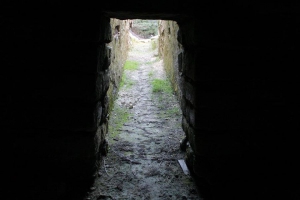
Just next to the small village of Fylaki at Apokoronas province, Chania, you will find the vaulted tomb of Fylaki. It was built in the post Minoan Times. It is very well preserved and clean. There is a long aisle at its entrance and its pyramid-like roof is very impressive.
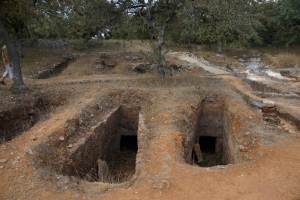
The necropolis of Armeni is situated 9km south of the town of Rethymnon, on the main road which leads to the south coast of Crete. The greatest Late Minoan III A-B (c. 1400-1200 BC) cemetery was discovered on a shallow hill called Prinokefalo, which means “hild of the wild oaks”.
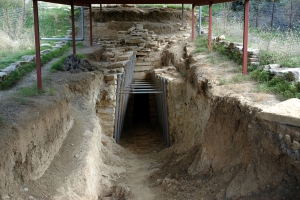
Near the village Margarites we meet is a Late Minoan tomb of 1350 BC, which is considered one of the most important sites of the area. An aisle with carved stones leads to a circular domed tomb. Inside it, the bones of four adults and two children were found. From the findings, it seems that they came from higher social and religious level.
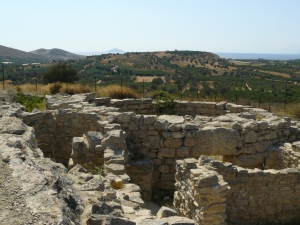
At position Grigori Peak by Kamilari we meet the ruins of alarge domed tomb (34m long perimeter) with panoramic sea views. The tomb was discovered in 1959 by the Italian archaeologist Doro Levi, and dates back from 2000 BC.
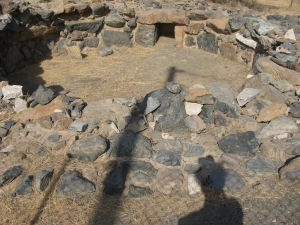
At Gerokambos (Sacred Place) west of Lendas in 1959 three vaulted tombs were found, with the largest (diameter 5.10m) looted and empty. In front of the entrance, a hall was full of people and animal bones, charcoal and cups. In a second tomb figurines, daggers, vases, seals and beads were found.
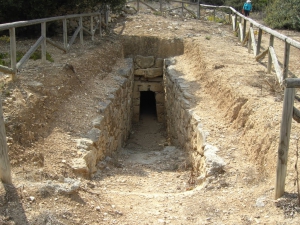
At position Platyskinos near Achladia, Sitia, a large underground vaulted tomb of diameter 4.08m, height 4.16m and corridor 9m, has been revealed. The tomb, extremely rare especially in Eastern Crete, dates back from 1400-1220 BC and is thought to have been inspired by the tombs of Mycenae.
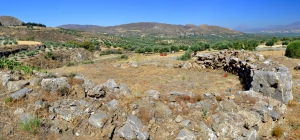
The prepalatial cemetery Koumasa is located between Loukia and Koumasa. This Minoan archaeological site was first excavated by Stephanos Xanthoudides from 1904-1906 and four graves came to light (three vaulted graves and one rectangular).

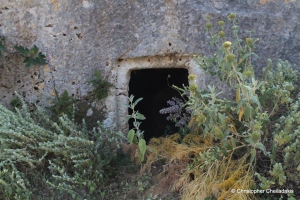
Above the scenic village of Trialonia, Kissamos district, and a little on the east, we meet the hill of Kefala. Kefala has views to all surrounding areas and hides a truly unknown treasure, a huge archaeological site which has not been protected by the Greek State and is still being destroyed.
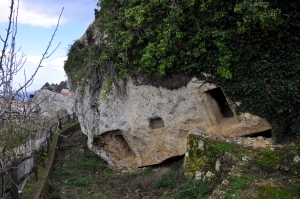
Agios Thomas (Saint Thomas) is one of the most impressive mountain villages of Crete. This is mainly due to the rocks of the region that are easy to carve. Excellent monuments of carved architecture travel us to ancient times with carved Minoan presses, Roman tombs and cavernous temples.
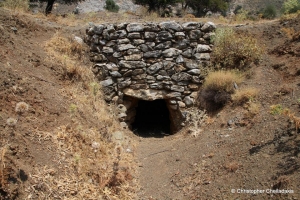
The most important of the several tombs found in the surrounding area of Apodoulou is sited at position Sopotakia and has an aisle of 7 meters and a chamber of diameter 3.10 meters. Within the tomb three urns were found (1380-1200 BC).

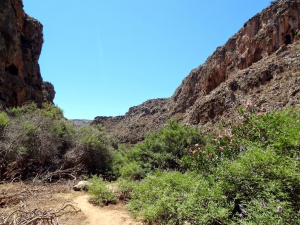
The beautiful Gorge of Kato Zakros (or the gorge of the Dead) starts in a short distance from Ano Zakros, nearly 100km southeast of St. Nicholas, and ends at Kato Zakros. The beauty of the landscape, the historical importance of the gorge and its accessibility, attract many visitors every year.
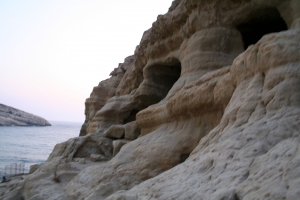
Matala, ancient Matelon, was a port of Phaestus and Gortys and is well known for the carved caves, which were Grecoroman tombs. The cape south of Matala has been identified as the Cape Nysos and the location where the ships of Menelaus were wrecked (Odyssey).
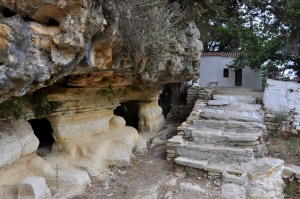
Ancient Lappa was built near the current town of Argyroupolis, located 27km south of Rethymno. The area is now famous for its springs with waterfalls, its old mills and the lush green landscape that attracts thousands of visitors each year.
Also read:
- Home
 Beaches
 Nature
 Past
Past Destinations
 Highlights
 West Crete
- Central Crete
- East Crete
- Towns
- Chania Prefecture
- Chania
- Paleochora
- Kissamos
- Georgioupolis
- Chora Sfakion
- Loutro
- Rethymnon Prefecture
- Rethymnon
- Agia Galini
- Plakias
- Spili
- Anogia
- Heraklion Prefecture
- Heraklion
- Hersonissos
- Malia
- Matala
- Agia Pelagia`
- Archanes
- Kokkinos Pirgos
- Lassithi Prefecture
- Agios Nikolaos
- Elounda
- Sitia
- Ierapetra
- Makrigialos
- Palekastro
- Zakros
- Lassithi Plateau
- Get Prepared


