








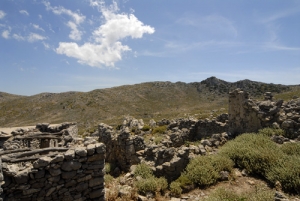
A small castle was located near the village Sitanos of Sitia Region, namely Skalia. Skalia was a small village with a few residents built atop a mountain slope, where the outer walls of the houses formed a wall that surrounded the village, while from the north it was protected by cliffs.

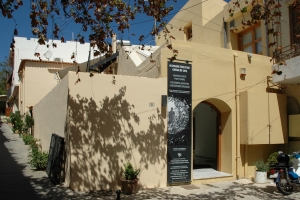
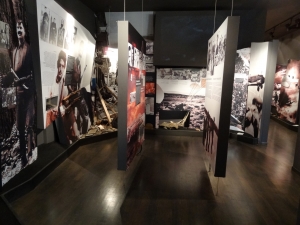
It is based in the heart of the old historic town, under the Venetian wall and the Archaeological Museum. It is housed in a Venetian building that operated (in the early 20th century until the 70s) as a soap factory and is now a modern museum around covering about 1000 sq.m.

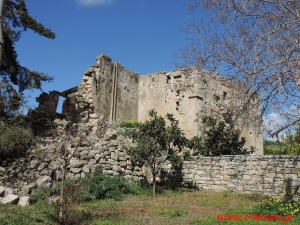
Agriolidis was a terrible janissary in Messara plain, who lived during the Greek revolutions of 1821. He resided in a 17th century chateau in the village of Agios Ioannis, near Phaestus, which still survives.
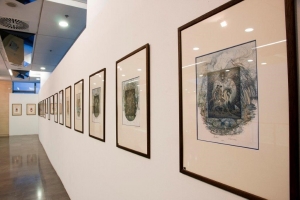
At Arhanes we meet the unique museum - private collection of engravings and exlibris in Greece. The exhibits include lithographs, ex libris, free graphics, thumbnails, etc.

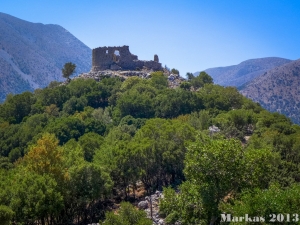
Askyfou Plateau, about 50km south of Chania city, is located in a strategic position and is formed on the passage that connects the southern shores of Sfakia to the north coasts of Crete. Sfakia did always breed great revolutionaries and the Turks always wanted to control them. Thus, in response to the Cretan Revolution of 1866, they began construct Koules, i.e. small castles, in the most important locations of Sfakia.
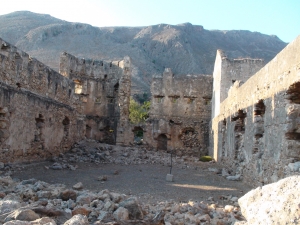
Above Loutro there are still the ruins of the Turkish fortress, Koules, which dominated over the current settlement. The building was built in 1868 and had two towers on west and east sides. It has rectangular shape and some of its walls survive. Outside the walls, there are big tanks surviving.

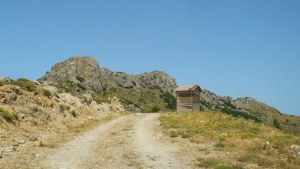
The town of Hyrtakina was built on the steep Kastri near the village Temenia and flourished in the Hellenistic Times. Today the vegetation has covered most parts of the ancient city.

- Home
 Beaches
 Nature
 Past
Past Destinations
 Highlights
 West Crete
- Central Crete
- East Crete
- Towns
- Chania Prefecture
- Chania
- Paleochora
- Kissamos
- Georgioupolis
- Chora Sfakion
- Loutro
- Rethymnon Prefecture
- Rethymnon
- Agia Galini
- Plakias
- Spili
- Anogia
- Heraklion Prefecture
- Heraklion
- Hersonissos
- Malia
- Matala
- Agia Pelagia`
- Archanes
- Kokkinos Pirgos
- Lassithi Prefecture
- Agios Nikolaos
- Elounda
- Sitia
- Ierapetra
- Makrigialos
- Palekastro
- Zakros
- Lassithi Plateau
- Get Prepared


