



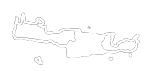





 Matala beach
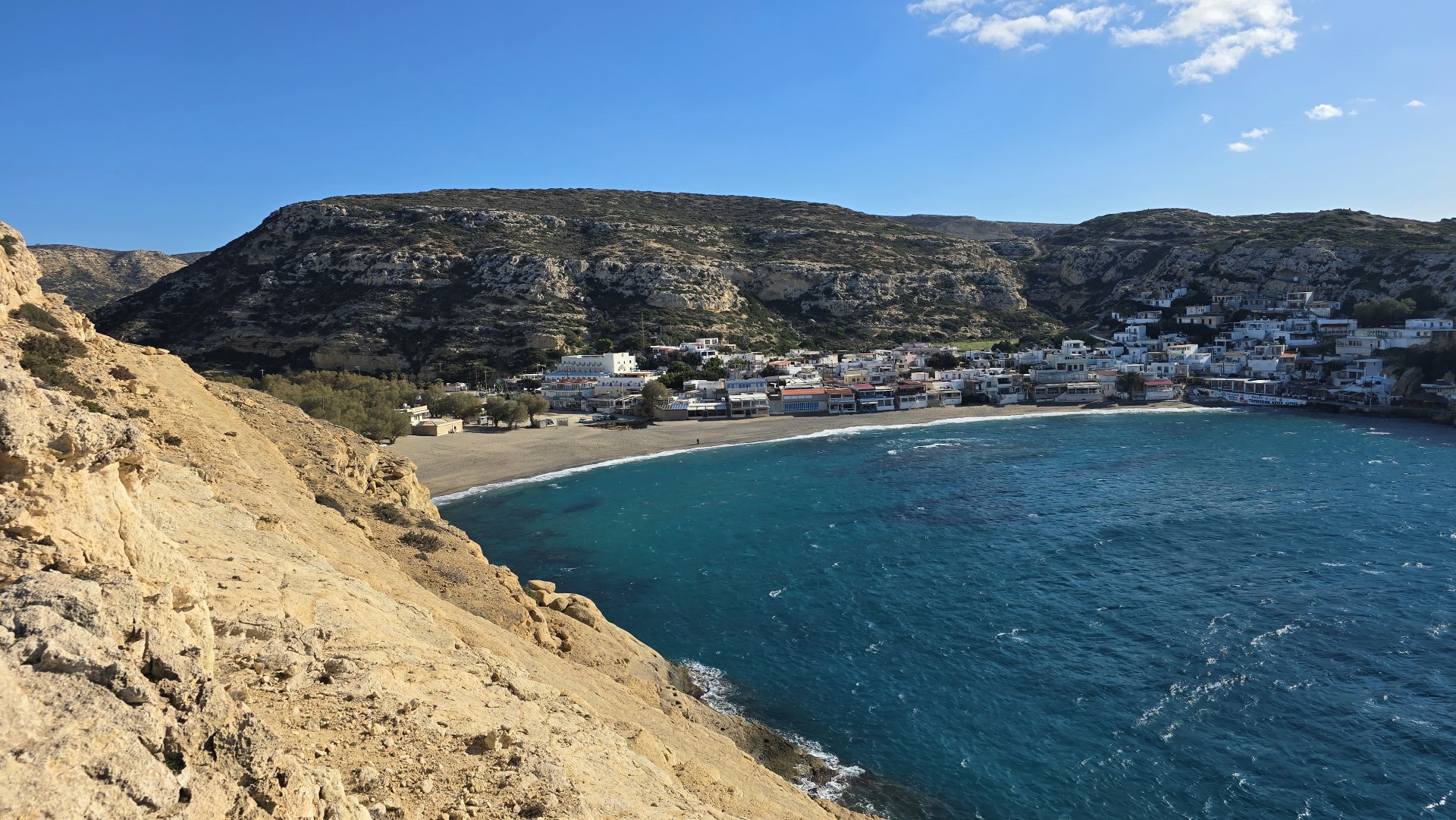
Matala is a coastal village in the community of Pitsidia, about 70 km southwest of Heraklion, where the Messara plain meets the western end of the Asterousia Mountains. The village lies at the mouth of a small valley, between Nisos hill to the north and Kastri hill to the south. The bay opens westwards towards the Paximadia islets.
The beach and village
The beach is about 300 metres long, with sand and fine gravel. Flat rock slabs lie on the seabed off the centre of the beach, and westerly winds can bring heavy surf into the bay. A large natural cave opens at the northern end of the shore, near the rock-cut chambers. Tamarisk trees provide shade along the stretch in front of the campsite.
The beach has umbrellas, showers and seasonal facilities. Taverns, cafés and small places to stay are scattered around the bay and along the village lanes. In the evening, the seafront bars and restaurants are the busiest part of the village.
The ancient port and the caves
Ancient Matelon was linked to two important centres in the Messara. It served as the port of Phaistos in the Minoan period and of Gortyn in Roman times. Excavations beside the present village uncovered buildings and traces of workshops. Remains of the ancient settlement can also be seen in the sea.
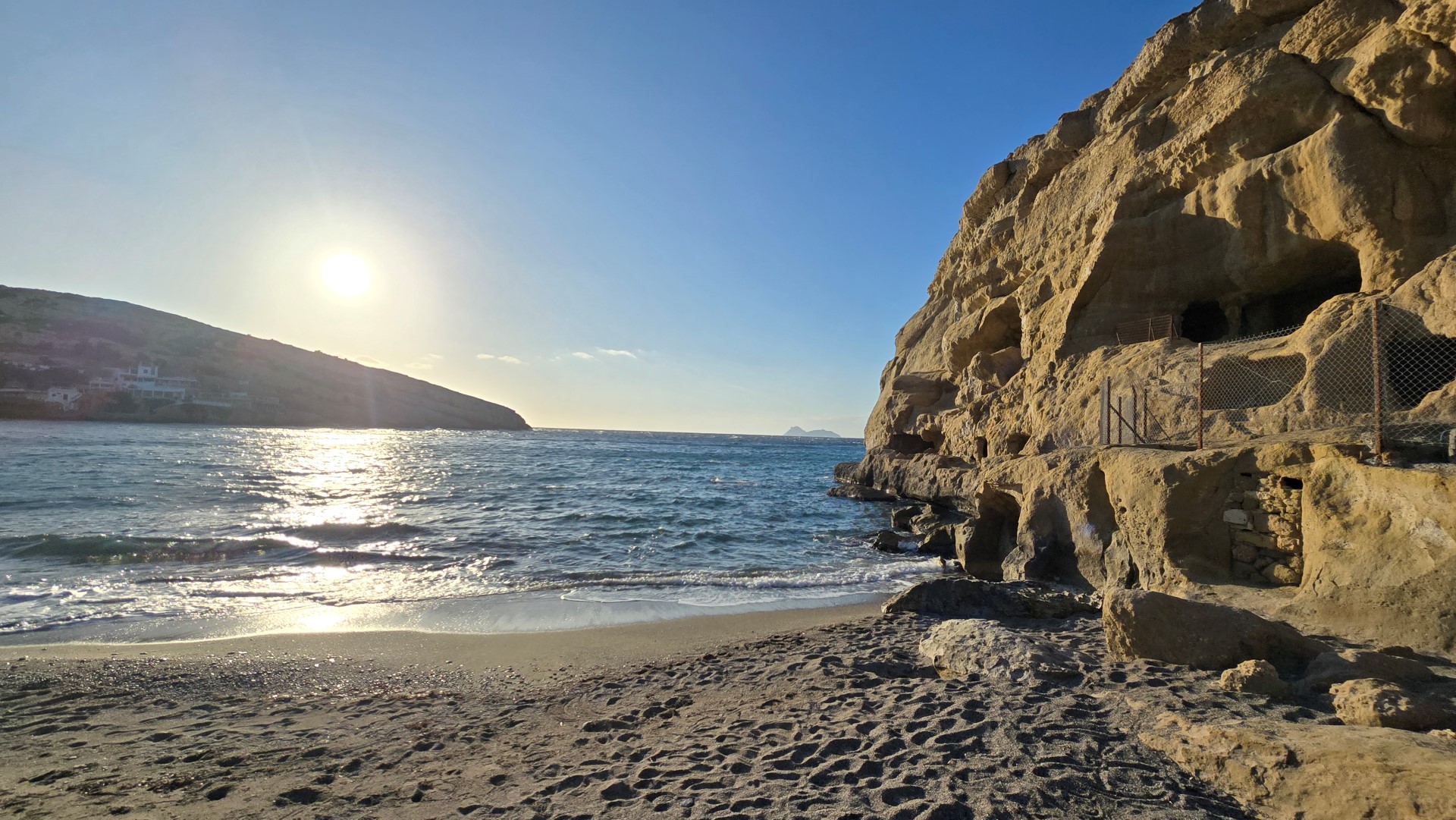
The best-known caves are carved into the soft rock on the north side of the bay. They were used as tombs in the Greco-Roman period. Steps, openings and stone benches cut into the rock can still be seen in some chambers. The caves are open to visitors as an archaeological site, with a separate entrance from the beach.
The hippies, Joni Mitchell and the cinema
In the late 1960s and early 1970s, when Matala was still a small fishing village, young people from several countries stayed in the caves for a time. Among them was the Canadian singer-songwriter Joni Mitchell, who stayed in Matala in 1970. Her time there is associated with the song Carey, released on her 1971 album Blue. The Greek musician Dimitris Poulikakos also spent time in Matala.
Scenes from the Greek comedy My Aunt the Hippie, starring Rena Vlachopoulou, were filmed in Matala around the same time. During Greece’s military dictatorship, the authorities removed the hippies from the caves. Today, the Matala Beach Festival uses music to recall that period in the village’s history.
Around the bay
On Kastri hill, south of the village, stand the remains of the Matala koule, an Ottoman watchtower overlooking the bay. The path to Red Beach starts on the same side of the village. Matala also has a cave church dedicated to the Virgin Mary, mentioned in Venetian records. This stretch of coast has been associated with the wreck of Menelaus’s ships in Homer’s Odyssey. The precise location remains uncertain.



 Stay nearby
Nearby places of interest
Straight-line distances
 0.3 km
Ancient Matala
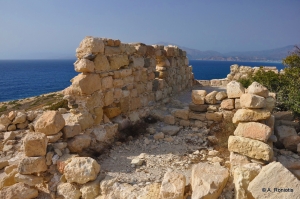 0.3 km
Matala tower (koule)
 0.9 km
Red Beach (Kokkini Ammos) near Matala
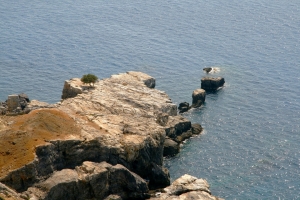 1.5 km
Trail Matala - Vathy
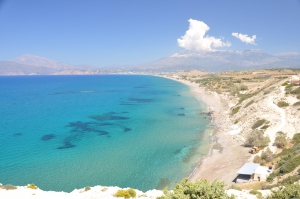 2.4 km
Komos beach
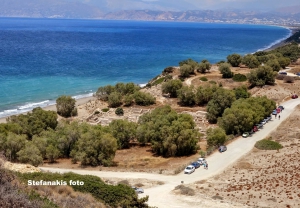 2.4 km
Ancient Kommos
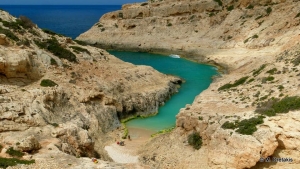 3.6 km
Gournia Fjord near Vathy
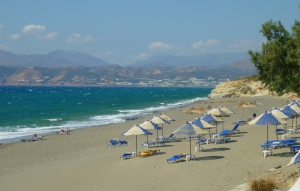 4 km
Kalamaki beach
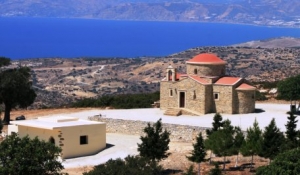 4 km
Saints Eftyhiani monastery
 4.3 km
Church of Saint Andrew by Odigitria monastery
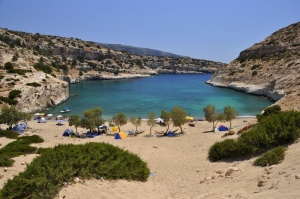 4.7 km
Vathi beach
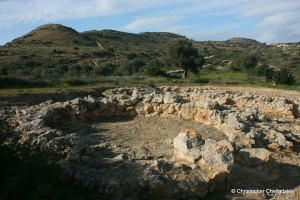 5.1 km
Odigitria Prepalatial Cemetery
 5.1 km
Odigitria Monastery near Sivas
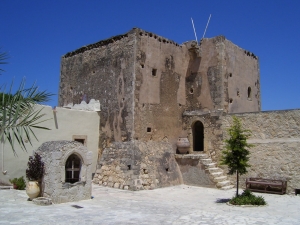 5.1 km
Xopateras Tower
 5.1 km
Folklore Museum of Odigitria Monastery
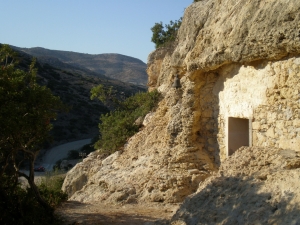 6.1 km
Saint Kiriaki church at Agiofarago
 6.1 km
Pahia Ammos beach (Afratias)
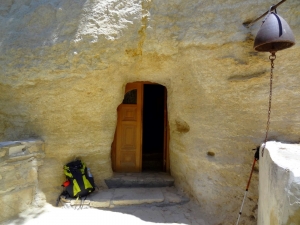 6.3 km
Panagia Church at Martsalo
Additional Info
- Sea water color: Blue, Green
- Sand type: Sand, Fine Pebbles
- Location: Heraklion Prefecture, Central Crete, South Crete, Messara area (Kainourgiou), Tymbaki area (Pirgiotissa)
- Depth: Deep
- Sea surface: Usually wavy
- Crowds: Crowded place
- Facilities: Accommodation options nearby, Food / water nearby, Umbrellas / beds, Sports, Lifeguard, Showers
- Other Information: Tree Shade
- Accessibility: Bus services, Paved road, Handicap friendly


