







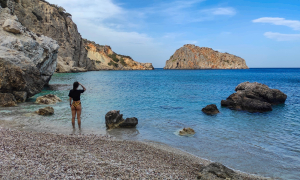
East of Istron Bay there is a very small cove with three remote beaches, accessed on foot via a short path. The beaches are named Vryonisi (or Prasonisi), after the small Vryonisi (or Prasonisi) islet that is formed just opposite the small bay.

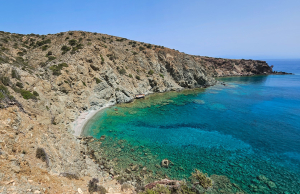
Tourkavlako beach is located a little north of the port of Karave in Gavdos. The beach has pebbles and sand, while deeper it has rocks. There is no natural shade, which makes it hard for someone to stay there without shade all day long.

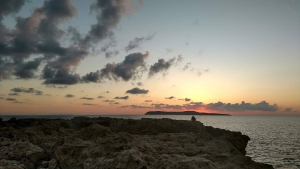
Elassa is the easternmost territory of the province of Sitia and the entire Crete region, as it is located about 3 nautical miles east of Cape Sidero. It spans an area of 1.75 square kilometers, while the highest altitude is 75 meters.
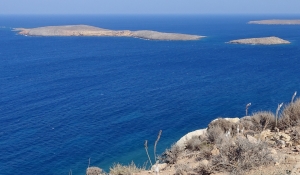
The islands of Grandes is a complex of three small lowland rocks in the province of Sitia, about half a mile opposite the beautiful beach of Hiona. In fact, the largest area (300 acres) is occupied by the middle island, known as Prasonisi, which is oblong and has the highest altitude at 31 meters. In the middle of the island there is a beautiful beach with two tamarisk trees, surrounded by rocks.
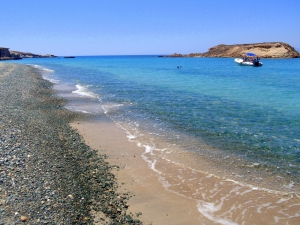
Kamarelles Beach, opposite the small islet of Marmaro and next to the ancient Roman Theatre, is an amazing sandy beach. It is very interesting to watch ancient pillars while snorkeling! On the south end of the beach, we meet two impressive natural arches, called Kamarelles.
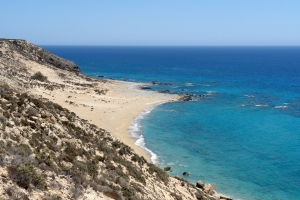
The longest beach at Koufonissi lies in the southeast part of the islet, overlooking Africa! Amazing clean water, rocky seabed ideal for snorkeling, and smooth sand ideal for playing beach tennis. The only problem is the lack of shade.

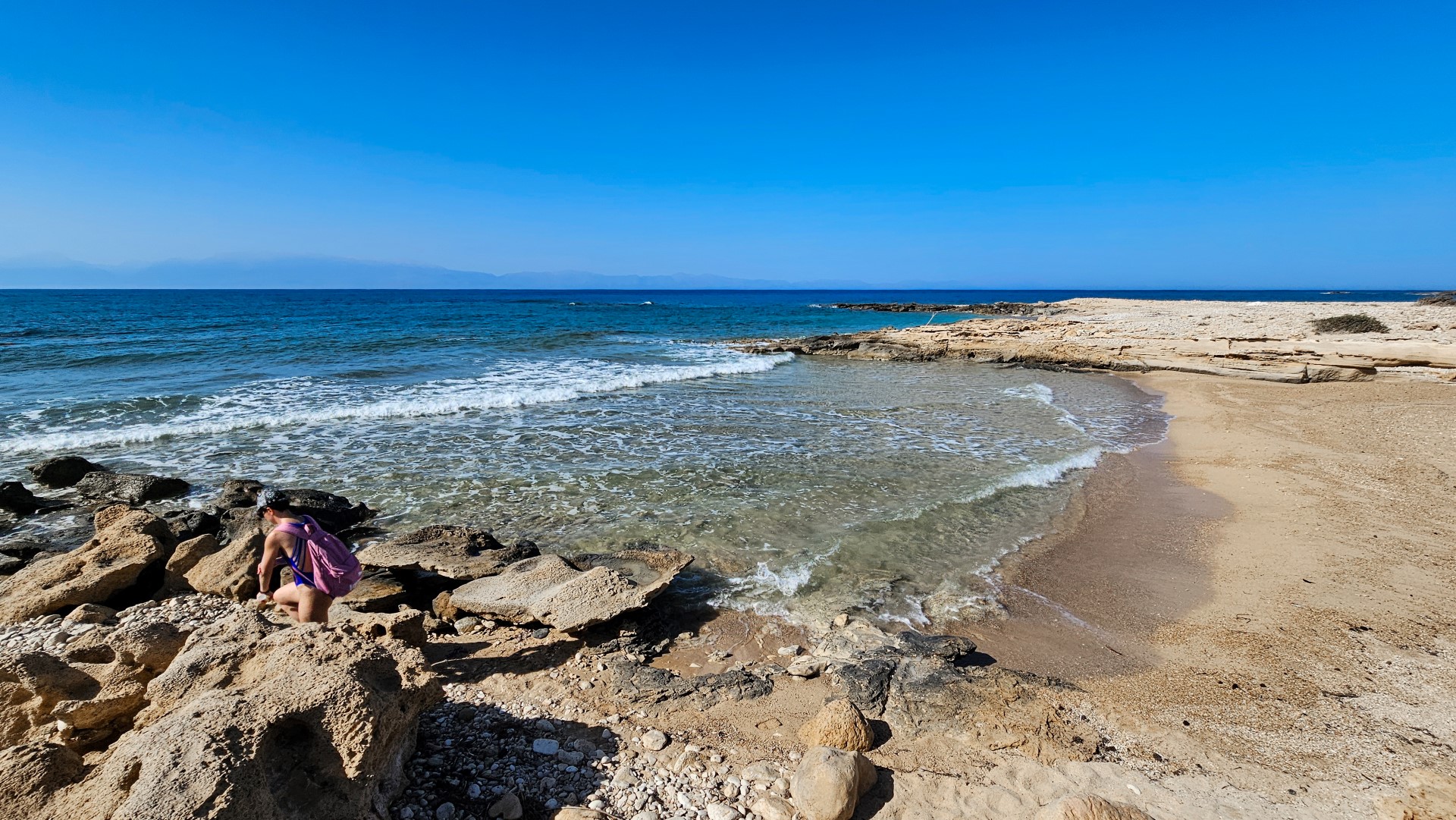
Stavrolimni beach, also known as Stravolimni, is located at the northernmost tip of Gavdos. More specifically, it lies on the footpath that connects the beaches of Lavrakas and Pyrgos.
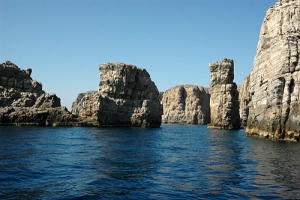
The Dionysades (also Gianysades) is a small group of islands off Sitia on the northeast coast of Crete. The group includes the islands Gianysada, Dragonada, Paximada, and Paximadaki. This island group is part of an environmentally protected area with many rare plants and animals including the falcon, Falco eleonorae, which finds sanctuary here.

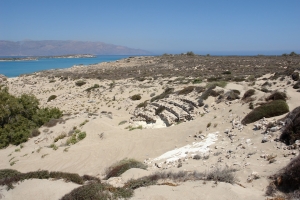
Koufonissi was an economic and cultural center from the Minoan until the Greco-Roman Times and was claimed by all major cities of the region. As recorded on the inscription of the Magnites currently embeded on the facade of the Toplou monastery church, there was a great dispute between Itanos and Ierapytna about Lefki island. In 132BAD the island was owned by Itanos.

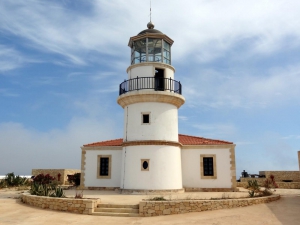
The lighthouse of Gavdos is built a few meters south of the village Ambelos at an altitude of 368m, at the west coastline. Constructed in 1880 by the French Company for Lighthouses and was visible at a distance of 42 miles (the second longest distance in the world since then, after the lighthouse of Tierra del Fuego).
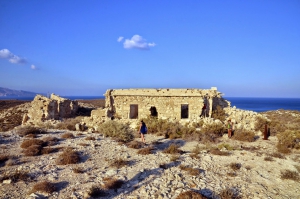
At the middle of the southeast shores of Lefki or Koufonissi island, at 75m altitude, we meet the ruined lighthouse of the island. There was found a temple, which unfortunately has suffered from predatory looting from the authorities (in 1920) in order to build the huge lighthouse, only 5m from the eastern short side of the temple where the entrance would have been, even though another stepped entrance was found on the north side.
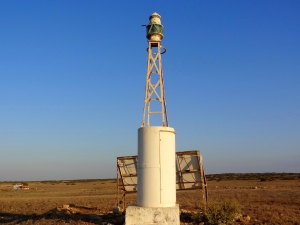
At the west part of Chrissi islet you will meet the small lighthouse, powered by photovoltaic panel. The lighthouse is located close to the small chapel of Agios Nikolaos (Saint Nicholas) and the dried lake of the island.

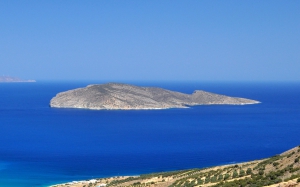
Psira is a small uninhabited islet located 1 mile north of Tholos beach, situated at the northeastern edge of the Gulf of Mirabello. In Psira a Minoan settlement of 15-20 acres has been found, being one of the most important sites in Crete.
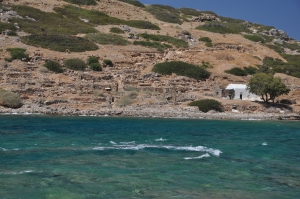
The islet Scoglio de Muflo of the Venetians, which is the island opposite of Mochlos, seems to have been a very important commercial center and port in antiquity till the Byzantine Era. The island, also called Psilos (i.e. Flea) (opposed to a larger island to the west called Psira, i.e. lice) is an archaeological site that still gets excavated.

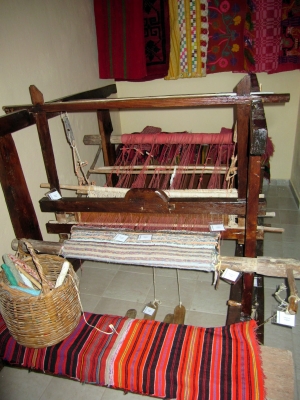
The folklore museum of Metohi - Sgoudiana is located near Korfos beach at Gavdos Island and was founded by the priest Emmanouel Bikogiannakis, who collected all Gavdian day life tools, agricultural and shipbuilding equipment, traditional costumes, household items, etc.

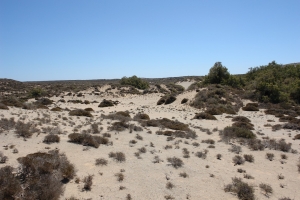
The desert region bears the place name Elia by a centuries-old olive tree, the only tree in the area and is one of the 4 total olive trees (!) that we meet throughout the island. The existence of this secret desert does not seem in any beach of the island shows how close the island is located to the African climate and continent.

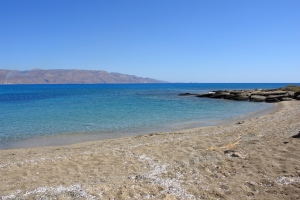
Within walking distance from the sea, on the north coast of Koufonissi islet, we meet the scenic chapel of Saint Nicholas, the patron saint of the sailors. Here several sandy beaches are formed.
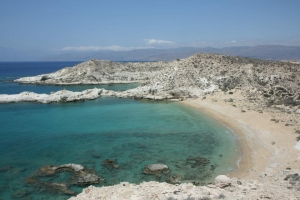
Southwest of the Roman theater of Lefki, the two beautiful beaches of Papaloukas are formed, Ano (upper) and Kato (lower) Papaloukas.
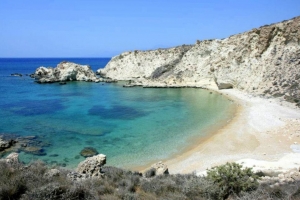
On the west coast of Koufonissi, in the area where we meet the characteristic white clay of the island, the beautiful beach of Akritamos is formed.
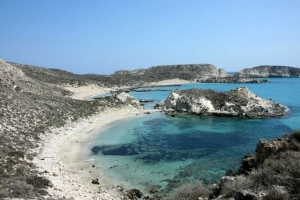
At the southeastern tip of the island Koufonissi, between the beach of Hiliaderfia and the narrowest part of Trahilas Cape (called Diakofti), we meet the location called Halasma.
Also read:
- Home
 Beaches
 Nature
 Past
Past Destinations
 Highlights
 West Crete
- Central Crete
- East Crete
- Towns
- Chania Prefecture
- Chania
- Paleochora
- Kissamos
- Georgioupolis
- Chora Sfakion
- Loutro
- Rethymnon Prefecture
- Rethymnon
- Agia Galini
- Plakias
- Spili
- Anogia
- Heraklion Prefecture
- Heraklion
- Hersonissos
- Malia
- Matala
- Agia Pelagia`
- Archanes
- Kokkinos Pirgos
- Lassithi Prefecture
- Agios Nikolaos
- Elounda
- Sitia
- Ierapetra
- Makrigialos
- Palekastro
- Zakros
- Lassithi Plateau
- Get Prepared


