







 Gate of Saint Andrew (Agios Andreas)
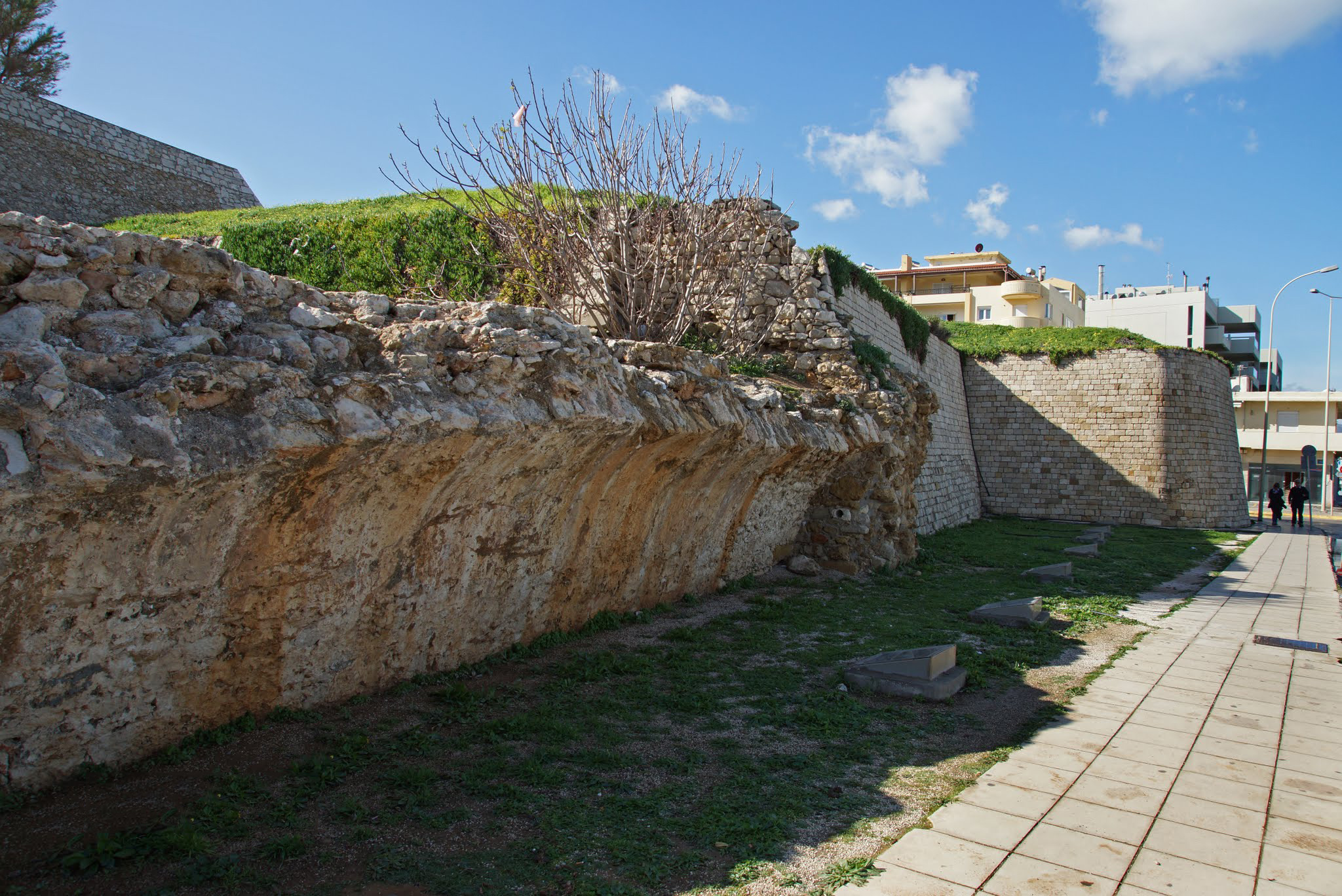
The Gate of Saint Andrew stood at the northwestern end of the Venetian Walls of Heraklion, close to the bastion of the same name and to the point where the land fortifications met the seaward wall. It was a military sea gate and, like the bastion, took its name from a nearby church dedicated to Saint Andrew.
The Bastion of Saint Andrew, originally known as the Bastion of the Holy Spirit, was one of the most vulnerable sections of the fortifications. Its position beside the sea, the rocky terrain and certain structural weaknesses made its effective defence particularly difficult.
During the final years of the Siege of Candia, the bastion was subjected to fierce assaults, artillery bombardments and extensive Ottoman mining operations. In September 1668, the besiegers opened a major breach in the fortifications, while fighting in the area continued until the end of the siege.
Following the capitulation of Candia in 1669 and the evacuation of the city by the Venetians, the Ottoman forces entered through the Gate of Saint Andrew. The gate consequently became known during the Ottoman period as Yürüş Kapısı, meaning the “Gate of Assault”. It became symbolically associated with the end of Venetian rule in Crete after one of the longest sieges in recorded history.
In the early 20th century, most of the Gate of Saint Andrew was demolished to make way for Heraklion’s coastal avenue. Only the southern section of its arched passage can still be distinguished, incorporated into the surviving end of the Venetian fortifications.
.jpg)


What is near me?
Additional Info
- Location: Heraklion Prefecture
- Peak Period: Venetian Era (1204 AD - 1669 AD)


