








 Panagia Akrotiriani Monastery and Tobacco Factory
During the Venetian period, the Orthodox nunnery of Panagia Akrotiriani stood in the district of Agia Triada, behind the former vegetable market of Heraklion. Venetian sources refer to it as the Monasterio Greco Madonna Acrotiriani. It was a dependency of the Monastery of Panagia Akrotiriani, today known as Toplou Monastery, near Sitia.
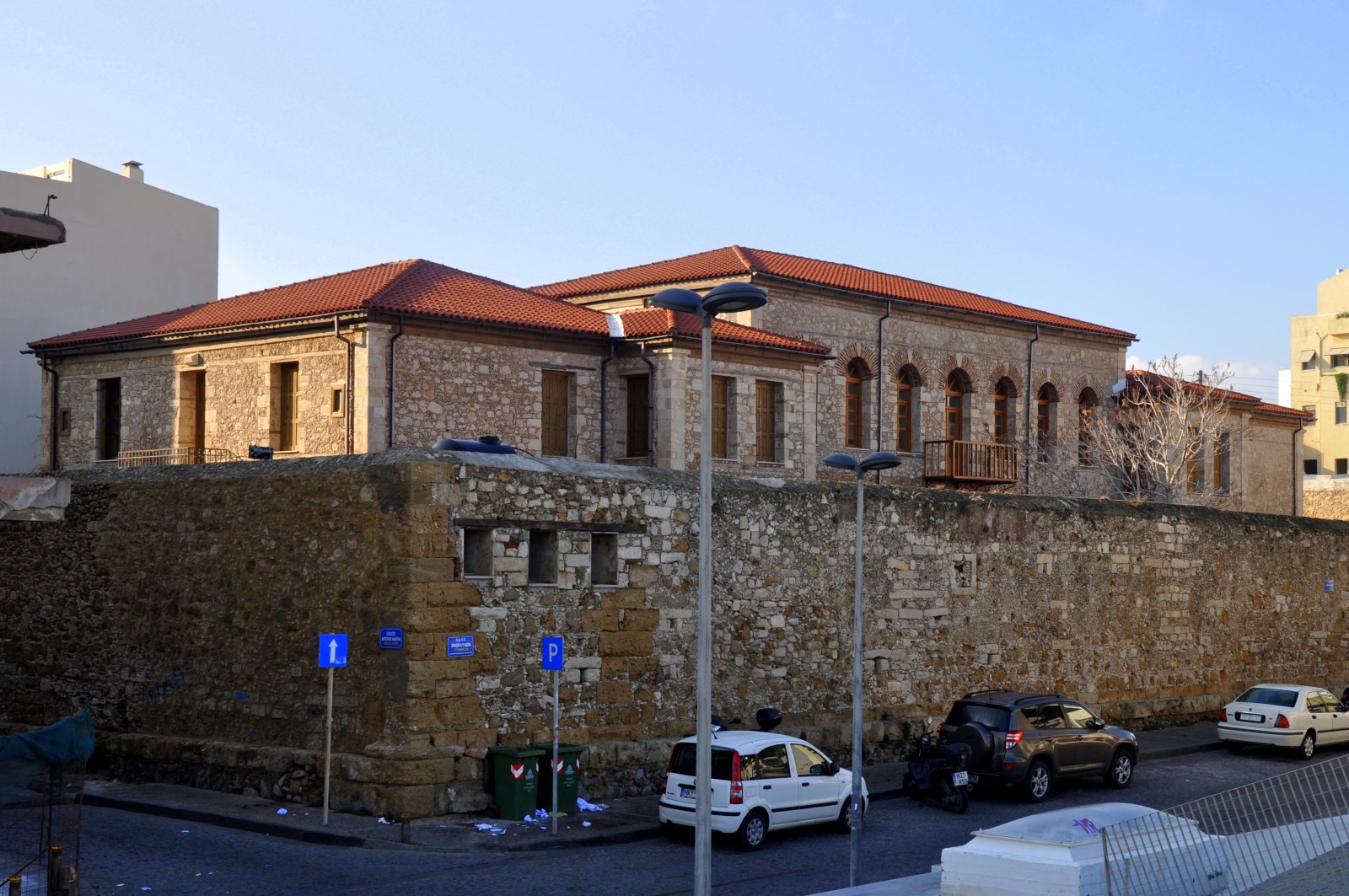
The dependency was probably founded in the early 16th century, while its presence is securely documented during the first half of the 17th century. The monastic complex was surrounded by a high and strongly constructed enclosure and appears as an important landmark on Venetian maps of Candia.
According to a source dating from 1671, the monastery’s principal church was dedicated to Saint John the Theologian, while a second church was dedicated to Saint Peter. Archaeological investigations beneath the later building have identified remains of the monastic complex, including structures associated with its main church.
Following the Ottoman capture of Candia in 1669, the monastery was demolished and a barracks for the local, or Yerli, Janissaries was erected on its site. Its construction is associated with the Ottoman official Turnacıbaşı Ahmed Agha. A small mosque and an Ottoman bath were also established within the complex.
After the abolition of the Janissary corps in 1826, the building acquired several different functions. It was used as a hospital and later as a Muslim orphanage and technical school for orphans. During the period of the autonomous Cretan State, it housed the Tobacco Revenue Office.
The complex was subsequently converted into a tobacco-cutting and processing factory. This use was connected with the cultivation and trade of tobacco in Crete during the 19th and early 20th centuries. The present Church of Agia Triada and the district’s primary school were also constructed in the surrounding area.
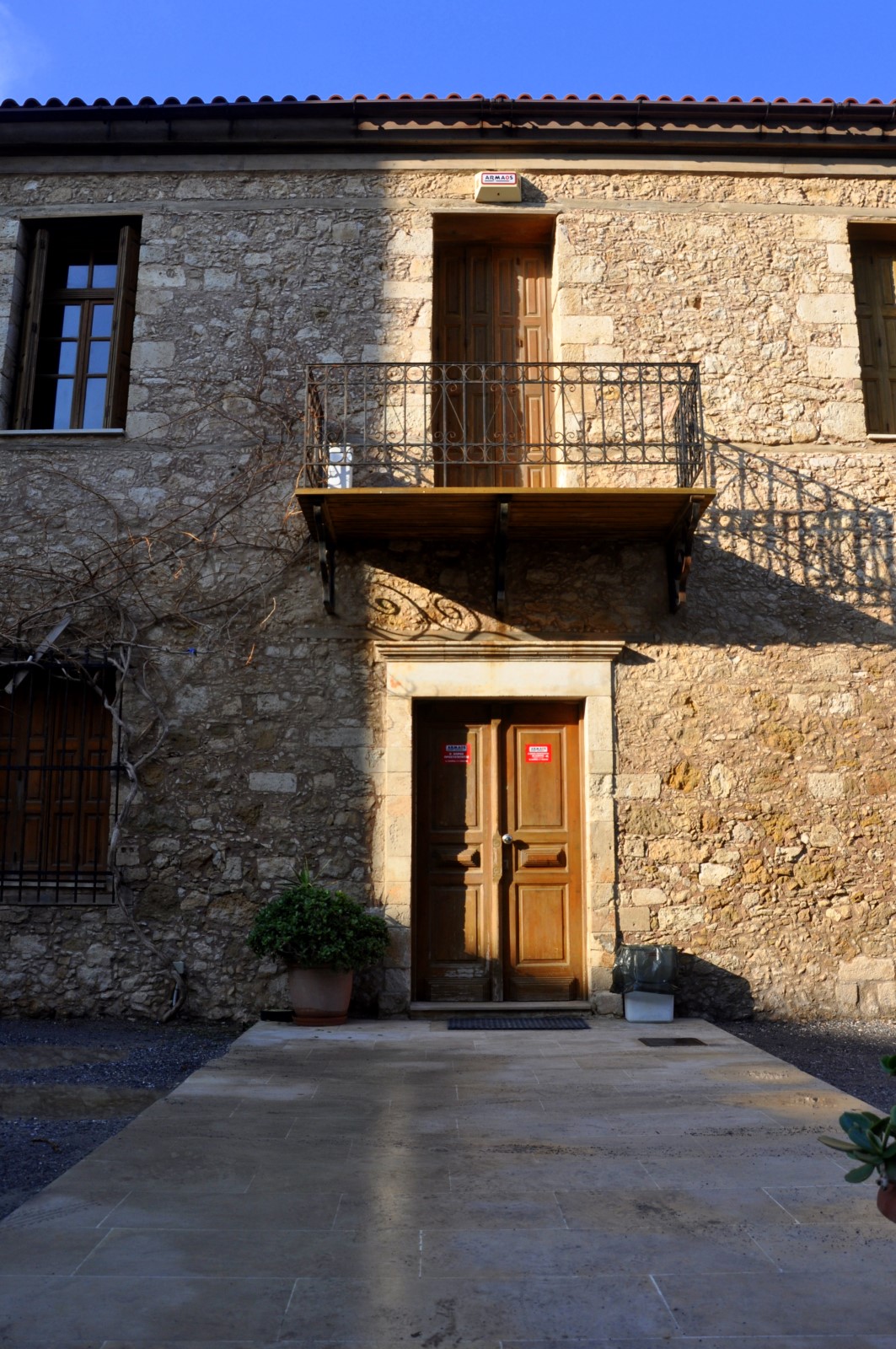
The surviving building is therefore principally an Ottoman structure with numerous later alterations, rather than the original Venetian monastery. It was restored by the competent Ephorate of Byzantine Antiquities and now houses services of the Ephorate of Antiquities of Heraklion.
Earlier plans envisaged converting the restored building into a Byzantine Museum. The museum, however, has not opened, and the complex is not currently operated as an organised public museum.


What is near me?
Additional Info
- Location: Heraklion Prefecture
- Accessibility: Paved road
- Peak Period: Venetian Era (1204 AD - 1669 AD)


