








 Tripiti Minoan settlement

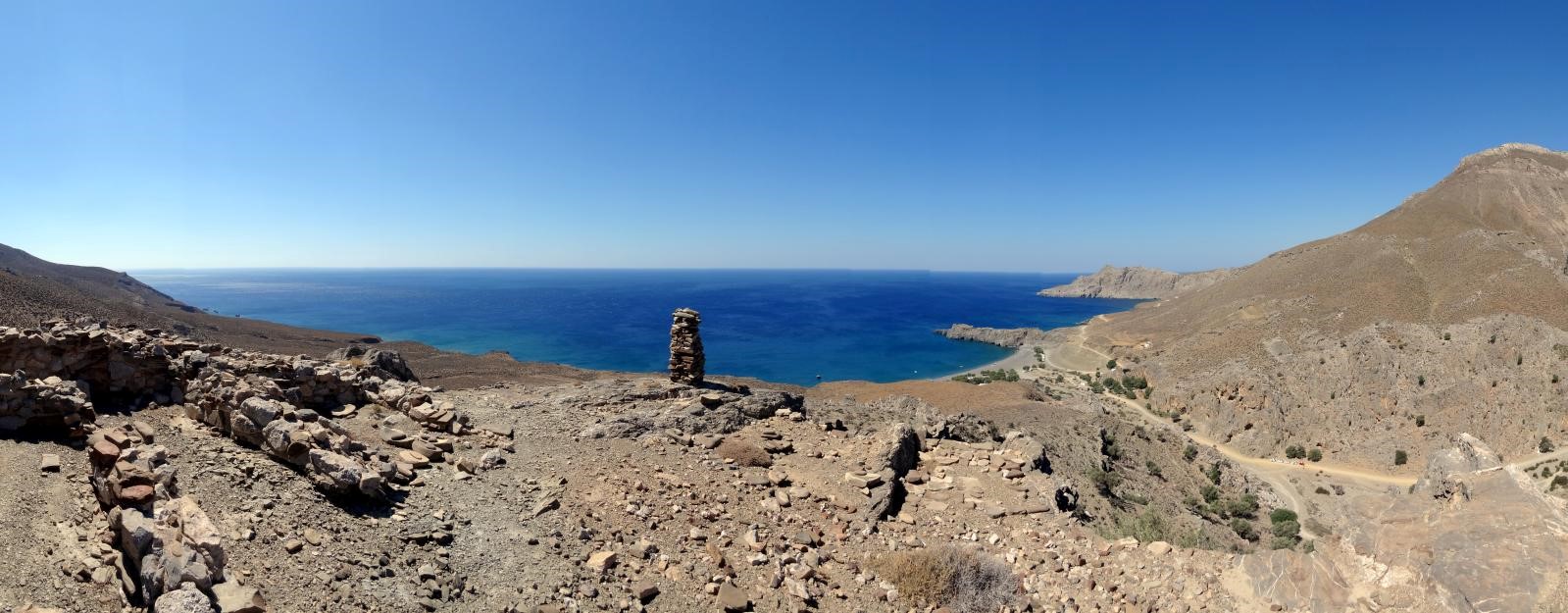
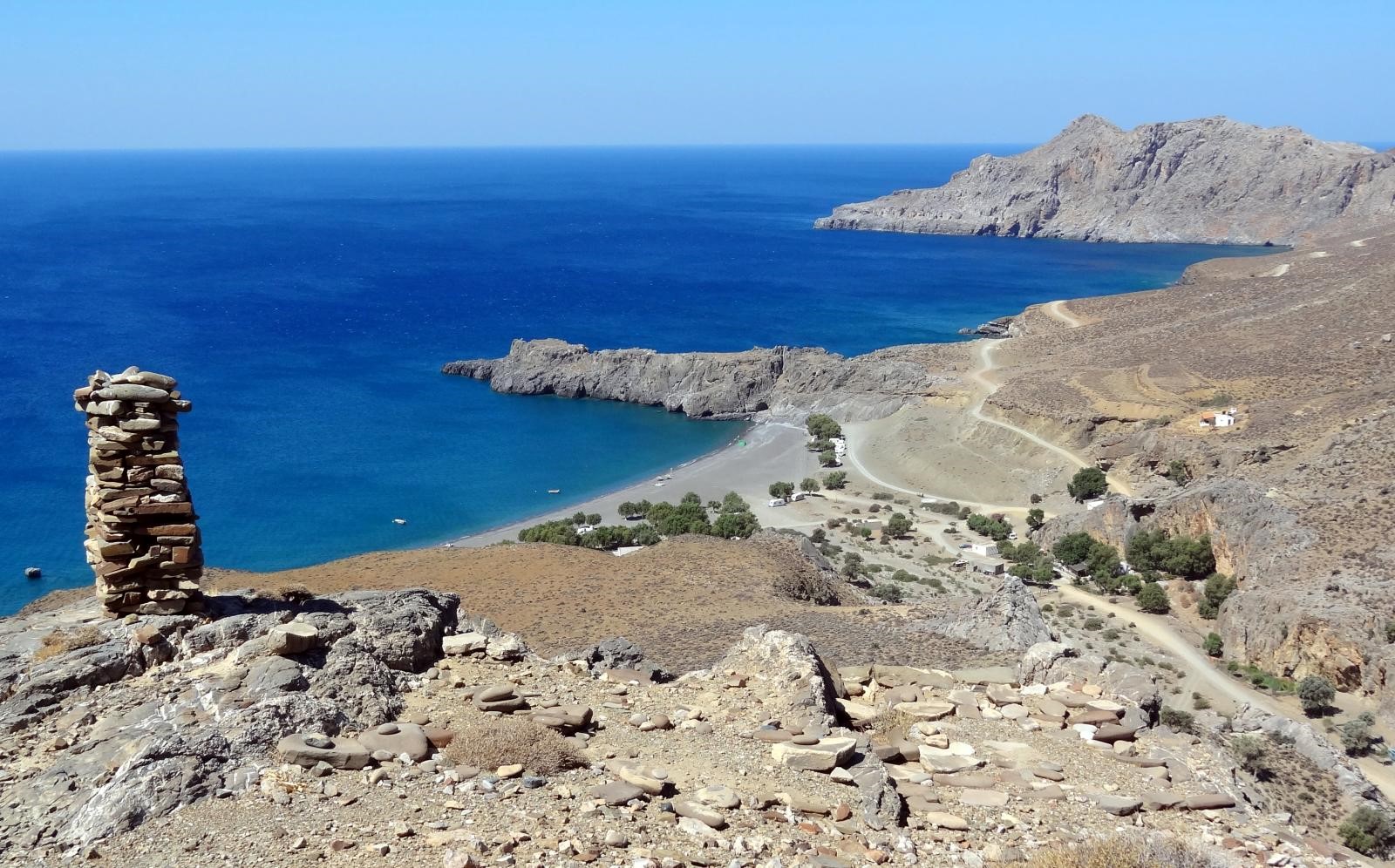
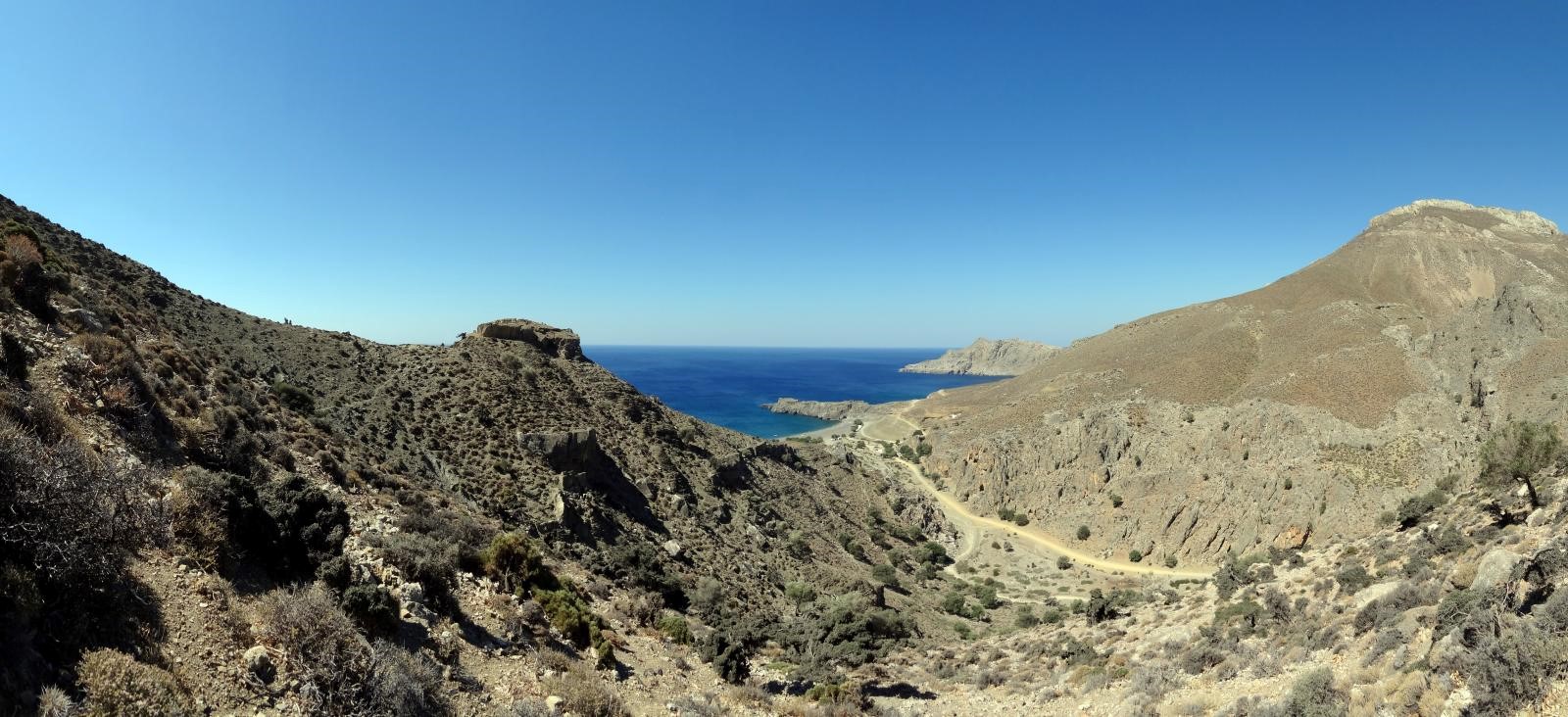
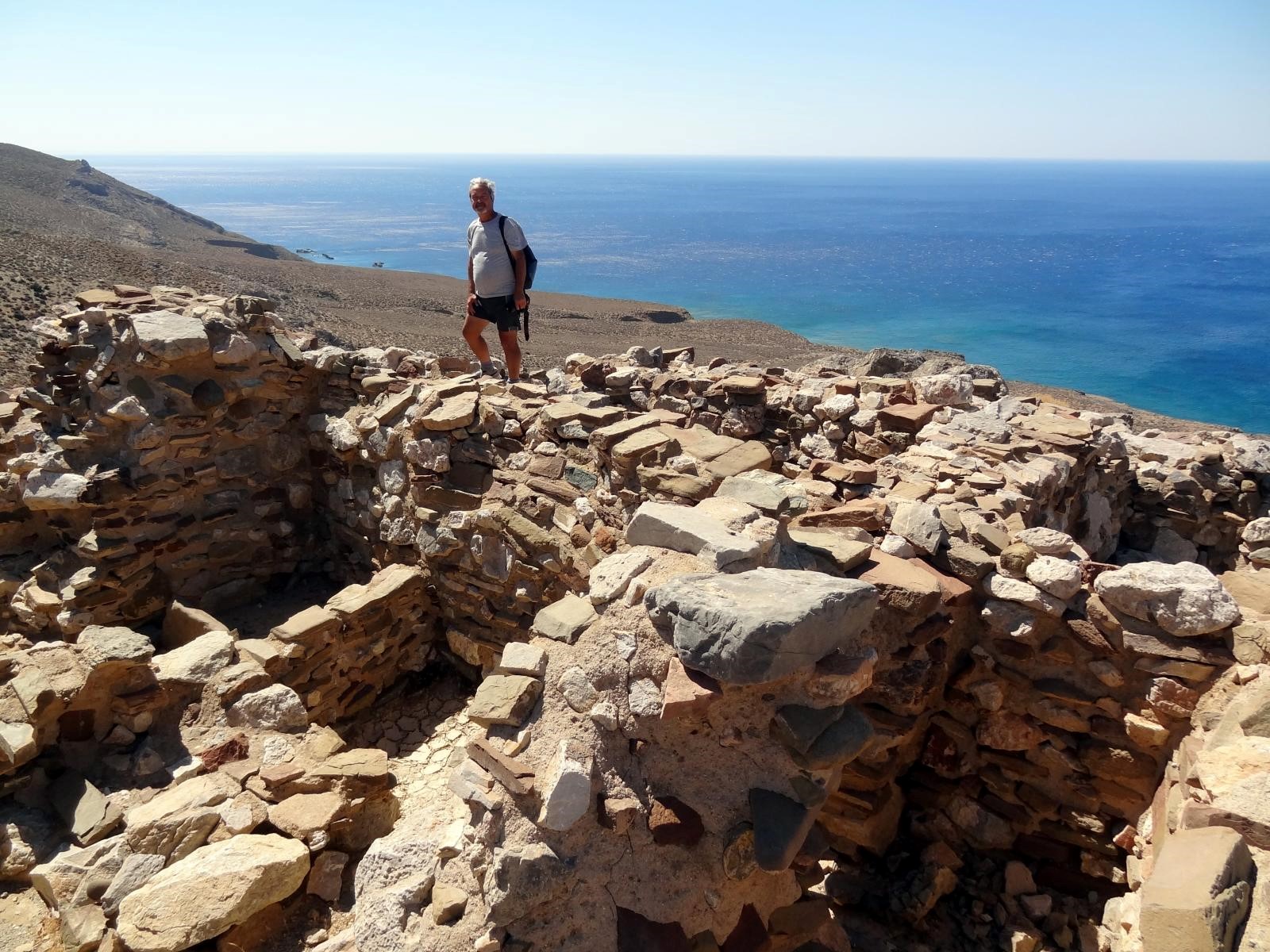
On the rocky hill of Papouri, also known as Adami Korfali, in the area of Kalokambos, east of Tripiti Gorge, lies one of the most important Early Minoan settlements discovered in Crete. It was built at an altitude of approximately 135 metres in the Asterousia Mountains, with panoramic views of the Libyan Sea and Tripiti beach, which lies about 800 metres away.
The settlement was inhabited during the Early Minoan and the beginning of the Middle Minoan periods, approximately during the 3rd millennium BC. Systematic excavations began in 1986 under archaeologist Antonis Vasilakis and continued until 1991, revealing a small but remarkably well-organised village that provides valuable information about the lives of the early Minoans.
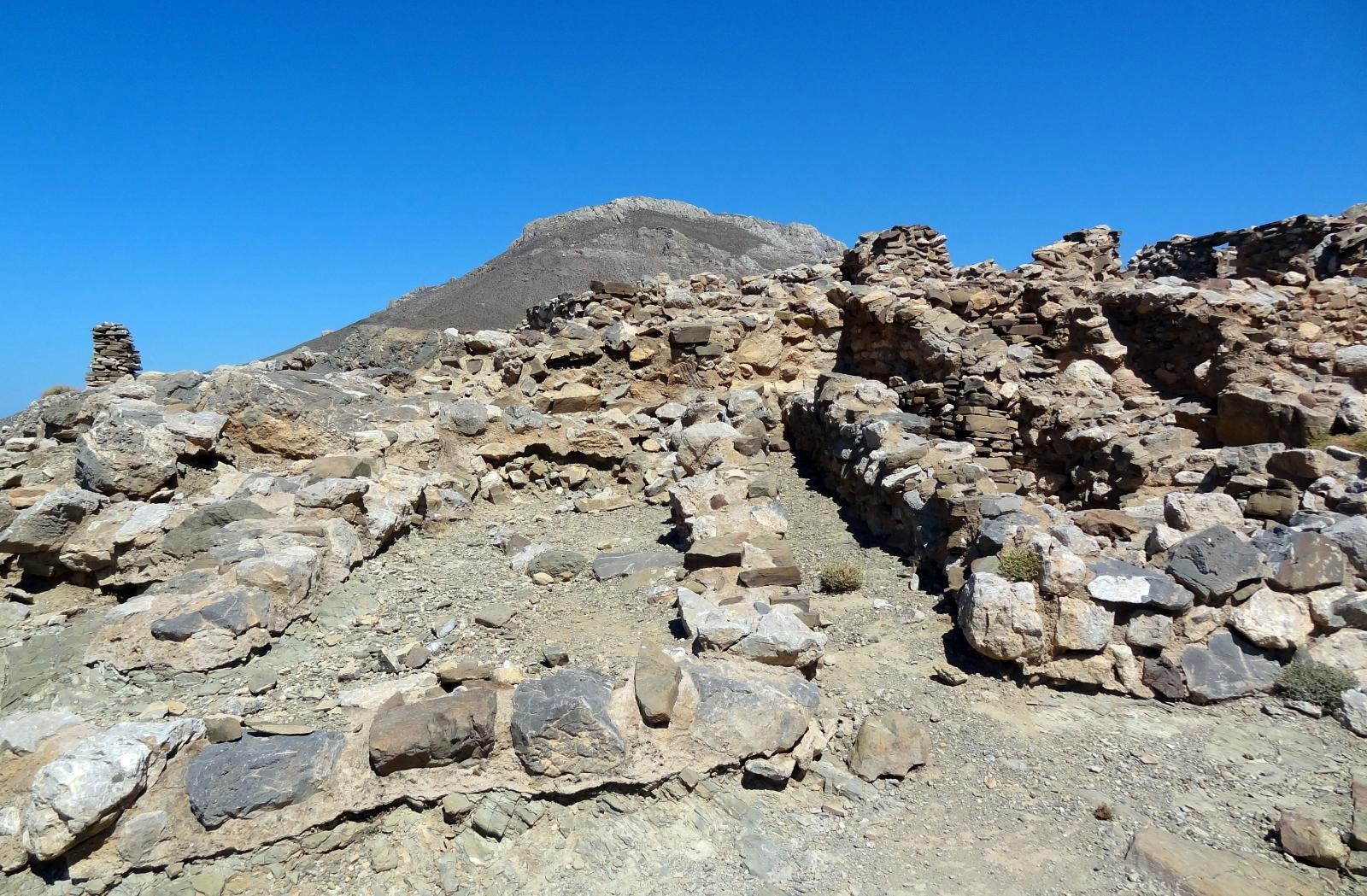
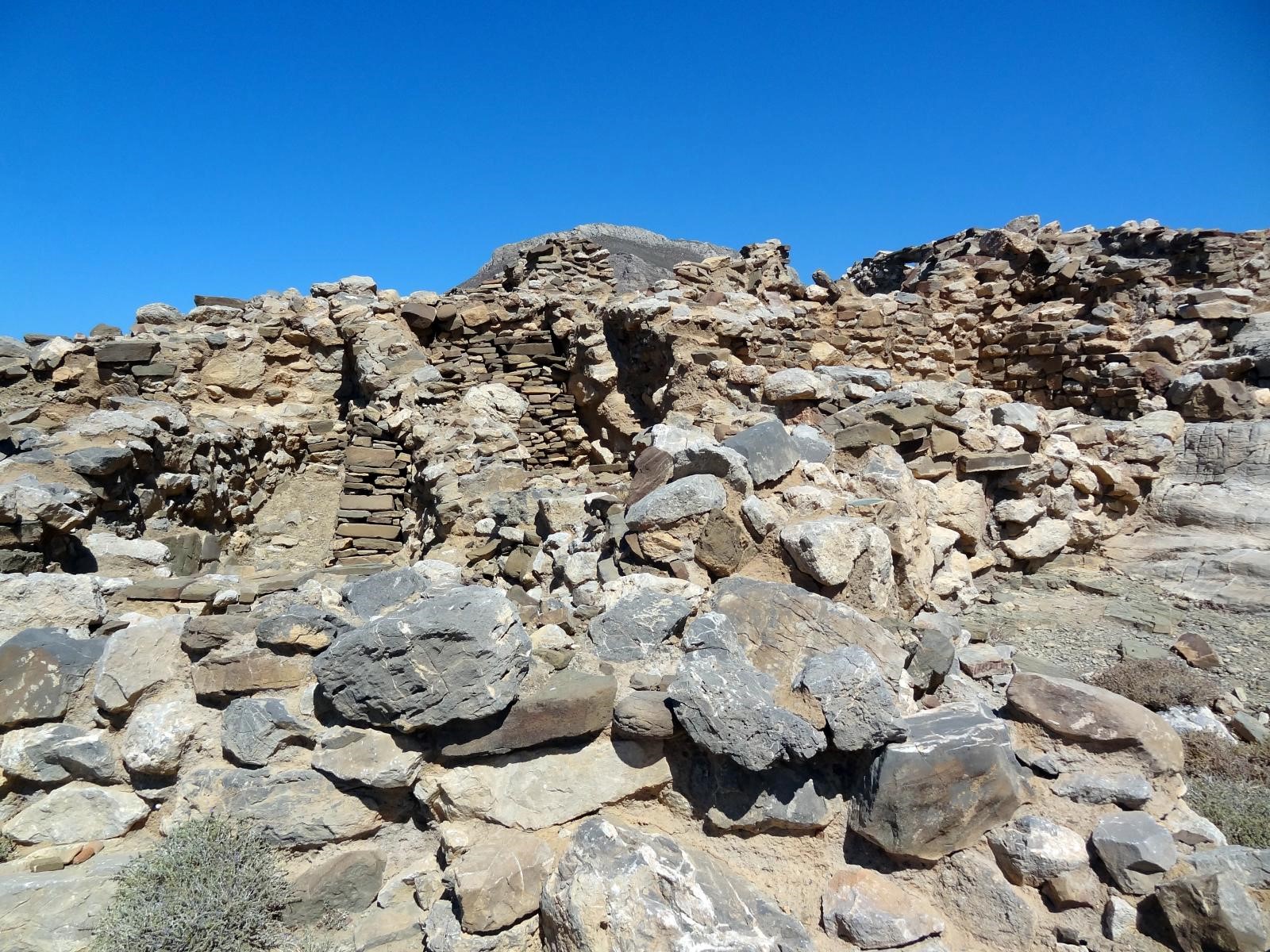
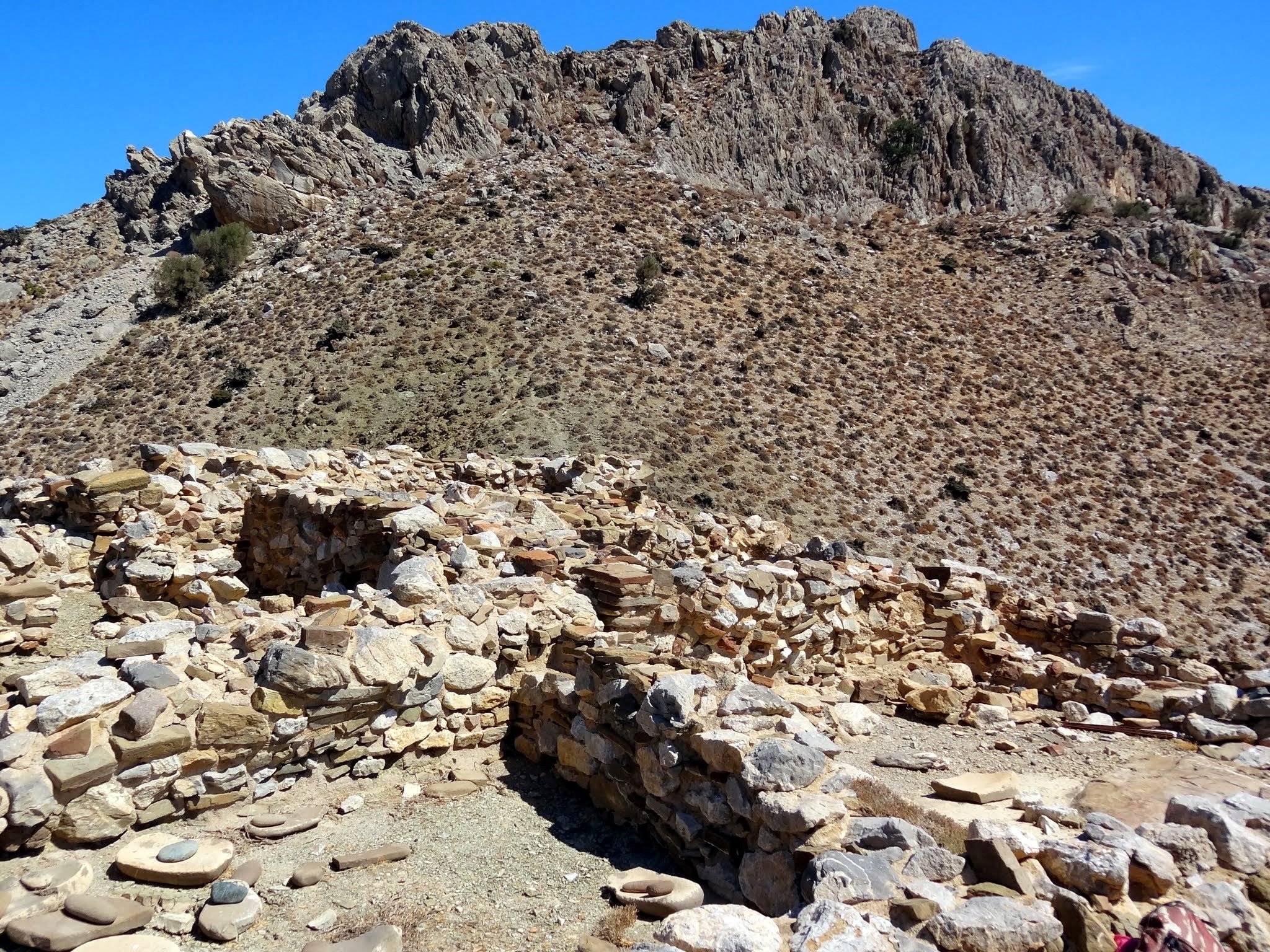
The village was built on the summit of the steep hill, which offered natural protection, while a nearby water spring and the cultivable land of the surrounding area favoured permanent habitation. A central street divided the settlement into two sections, with the houses built closely together. Seven houses containing a total of 36 rooms and other auxiliary spaces have been uncovered, while in some places the stone walls survive to a height of approximately 2.5 metres.
The houses were single-storey structures built of unworked stone and mud, with flat roofs made of timber, branches and earth. Their interiors contained cooking areas with hearths, built-in benches, storage recesses and stone pillars supporting the roofs. Some of the houses also had low mezzanine floors. Archaeologists estimate that approximately 30–40 people lived in the settlement, organised into small family groups.
The inhabitants were mainly engaged in agriculture, livestock farming, fishing and other everyday activities. Excavations uncovered charred seeds, animal bones, shells, clay vessels, stone and bronze tools, as well as blades made of obsidian from the island of Milos. Particularly notable finds include stone millstones used for grinding grain, vessels for carrying and storing water and food, clay seals and small beads made of various materials. These discoveries reveal an organised community that exploited the natural resources of the region and maintained contacts with other parts of the Aegean.
South of the settlement, at the site of Kalokambos, an important Minoan tholos tomb dating to the Early Bronze Age was also discovered. The tomb had a circular ground plan, was built of large stones and featured a trilithic entrance. Human bones, pottery fragments, beads and a small number of bronze blades were found inside it.
The Minoan settlement of Tripiti is one of the most interesting archaeological monuments in the Asterousia Mountains, as it preserves evidence of the everyday life of a small community that flourished approximately 4,500–5,000 years ago. Its location between the steep mountain slopes and the South Cretan Sea also provides a remarkable picture of the relationship between Crete’s earliest inhabitants and their natural environment.
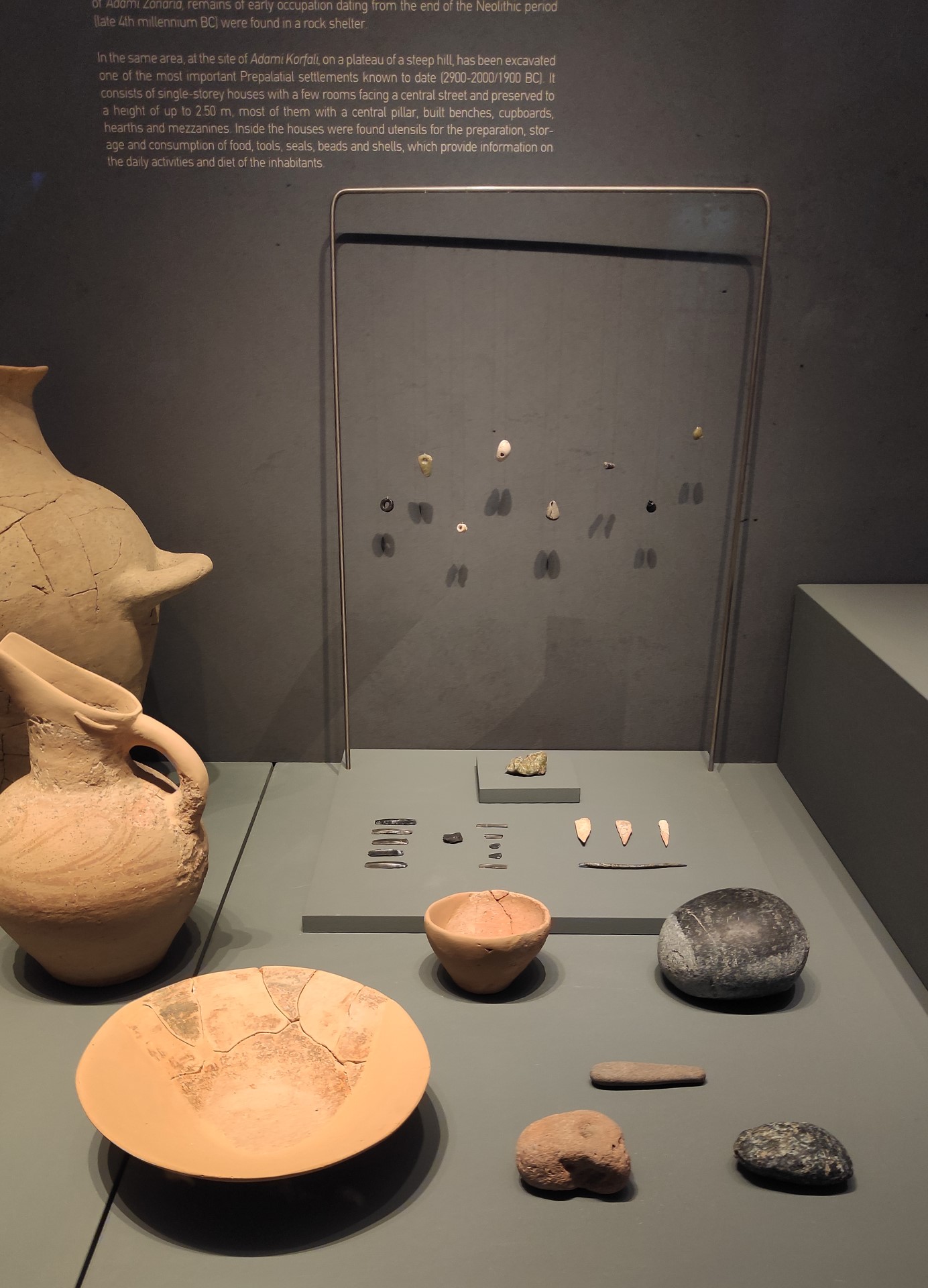
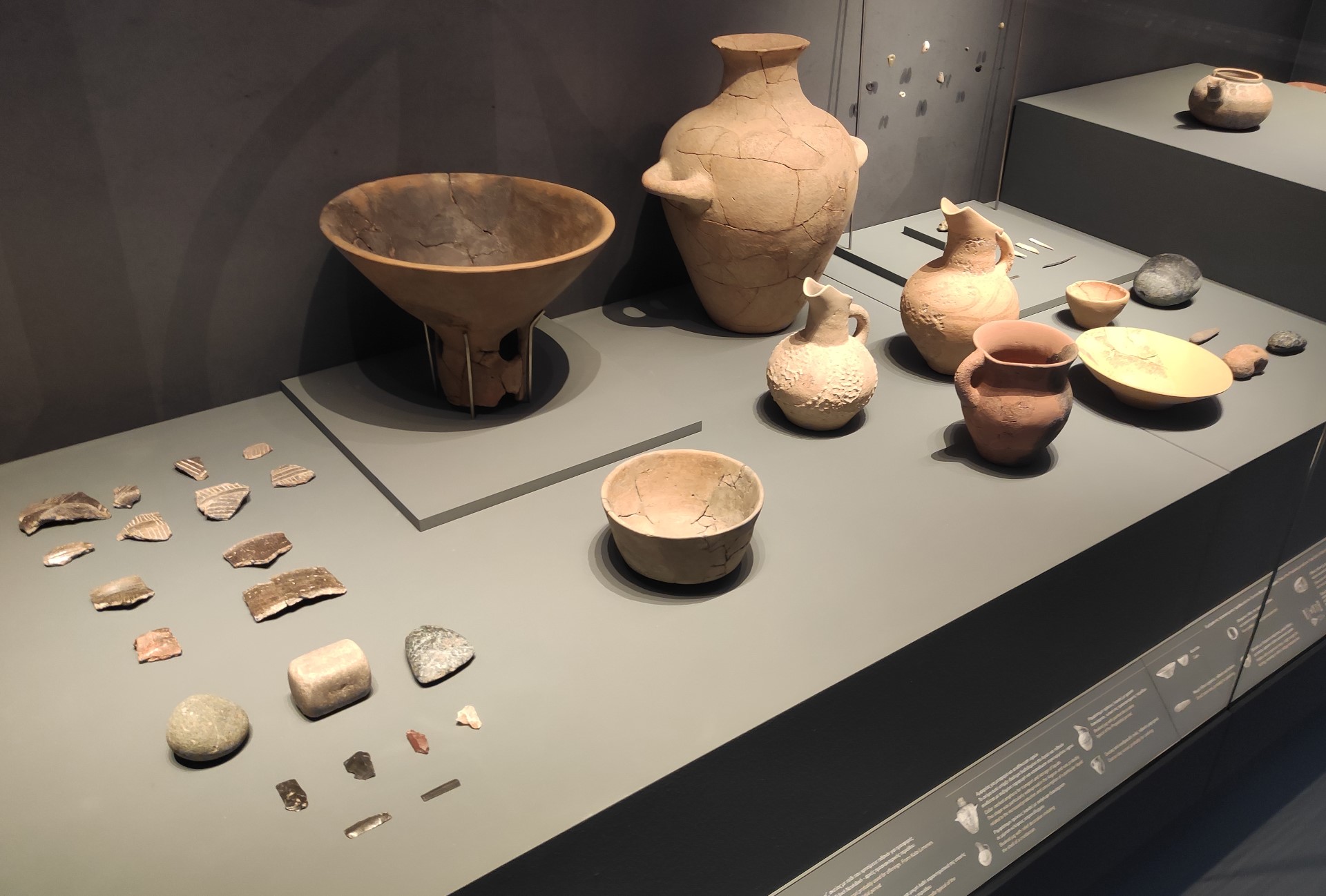
 found in tomb at Kalokambos, Tripiti, exhibited at Messara Archeaological Museum.jpg)


What is near me?
Additional Info
- Location: Heraklion Prefecture
- Type: Ancient Settlement
- Accessibility: Walking
- Peak Period: Minoan Era (3000 BC-1200 BC)


