


• Home
  • ⭐ Travel Guide for Island Crete ⛵, Greece❗ - Φαγητό

The multicultural and distant past of Crete is reflected in all aspects of modern Cretan people, such as language, dance, music, food, arts and crafts.

Folk tradition of Crete constitutes an inexhaustible contemporary cultural entity with customs, materials, spiritual features and ancient habits that have formed the core of the modern Cretan life over the years.

The Cretan dialect is considered the oldest in Greece and has been a subject of study and research. Dozens of words have ancient or archaic origin or come from linguistic influences from Arabs, Venetians and Ottomans.

  • The character of Cretans is generally hardened by the difficulties of life. However, they are always authentic, smiling and they love sharing their feelings and hospitality with their guests.

    The Greek word for hospitality, philoxenia, derives from the words filos (friend) and xenos (stranger) and means to become friend with the stranger.

    Cretans are the genuine descendants of the Cretan-born Zeus, the god of gods, humans and hospitality. Indeed, Cretans are famous for their hospitality, induced solely by respect for their fellow men.

    Most locals will offer you a shot of raki when you ask for directions at any village.

  • Myths Crete is inseparable from myths and legends, which stem from its ancient past. In Crete, Rhea gave birth to Zeus, the most important god of antiquity, father of the gods, people and hospitality. The Diktaean and Idaean Caves are connected to his birth and upbringing.

    Later, Zeus in the form of a white bull, abducted the beautiful nymph from Phoenicia, Europa, and moved her to Crete. They mated below the evergreen plane tree of Gortys, which is still alive. Afterwards, Europa gave birth to Minos, the king of the first brilliant European civilization, the Minoan, and therefore, the continent was named Europe.

    It was Crete where for the first time the ingenious craftsman Daedalus, designed and built the famous Labyrinth, where the monstrous Minotaur was imprisoned. Later on, Daedalus ignored the law of gravity and escaped Crete by flying away with his son Icarus. In the dark Labyrinth, Theseus killed the Minotaur and found the exit by following the thread of Ariadne.

    Crete was guarded by the bronze giant Talos, the first robot in mythology. Talos wandered around the island three times a day and protected it from invaders, but it was exterminated by the Argonauts.

    Even today there exist are legends with the most famous ones being Drosoulites, shadows that walk at the break of dawn between May and June outside the fortress Fragokastello. These are the souls of soldiers who lost their lives there.

  • The island has a long and rich musical tradition with deep roots in antiquity, strongly influenced by the Byzantine music and enriched by the musical culture of the wider eastern Mediterranean. During feasts and celebrations, locals and visitors get involved with the special musical culture of Crete.

    Cretan music is considered the most vibrant in Greece, because it not only it continues to evolve and incorporate creative contemporary musical features, but it also manages to express modern reality.

    Improvisation is one of the characteristics of Cretan artists. Musicians are not limited to repeating basic melodies, but enrich their playing with improvisations that accompany dancers, who in turn spontaneously contrive new moves.

    Mantinades, small poems, reflect the emotions of Cretans and express sorrow, love and any feeling that arises from the sensitive Cretan soul. One of the most impressive “scenes”during a typical Cretan feat, is when two or more improvisers exchange mantinades for hours.

    Hugged men in West Crete sing the rizitika (rebel songs), some of the most primitive samples of musical and poetic tradition.

  • Greek dances and music first appeared in Crete, where the mother of the Gods, Rhea, taught them to Curetes who venerated her. The most famous Cretan dance was the Pyrrhic. Very famous throughout Greece, Cretan dances are echoes of the dances of the Curetes.

    Traditional Cretan dances are danced by men and women, who wear their wonderful Cretan costumes in formal events. They are either fast or slow, but always vivid and imposing. When danced by groups of men, they remind of the war dances of Curetes.

    With the lyre or the violin as a guide, accompanied by the lute and rarer instruments, such as the bulgari, the askomandoura or the thiamboli, dancers present the complex steps and the first of the cycle, usually a man, performs skillful dance movements called talimia.

    Each area of the island has its own traditional dances, most of which retain the primitive circular pattern. Main dances are pentozalis, kastrinos, pidichtos, sousta, siganos and syrtos.

    The famous melody of Zorbas is based on an old version of the Cretan dance syrtos.
  • Cretans have always loved arts and events, through which they can come into contact with their social environment and share their emotions.

    On summer nights, various cities of the island organize art exhibitions and festivals of theater, music, film and dance. Concerts are performed in stadiums, archaeological sites, on the Venetian walls of Heraklion and Chania or in small theaters in the countryside.

    The religious celebrations are always framed with Cretan music and dance in at village squares or near the churches, reviving customs of the Minoan ages.

    There are many events that have been associated with local products and are always an occasion for a big celebration. Feasts of potato, raki, zucchini, bread, wheat, wine, cheese, snail, cherry and apple include free tasting of the traditional products of each region.

    When winter arrives, celebrations do not stop. Groups of friends gather in kazania (raki distilleries), where the rite of distilling raki soon turns into a traditional feast with dance and music.

  • Major cities of Crete are home to impressive architectural structures, mainly from the Venetian and the Ottoman Era. Forts, scenic harbors, palaces, fountains and temples are the main attractions of the cities. On the other hand, the interesting attractions in the hinterland include arched bridges, water and wind mills, aqueducts, cisterns and chapels.

    Venetian and Ottoman architectural patterns, combined with features of folklore architecture, are evident in contemporary houses. Arched gates since the Venetian era, and sahnisi (protruding covered balcony) since the Ottoman era, are some of the features used even today.

    The traditional rural house is an evolution of the prehistoric home dwelling; it is constructed with stone, branches and soil, while wooden beams support the roof. To the interior, there is space for animals, while the main features include a stone-built wine press covered by with a wooden platform, a fireplace for cooking and heating, and some niches in the walls for storing household utensils.

    Some of the most interesting traditional buildings, perfectly adapted to the needs and particularities of the mountainous areas of Crete, are mitata. They are round domed buildings, made solely of dry stone, being an evolution of the domed Minoan tombs. Mitata provided shelter to shepherds and were used for milking goats and cheese-making. They are met in all ranges of Crete, but Nida plateau by Anogia is the most famous place to come across such constructions.

  • Travelers of Crete can visit very interesting art collections and exhibitions throughout the year. Temporary exhibitions of painting, photography and other forms of art are frequently hosted in galleries in Heraklion, Chania, Agios Nikolaos, Panormos and other towns. It is worth mentioning the southernmost gallery of Europe which is housed at Keratokambos and the museum of engravings, named Xotaris, in Arhanes.

    Museums and art galleries with permanent collections of utmost importance include the Museum of Visual Arts in Heraklion, the Art Factory Eleourgion in Dromonero, the Museum of Contemporary Art in Rethymnon and more. Important collections of wood and stone sculpture operate in Axos, Asteri, Venerato and Marathos. There is also a Wax museum in Zoniana.

    Museums and collections that highlight the life and work of great Cretan authors, artists and politicians are met all over the island. Venues associated with the life and work of the national leader Eleftherios Venizelos are open to visitors. These include the house where he was born in Mournies, his house at Halepa, the Historical Museum in Therisso and the Museum of Venizelos at the village Agios Georgios. A very interesting museum dedicated to the great author Nikos Kazantzakis operates at his birthplace, Myrtia. Moreover, visitors can visit the house, where the great Cretan painter El Greco is believed to have been born in Fodele, and the Gate Bethlehem at the Walls of Heraklion, where objects used for the film El Greco are exposed. Lastly, Viannos houses a museum dedicated to the author Ioannis Kondylakis.

  • Limited water resources in Crete, due to its geographical position, forced its inhabitants to construct colossal projects for water supply in cities. Even today, the surviving parts of the long aqueduct of Lyktos, that brought water to ancient Hersonissos, and the giant Venetian aqueduct, which brought water to the center of Candia (the contemporary city of Heraklion) from springs in Arhanes and Skalani, are awe-inspiring.

    In major cities, water was provided through elaborate fountains, with the most famous being the surviving Morosini Fountain in the center of Heraklion. In many areas of Crete where water is scarce, such as the north mountainous part of the province Mirabello, large cisterns and wells are still used.

    Although rivers in Crete are mainly seasonal, visitors will be impressed by some of the most beautiful stone bridges in Greece. The most famous is the arched bridge of Preveli. The ancient bridges of Eleftherna, built in the ekforic system, and Elliniki Kamara (Greek Bridge) at Vrysses have are of great archaeological importance.

    In western Crete, where rainfalls are quite frequent, water mills were used for grinding grain. However, in drier Eastern Crete residents used the wind for their needs. Indeed, many clusters of windmills, called milotopi, are met in most places, especially at northern Mirabelo. The windmills of Ambelos at Lassithi Plateau form the largest milotopi in Greece. Apart from grinding grain, the need for pumping water to irrigate crops at the plateaus of Lassithi and Ziros inspired the construction of lightweight metal windmills that pumped water from wells.

    About 12.000 metal windmills operated in the middle of the previous century at Lassithi Plateau, forming the first wind farm in the world with estimated installed power of 5MW.

1 1 1 1 1 1 1 1 1 1 Rating 5.00 (3 Votes)
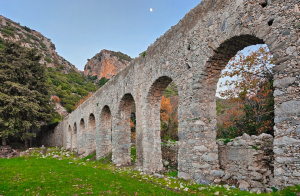
Potamida Watermill

In the village Potamida, province Kissamos, lies the Kalogridis family watermill. The watermill was restored in 2013 by the locals and became operational again. The locals in the past used to bring their cereals to the watermill. Then, with the help of water, the millstones turned the mill, producing the precious flour.
Read more ...
1 1 1 1 1 1 1 1 1 1 Rating 5.00 (1 Vote)
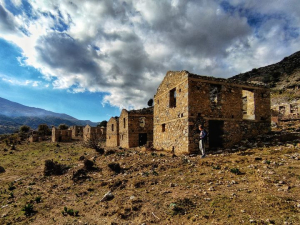
Simas bridge

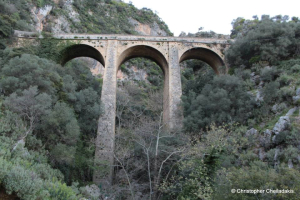
The bridge of Simas in Prasses, Rethymnon is the highest stone built bridge in Crete and is a construction miracle for the time it was built. It is located on the south side of Vrysinas Mount.

Read more ...
1 1 1 1 1 1 1 1 1 1 Rating 5.00 (1 Vote)
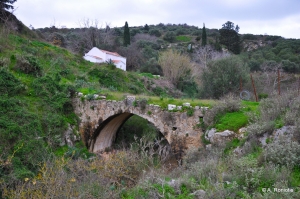
Nea Vorizia

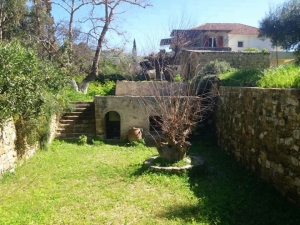
Just before reaching the village Vorizia and below Vrondissi Monastery, we come across a weird abandoned settlement with ten identical stone houses, without roofs. This settlement is linked to the history of Psiloritis massif.
Read more ...
1 1 1 1 1 1 1 1 1 1 Rating 5.00 (1 Vote)
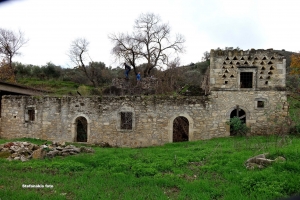
Sambathiani Kamara Bridge

This is a small stone bridge that connects the two sides of a small canyon that locals call Sambathiano Chavgoudaki (small gorge of Sambas). Next to the bridge there is the church of Agios Mamas.
Read more ...
1 1 1 1 1 1 1 1 1 1 Rating 5.00 (1 Vote)
Gerontomilos Watermill at Phaestus

On the road that connects village Vori with the palace of Phaestus and next to the banks of river Geropotamos, we meet the ruined watermill of the area that locals call Gerontomylos (old mill). It is said that the area around the mill was a favorite place for the Greek writer Nikos Kazantzakis.

Read more ...
1 1 1 1 1 1 1 1 1 1 Rating 5.00 (1 Vote)
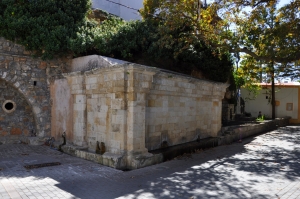
Amariano Fountain

The small village of Amariano in the province Pediada is known for its picturesque alleys, the square with the old plane tree and the traditional coffee shops. In the square there is the old fountain of 1898 and a cistern, where the visitor can drink the water of the spring that comes from the mountain area of Afentis Christos in Dikti Range.

Read more ...
1 1 1 1 1 1 1 1 1 1 Rating 4.00 (4 Votes)
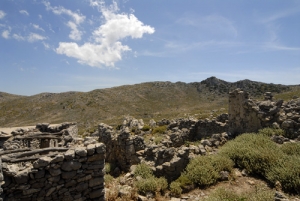
Skalia near Zakros

A small castle was located near the village Sitanos of Sitia Region, namely Skalia. Skalia was a small village with a few residents built atop a mountain slope, where the outer walls of the houses formed a wall that surrounded the village, while from the north it was protected by cliffs.

Read more ...
1 1 1 1 1 1 1 1 1 1 Rating 3.20 (5 Votes)
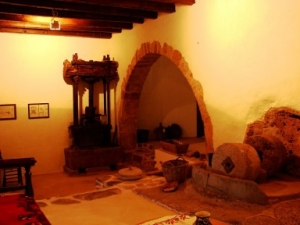
Prinaris Mill

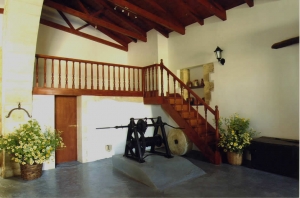
In the central square of the village Chromonastiri is the old oil mill of Prinaris family, fully renovated, with all its old equipment that can work till today.

Read more ...
1 1 1 1 1 1 1 1 1 1 Rating 4.57 (7 Votes)
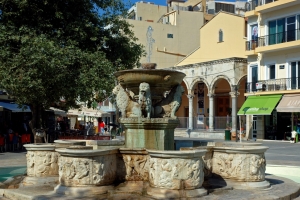
Morozini Fountain

The fountain of Morozini (known as Lions) is one of the nicest Venetian monuments of Candia (current Heraklion). The fountain was watered by the spring of Karidaki and the watered traveled about 15km in a gigantic aqueduct, one of the longest in the then world.

Read more ...
1 1 1 1 1 1 1 1 1 1 Rating 4.50 (2 Votes)
Mikri Episkopi at Partira

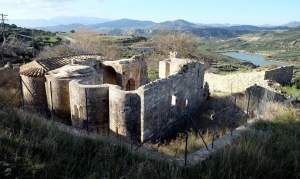
The ruined village Mikri Episkopi (i.e. Small Diocese) is located near Partira and was the seat of the Diocese of Arcadia. As expected, the village hosted an imposing temple, which has now collapsed. Columns and walls testify the importance of the temple.
Read more ...
1 1 1 1 1 1 1 1 1 1 Rating 4.50 (2 Votes)
Ambelos Windmills at Selli

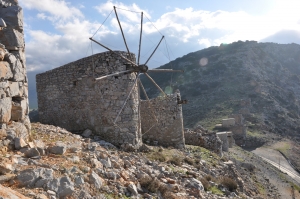
At position Seli Ambelou, at the northern entrance to the Lasithi Plateau, we are welcomed by the most important old windmill park of Crete. Here you still see 24 of the 27 initial windmills, which all belonged to the type Axetrocharis.
Read more ...
1 1 1 1 1 1 1 1 1 1 Rating 3.50 (2 Votes)
Galaropetra windmills at Fourni

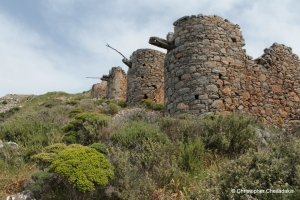
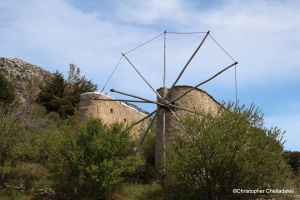
North of Fourni village, Merambelo district, we still meet one of the most impressive windmill park of Crete. There are still standing 13 windmills in a row at location Galaropetra. Others survive in good condition and others have collapsed.
Read more ...
1 1 1 1 1 1 1 1 1 1 Rating 3.25 (4 Votes)
Katakalou Windmills

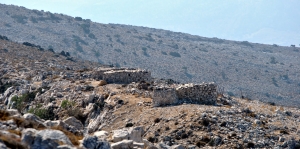
Within walking distance from the ruined village Argiro Nero, between the villages Zenia and Exo Potami we meet the small cluster of windmills of Katakalou. The mills are located in the same residential complex of Katakalou among vineyards and orchards. The mills operated after the destruction of the larger mill park of Zaroma, west of Mesa Potami.
Read more ...
1 1 1 1 1 1 1 1 1 1 Rating 4.33 (3 Votes)
Zaroma windmills

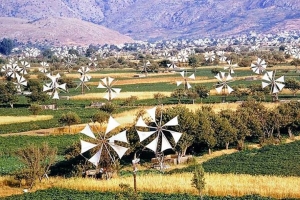
At this point there is a rough unknown windmill group that consisted of 10 mills and operated until May 1867. In these mills, local chieftains had gathered their wounded men during the titanic ten-day battle of Lassithi.
Read more ...
1 1 1 1 1 1 1 1 1 1 Rating 2.96 (12 Votes)
Lassithi Plateau Windmills

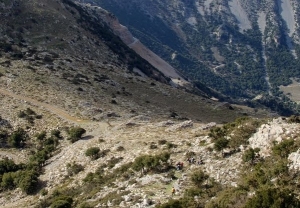
Lassithi plateau hosted, after the 1950s, the first, largest and most beautiful wind farm in the world with approximately 13000 windmills with a total installed power of above 5MW. The windmills operated as pumping engines above the wells of the plain to water the crops in summer.
Read more ...
1 1 1 1 1 1 1 1 1 1 Rating 2.75 (2 Votes)
Asfendami windmills

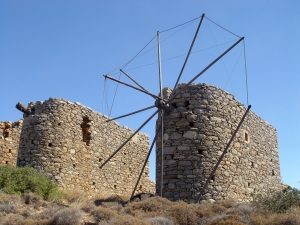
During the battle of Lassithi in 1867, the 10 windmills that stood near Potami village and were mainly used for milling, were destroyed by the Turks. The windmill park was then moved to Katakalou and Asfendami areas, and later moved to the big mill park of Ambelos.
Read more ...
1 1 1 1 1 1 1 1 1 1 Rating 4.33 (3 Votes)
Vrouhas Windmills

One of the large windmill parks of Merambelo district is located at Vrouhas village and consists of nine mills. They all turned only in a certain wind and their type is called Axetrocharis (this has rectangular shape with a round side where the mill is installed). In Crete we meet another type, Xetroharis that is completely circular, turning to all winds.
Read more ...
1 1 1 1 1 1 1 1 1 1 Rating 4.75 (4 Votes)
Elounda windmills

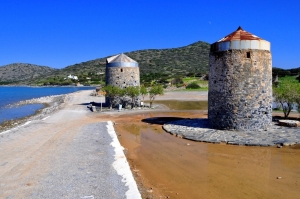
Contrary to the tradition of building mills on mountains, on the seaside of Elounda's ancient saltpans, we meet three windmills, at the scenic point where a canal connecting the lagoon with the south shores has been constructed. They all are completely circular, turning to all winds (this type is called Xetrocharis.

Read more ...

Also read:

Download Free Premium Joomla Templates • FREE High-quality Joomla! Designs BIGtheme.net