








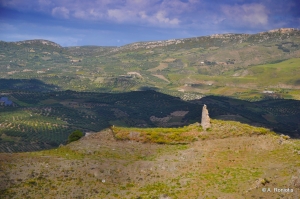
xxxxxxxxxxxxxx
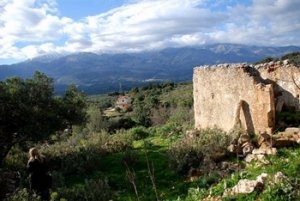
The tower of Aga at Tsifliki is located in a privileged position in Elounda lagoon, on the road leading to Plaka. In fact, the settlement Tsifliki owes its name to this residence, which was the base of the chiftlik (Turkish system of land management) of the region.

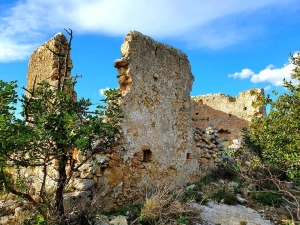
The koule of Kalonyktis is located on the hill of Agiasmatsi on the outskirts of the village of Kalonyktis in the province of Rethymno. This large tower was built by the Ottomans after the Great Cretan Revolution of 1866, being part of the large network of towers - koules - for the control of the Cretan revolutionaries.

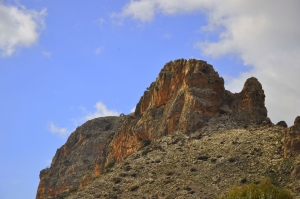
Above the seaside settlement of Keratokambos rises the steep hill of Kerato, also known as Kastri or Vigla, on which the ancient city of Kerea is believed to have been built. Vigla also hosts the impressive cave Nychteridospilios (meaning Bat cave), which was used as a sanctuary during the antiquity.
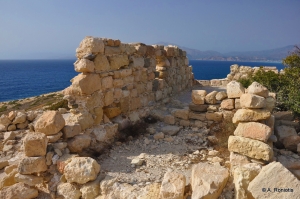
Koules of Matala is located on the hill Kastri above the famous beach of Matala. The access is very easy, as its very close to the path that heads to the Red Beach.
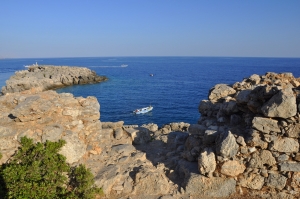
Most visitors of Loutro know about the fortress of Koules, which even today dominates over the village.However, they are unaware of the existence of a second fortress which is very easily accessible. The fortress of Kastella is located south of the village and next to the harbor where the big ships from Chora Sfakion stop.
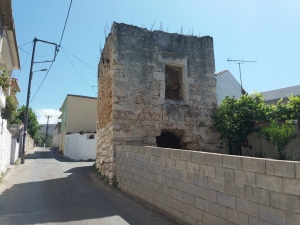
At position Pirgos of the village Gerani and within the boundaries of private property we meet the remains of the initally four-storey tower of Gerani. The small tower is believed to have functioned as a Medieval phrycotry to send messages by fire to other towers of the province of Rethymnon during the Venetian rule. Today only the first floor is preserved from the tower, as the two highest floors have collapsed.
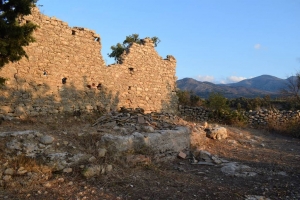
In the Mylopotamos province, one of the most mountainous in Crete, there were many fortresses. Among them are the Castle of Mylopotamos located in the village of Panormos and Panokastri near Agios Mamas. Panokastri or Pano Kasteli is situated in a rocky position above the village Kastri. This belonged to the family of the noble Alexios Kallergis from 1341.

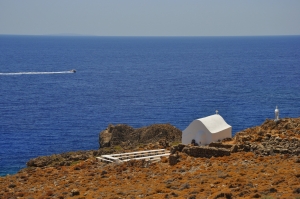
Between Loutro Sfakion and the famous beach of Glyka Nera, at Perlovakia, we meet the white brushed chapel of the Holy Cross (Timios Stavros) where a big feast takes place on September 14th every year.
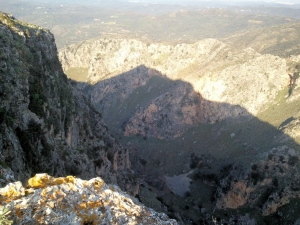
A steep cliff rises above the village of Malathyros, on which the Byzantines built a fortress to control the province of Kissamos. Ascent is possible from Malathyros. The fortress had a double fortification wall reaching a wall width of 2.30 meters and 12 semicircular fortification towers, while traces of cisterns and other buildings survive.
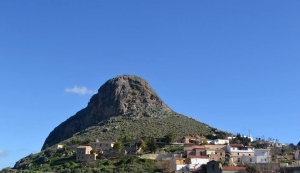
The fortress of Rokka is built on the steep hill of Trouli above the village of Rokka in the province of Kissamos. It is a fortress of the Byzantine period that was probably built after the liberation of Crete by Nicephorus Phocas in 961 at the site of a Roman fort.

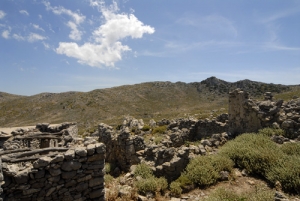
A small castle was located near the village Sitanos of Sitia Region, namely Skalia. Skalia was a small village with a few residents built atop a mountain slope, where the outer walls of the houses formed a wall that surrounded the village, while from the north it was protected by cliffs.
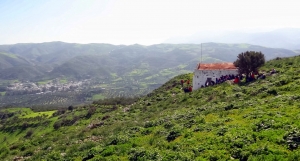
The fort Castel Belvedere or Kastelos was built on the isolated hill Kastellos, that was accessible only from its south side, near the villages of Ano and Kato Kastelliana. Here was the site of the ancient city Priansos, a powerful and great town that minted its own currency and had its seaport at Inatos (current Tsoutsouras).
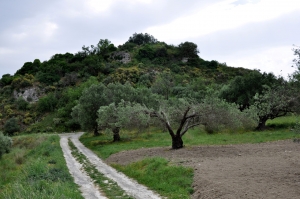
The fortress Castel di Beto was located east of the village Meleses, close to Del Cornaro, and was only accessible from its west side. On the top of the hill, there are still ruins of the 0.65m wide wall and remains of a tower, a tank, a church, several other buildings and houses. Moreover, nearby there is a Venetian fountain dating in 1594.
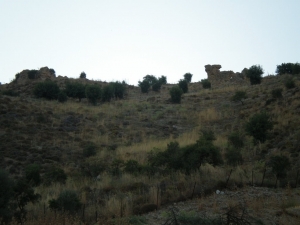
The Fort Bonifacio or Apano Castelli is located west of the current Tsifout Kastelli village, 44km south of Heraklion, on a hill now called Apano Kasteli or Psilo Aloni. The fort is reported since 1212 and was built by the Genoese pirate Henry Pescatore.
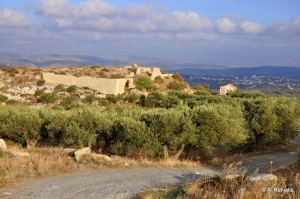
Castel del Corner or fort of Paleochora is located on the hill Kastelos south of Katalagari village, at an area full of olive trees and vineyards. According to tradition, it was built by Nicephorus Phocas after the liberation of Crete by the Arabs in 961 AD.
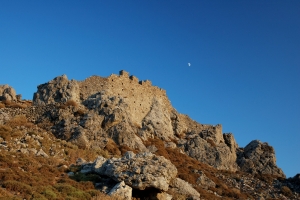
Next to the village of Krya, 25km away from the town of Sitia, there is a hill with the church of St. George and the ruins of a Venetian castle, called Monte Forte or Apano Castelli (Upper Forth).
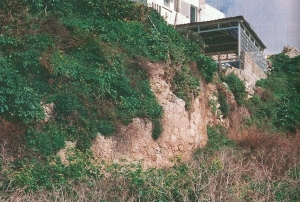
Fortezza is a suburb of Heraklion, built on a high hill next to the hospital of Venizelion. This hill was ideal for establishing a fortress, as evidenced by its name.
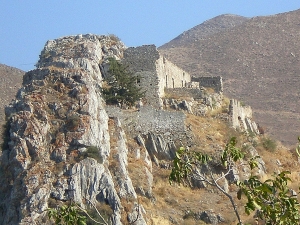
The village Charakas took its name after a large rock (charakas in Cretan dialect) on which we still see the ruins of the small Venetian fort and the church of the Transfiguration, which was restored recently. The fort consists of three rooms in which the floor is carved into the rock and covered with plaster.
- Home
 Beaches
 Nature
 Past
Past Destinations
 Highlights
 West Crete
- Central Crete
- East Crete
- Towns
- Chania Prefecture
- Chania
- Paleochora
- Kissamos
- Georgioupolis
- Chora Sfakion
- Loutro
- Rethymnon Prefecture
- Rethymnon
- Agia Galini
- Plakias
- Spili
- Anogia
- Heraklion Prefecture
- Heraklion
- Hersonissos
- Malia
- Matala
- Agia Pelagia`
- Archanes
- Kokkinos Pirgos
- Lassithi Prefecture
- Agios Nikolaos
- Elounda
- Sitia
- Ierapetra
- Makrigialos
- Palekastro
- Zakros
- Lassithi Plateau
- Get Prepared


