








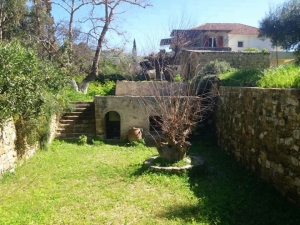
In the village Potamida, province Kissamos, lies the Kalogridis family watermill. The watermill was restored in 2013 by the locals and became operational again. The locals in the past used to bring their cereals to the watermill. Then, with the help of water, the millstones turned the mill, producing the precious flour.

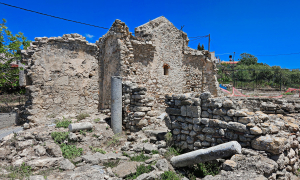
The ruined church of the Holy Trinity (Agia Triada) is located within the boundaries of the settlement of Ligortynos in the province of Monofatsi. Its use is placed from the post-Byzantine period to the Venetian period, and more specifically between the 11th and 15th centuries, with most findings dating to the 12th and 13th centuries.

xxxxxxxxxxxxxx

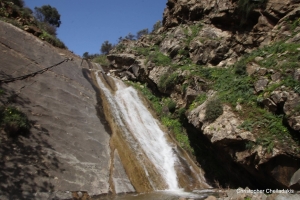
In the village Karavados in prefecture Heraklion lies a small gorge that is completely unknown, Argoulidias gorge. Its name is taken after the many wild olive trees (called argoulides in Cretan dialect) found in the canyon, the vegetation of which is complemented by carobs, Nerium oleanders and many plane trees.

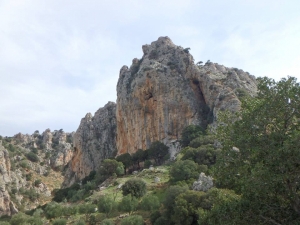
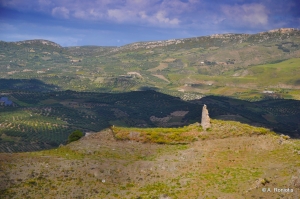
Above the steep gorge of Adrianos in the province of Mirabello rises the rocky outcrop of Fortezza. This inhospitable, steep and naturally fortified rock was chosen by the deposed Minoans to form a small town during the so-called Dark Period.

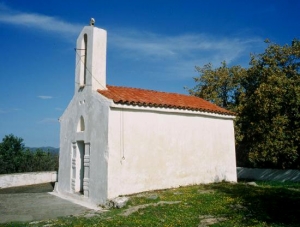
The church of Saint Isidore (Agios Isidoros) is built on a small plateau atop a hill in the small settlement Tzinaliana in Kakodiki, province Selino. It belongs to the architectural type of the one-room arched-roofed temples. At the entrance we can see two parts of an ancient Doric architrave.
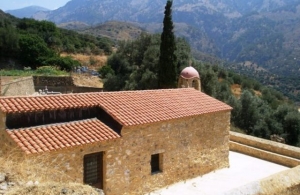
The church of Saint Nicholas (Agios Nikolaos) is built in a rural area northeast of the village Moni, province Selino. Its oldest eastern section was built in the architectural type of a single-storey arched temple with blind arches on the side walls.

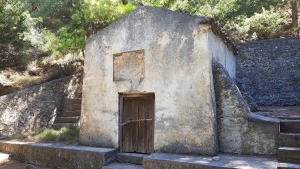
The small single-nave arched temple of Mary of Egypt is located in the Samaria deserted settlement, inside the imposing gorge of Samaria, accessed by a short path. According to one option, the name of the Samaria Canyon derives from the corruption of the name of Osia Maria (Saint Mary). The church celebrates on April 1st, when several mountaineering clubs of Crete participate in the festival.

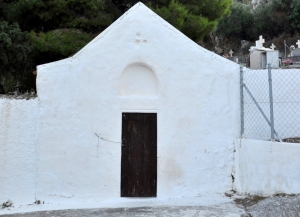
The church of Zoodochos Pigi is located at the position Sfakias and serves as the cemeterial church of the village Kavoussi. It is dedicated to the Theotokos and has the name of the Life giving Spring (Zoodochos Pigi), referring to the Marian pilgrimage of the same name in Constantinople.

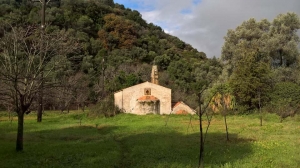
The church of Saint Basil is located to the north of the village of Vavouledo, province Kissamos, which is one of the many neighborhoods of Palea Roumata. The current church is the extension in the 19th century of the initial smaller single-nave arched church of the Savior Christ, dating back to the 15th century.
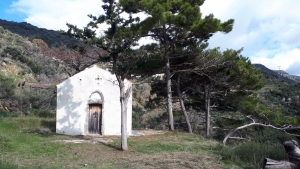
The church of Saint Athanasius (Agios Athanasios) is located just outside the village Kefali of the area called Nine Villages in Kissamos province. The single-nave arched temple is surrounded by a beautiful piney park and its interior has a reinforcing arch.

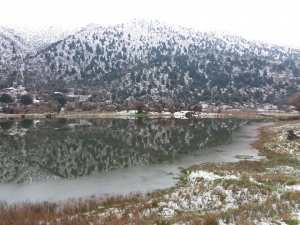
On the southern side of the Omalos Plateau in the White Mountains and between the starting point of the Samaria Gorge and Seliniotikos Giros, a seasonal lake of about 0.8 hectares is formed, which is covered by snow in winter. More small lakes are formed on the plateau in winter, with this one being the largest.

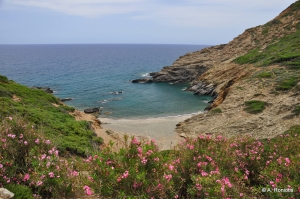
Agios Nikolaos beach is located in a remote area just west of Bali, province Mylopotamos. The name comes after the Byzantine double-nave church of Saint Nicholas, which is located in a green creek that leads to a beautiful cove.
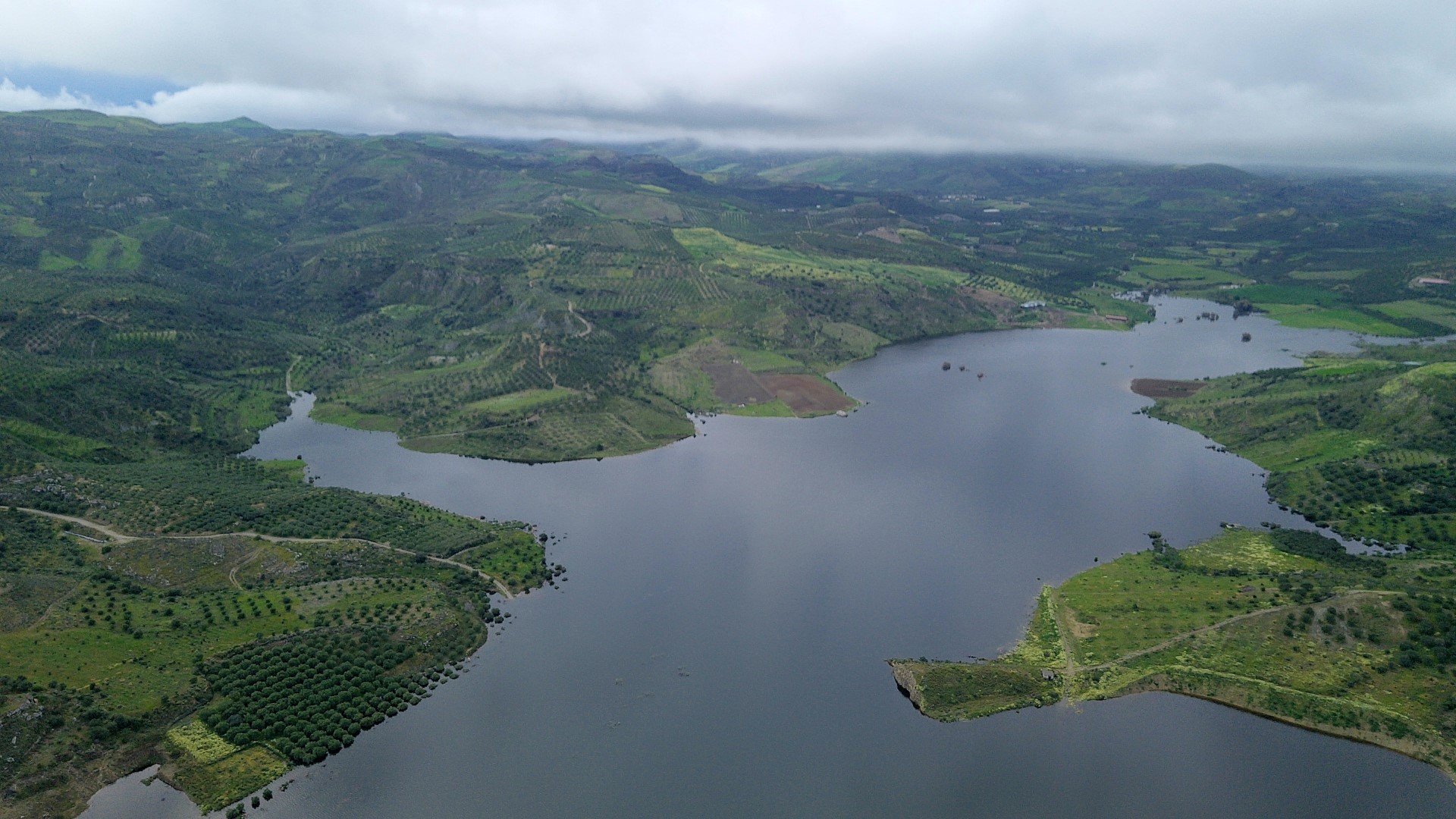
The Plakiotissa Dam is located in eastern Messara near the settlement of Plakiotissa in the province of Monofatsi. It is located in the Treis Potami (Three Rivers) region and collects the waters from the area south of Metaxochori.
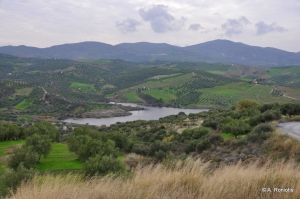
The dam of the Chalavrianos River is located in the rural area of Halavra in the district of Pano Archanes, south of Range Giouchtas, between the villages Houdetsi and Profitis Ilias. The Chalavrianos torrent, which feeds this artificial lake, is a tributary of the River Giofyros.

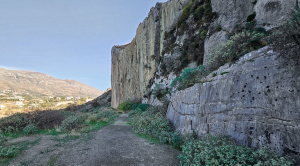
At the eastern end of the sandy beach of Plakias, at the base of the Karavos peninsula, the impressive limestone rock of Paligremnos is formed. Paligremnos is a geological fault with a great height and extremely smooth surface that exceeds 80 meters.

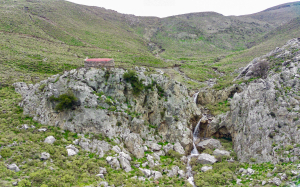
In the valley of Amourgela, the church of Agia Kyriaki has been built, above a series of beautiful waterfalls. Access is possible via a bad dirt road.
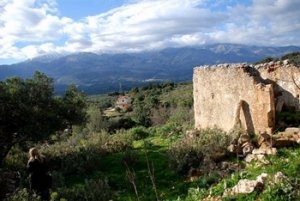
The tower of Aga at Tsifliki is located in a privileged position in Elounda lagoon, on the road leading to Plaka. In fact, the settlement Tsifliki owes its name to this residence, which was the base of the chiftlik (Turkish system of land management) of the region.

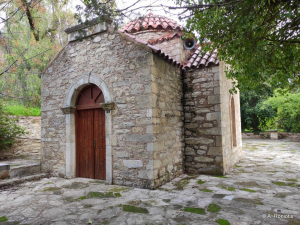
The church of Agia Paraskevi of Meritis is located within the boundaries of the Agricultural School of Messara at the entrance of the village of Ambelouzos. The church is the only surviving remnant of the small monastery that functioned as part of the Monastery of Saint Fanourios in Valsamonero.

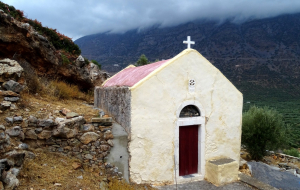
The church of Agios Antonios (Saint Anthony) is located at position Vrysidia, above the beach of Tholos, in Kavousi, Ierapetra province. The church was a katholikon (main temple) of a small monastery that is placed chronologically at the end of the 14th century. In fact, there is a visitor inscription with the year 1390.
Also read:
- Home
 Beaches
 Nature
 Past
Past Destinations
 Highlights
 West Crete
- Central Crete
- East Crete
- Towns
- Chania Prefecture
- Chania
- Paleochora
- Kissamos
- Georgioupolis
- Chora Sfakion
- Loutro
- Rethymnon Prefecture
- Rethymnon
- Agia Galini
- Plakias
- Spili
- Anogia
- Heraklion Prefecture
- Heraklion
- Hersonissos
- Malia
- Matala
- Agia Pelagia`
- Archanes
- Kokkinos Pirgos
- Lassithi Prefecture
- Agios Nikolaos
- Elounda
- Sitia
- Ierapetra
- Makrigialos
- Palekastro
- Zakros
- Lassithi Plateau
- Get Prepared


