






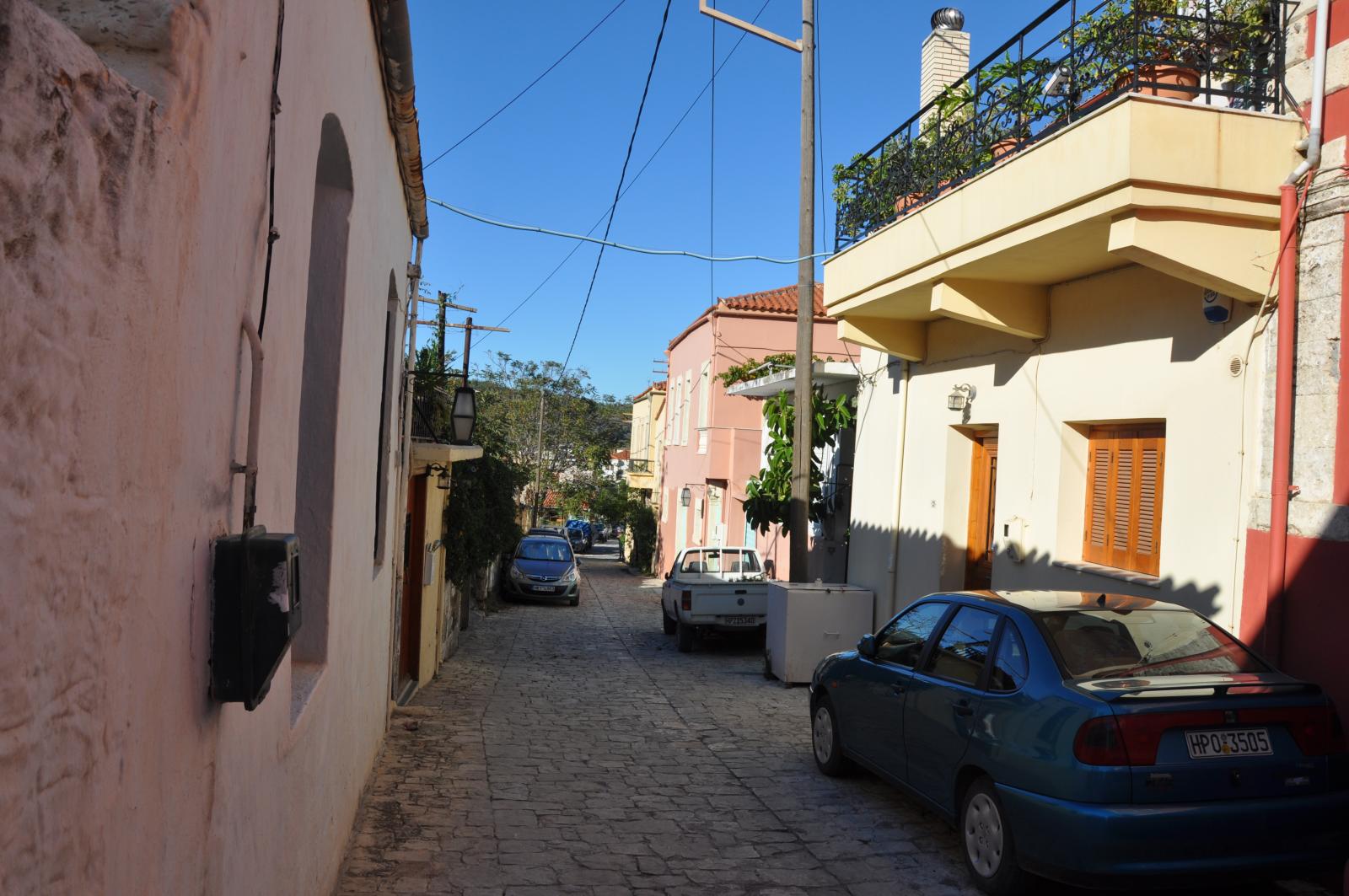
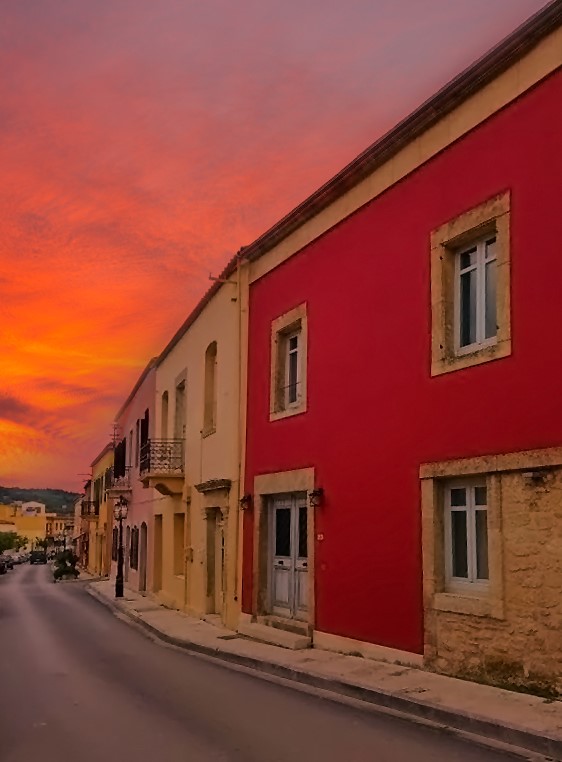
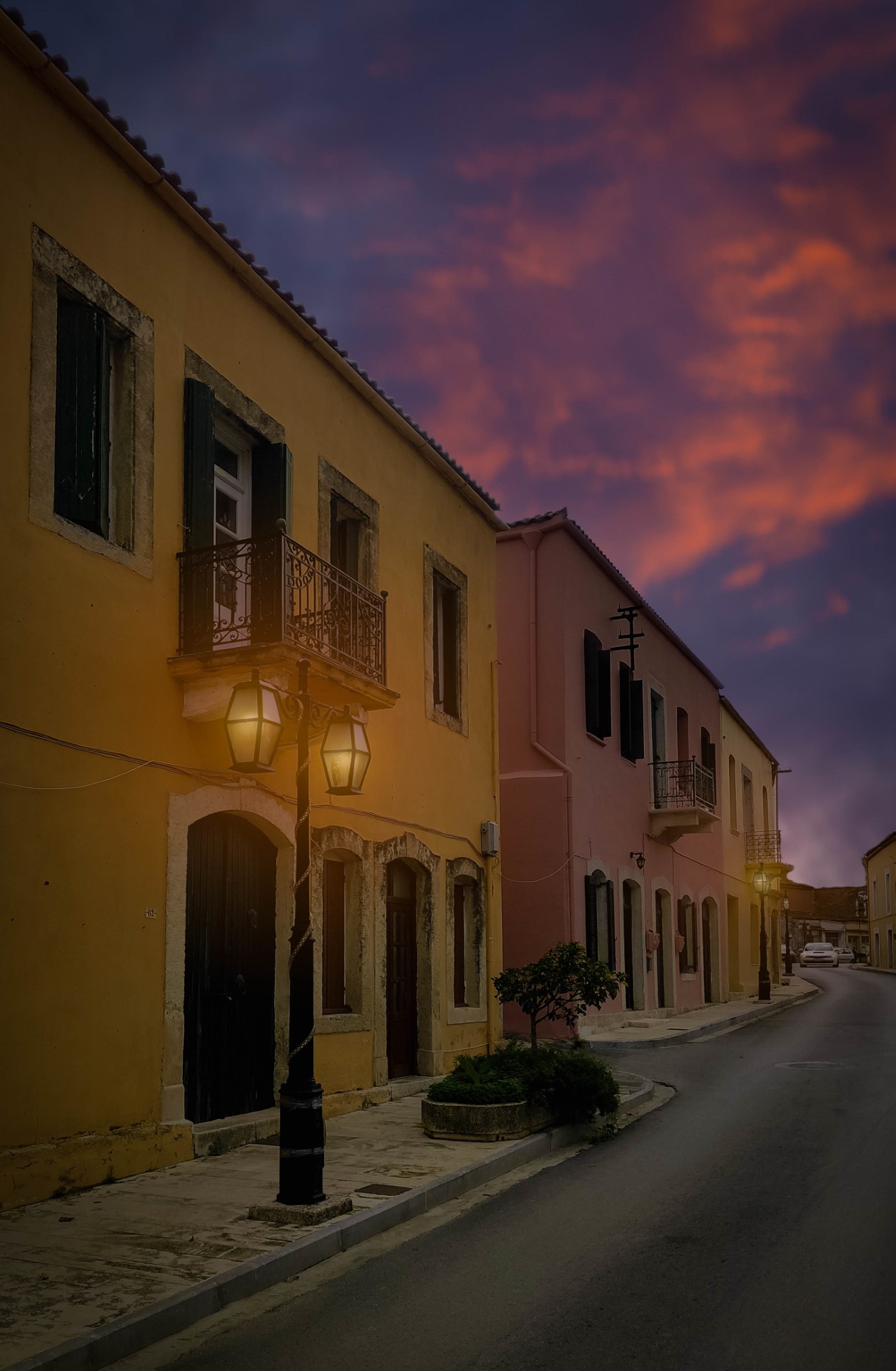

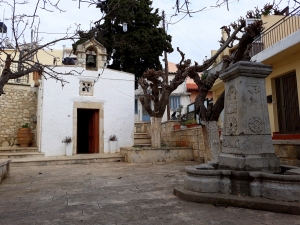
Within the picturesque narrow streets of the market of Epano Archanes, we meet the small square with the small temple of the Holy Cross (Timios Stavros). The church is single-aisled and vaulted, and part of the sanctuary is carved in rock, while its sanctuary is stone-built.
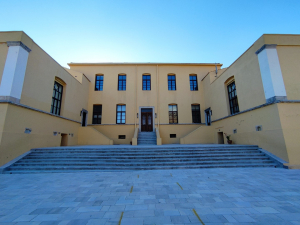
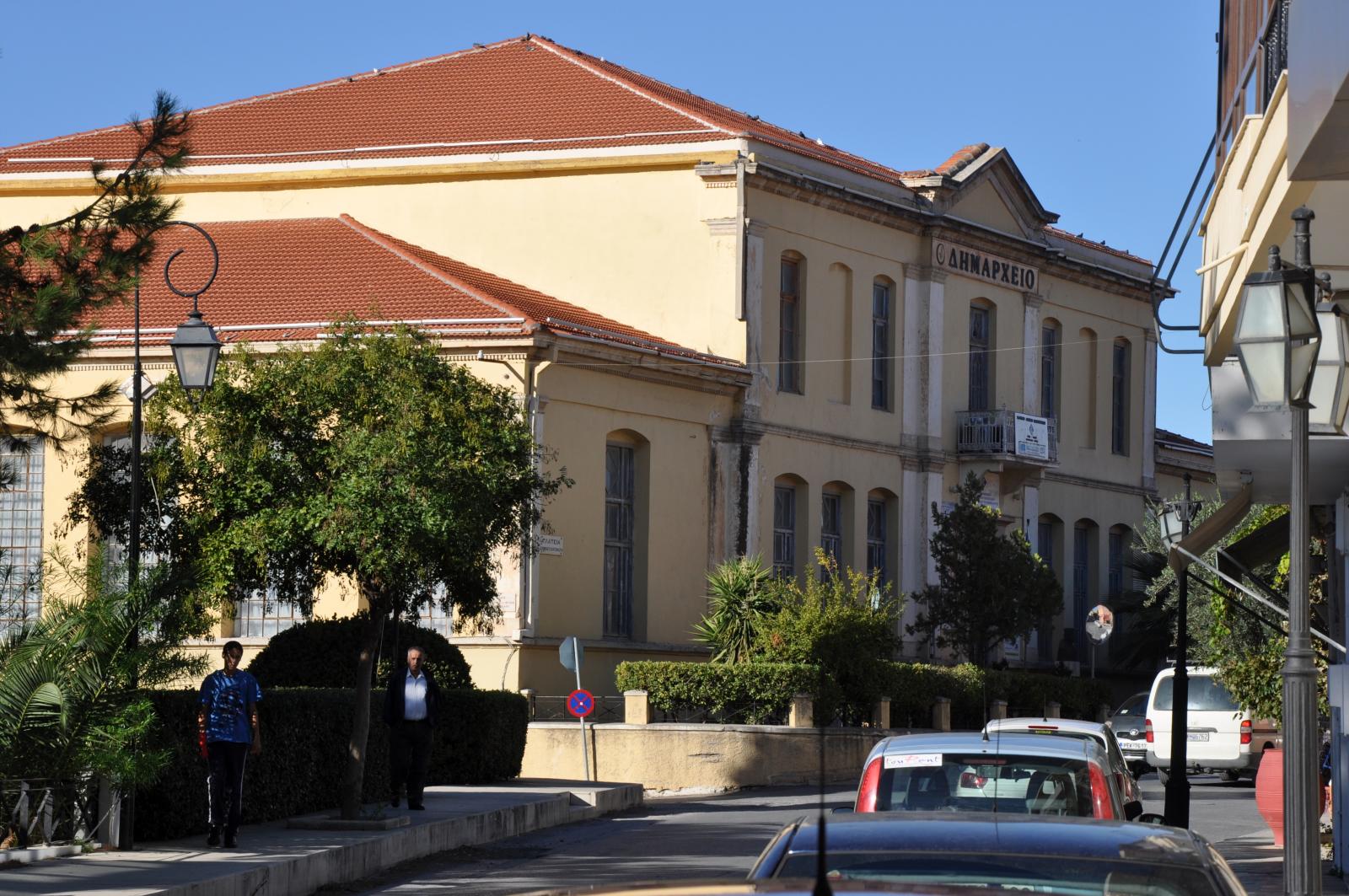
Near the northern entrance of Epano Archanes we find the Old Primary School of Archanes. The Didaskalio, as it is known, is a classic sample of neoclassical urban architecture of the early 20th century that was used in many schools in Greece.

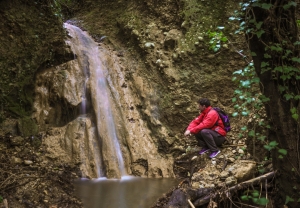
Shortly after Asomatos area south of Archanes we find the location Petsiliana, known for the church of Saints Constantine and Helen. Under the age-old plane trees, oaks and cypresses, water flows from the springs, forming several waterfalls.

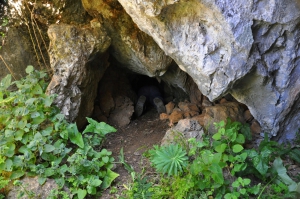
The cavern of Hosto Nero is found in the region Selia of Youchtas mountain near the road that leads to the top of Afentis Christos. It is located at an altitude of about 720 meters in the southern top of the holy mountain and in order for anyone to see it he/she has to enter through a narrow hole. This cavern has 3 rooms and many corridors that connect them all with the first room of 7 meters length that has enough light because of its big opening.

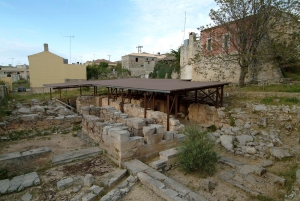
The palace of Archanes is located in the suburb Tourkogitonia of Archanes town. It came to light only in 1964 by Giannis Sakellarakis because, by then, only a few traces of the palace had been found. Some parts of the palace are still below the houses of modern Arhanes.
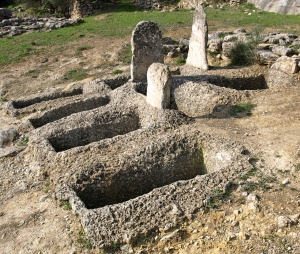
The archaeological site of Fourni is located on the homonym wooded hill, 17km south of Heraklion and west of Kato Archanes. To get there (the site is not open, but you could contact the guard), you could walk along the Minoan path starting from Kato Arhanes or drive to the beautiful artificial grove of Fourni.
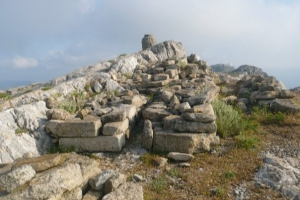
Jiouchtas in the ancient times was considered a sacred mountain, mainly because it resembles a human face that looks to the sky from the northwest. Even today the human like mountain causes awe. According to the legend, this is the face of Zeus and the mountain is his tomb. Indeed the name Jiouchtas is a corruption of the Latin word for Zeus, Jupiter.

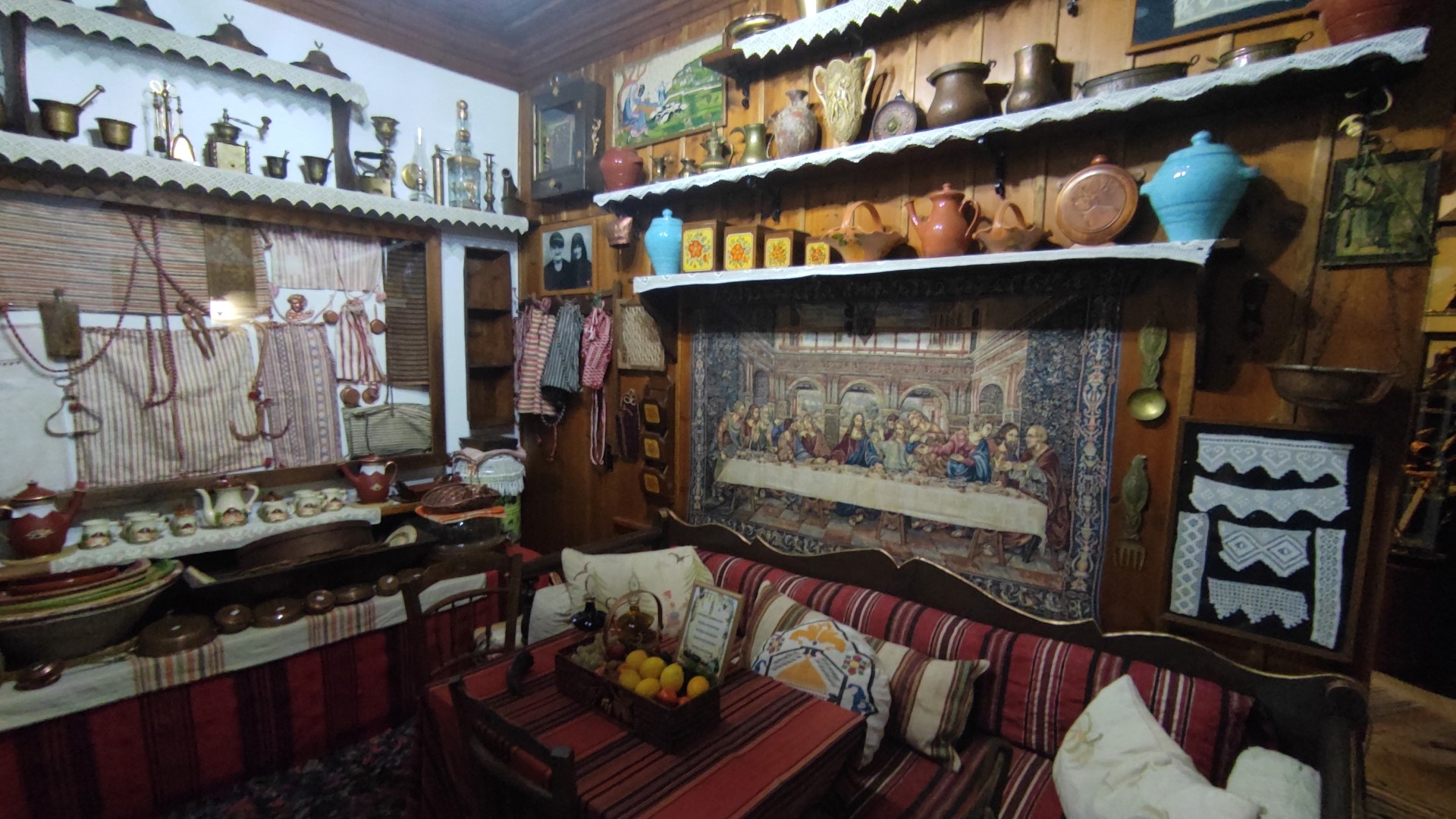
The Folklore and Historical Museum of Archanes is housed in a beautiful two-story mansion from 1771, near the church of Agios Nikolaos in Ano Archanes.

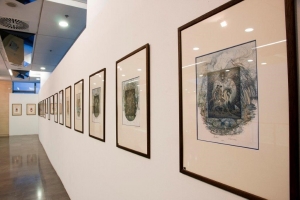
At Arhanes we meet the unique museum - private collection of engravings and exlibris in Greece. The exhibits include lithographs, ex libris, free graphics, thumbnails, etc.

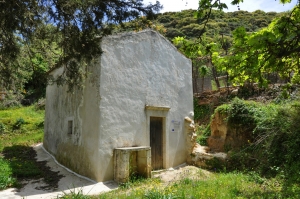
The very old church of Michael the Archangel is located south of Archanes, bearing frescoes of 1315. A mural depicts the founder of the church holding a model of the church and there are depictions of sinners in hell.
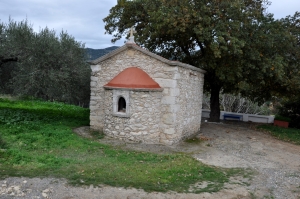
The church of Agia Paraskevi is located next to a green ravine, at a site that overlooks the south side of Arhanes town. What makes this church very important, are the few but very important frescoes preserved on its walls dating back from the medieval age.
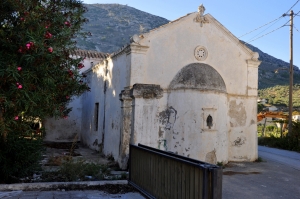
The district of Agia Triada (Holy Trinity) at Arhanes takes its name after the church of the Holy Trinity of the 14th century. The frescoes of the church have been restored.
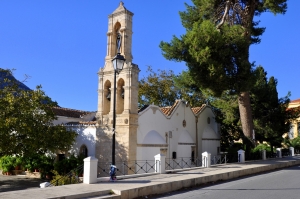
The Venetian church of Virgin Mary (Panagia Kera or Faneromeni) is located near the entrance of the town of Archanes. The name Faneromeni (Revealed) is taken after a legend that writes as follows: Once a girl called Maria saw a light at the point where the miraculous icon of the Virgin Mary was hidden. The girl then built the first temple.
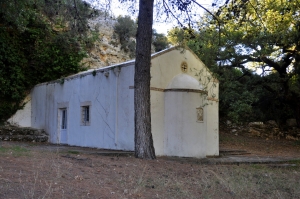
The church of Saint John Rigologos (Saint John the Forerunner) is located at an elevated position wooded with cypress, plane and pine trees, south of Archanes. The church has been built under a rock shelter and the surrounding place is perfect for a picnic and hiking from Archanes.
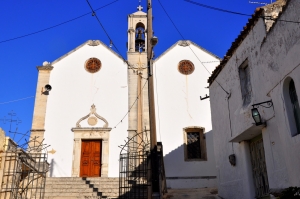
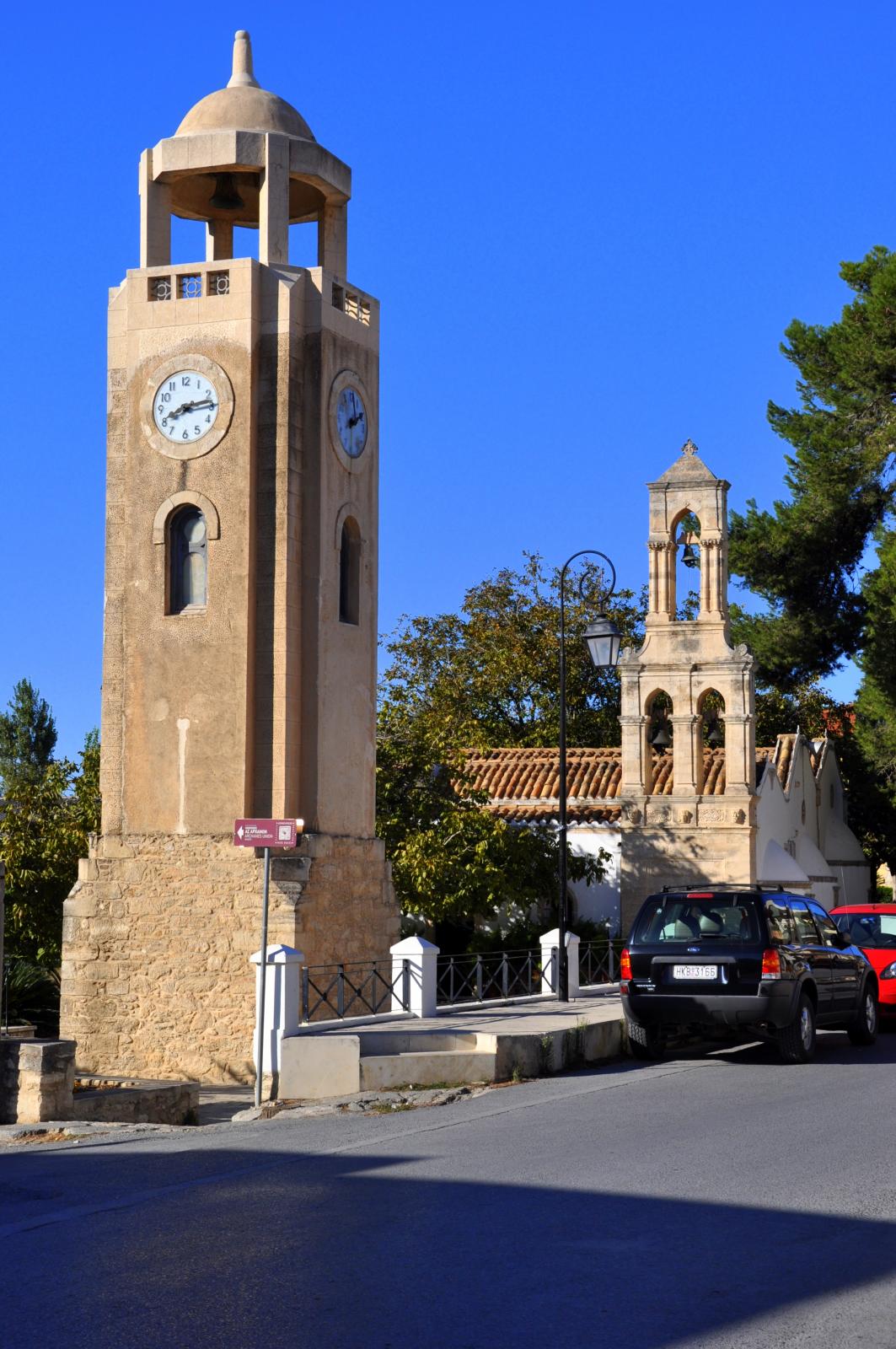
The church that stands high at Archanes is the double-aisled basilica of St. Nicholas. It was built in 1857 with a combination of styles inspired by Venetian and Ottoman elements.
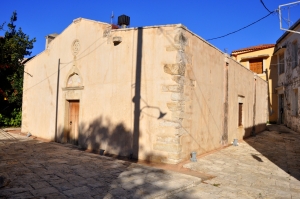
The church of St George is a three aisled basilica with a raised middle aisle. Its foundation dates back from the 13th to 14th century and is the largest frescoed church of Archanes. During the last renovation (18th-19th century) the gradients of the roof were decreased and altered its form.
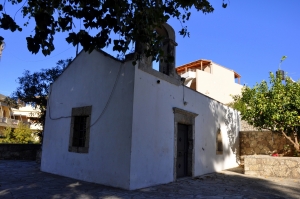
The Byzantine church of Saint John the Theologian in Archanes called Manganitis after the public stone press (magana) that existed here for wine production. The Venetians called it DE SAN ZUANNE THEOLOGO DETTO STO MANGALO.

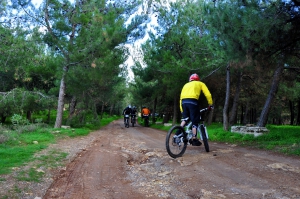
Fourni is a small lush green hill next to the picturesque Arhanes village, about 12km south of Heraklion. It takes its name after the local homonym preminoan cemetery, next to Knossano Gorge. Fourni can be accessed through Kato Arhanes, where you’ll meet signs leading there.
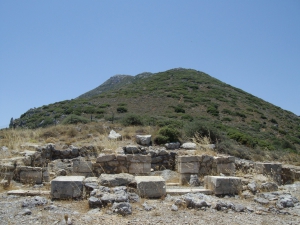
At position Anemospilia, on the north slopes of Mount Jiouchtas, the archeologists G. and E. Sakellarakis located in 1979 a small sanctuary of Minoan Crete that surprised the global archaeological community. This small sanctuary offered the first indication of human sacrifices in Minoan Crete.

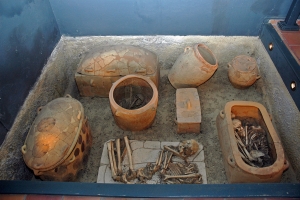
The Archaeological Museum of Archanes operates since 1993 in a beautiful neoclassical building that housed the first primary school of Archanes, at the district Tzami.
Also read:
- Home
 Beaches
 Nature
 Past
Past Destinations
 Highlights
 West Crete
- Central Crete
- East Crete
- Towns
- Chania Prefecture
- Chania
- Paleochora
- Kissamos
- Georgioupolis
- Chora Sfakion
- Loutro
- Rethymnon Prefecture
- Rethymnon
- Agia Galini
- Plakias
- Spili
- Anogia
- Heraklion Prefecture
- Heraklion
- Hersonissos
- Malia
- Matala
- Agia Pelagia`
- Archanes
- Kokkinos Pirgos
- Lassithi Prefecture
- Agios Nikolaos
- Elounda
- Sitia
- Ierapetra
- Makrigialos
- Palekastro
- Zakros
- Lassithi Plateau
- Get Prepared


