







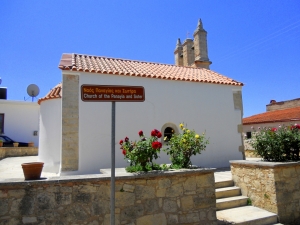
The two-aisled church of Panagia Katochoriani or Levadiotissa at Roustica is dedicated to the Assumption of the Virgin and the Transfiguration of Chist. It was founded probably in the 12th century as a single-aisled church of the Virgin Mary and in 1627 a second aisle was attached to the existing temple.

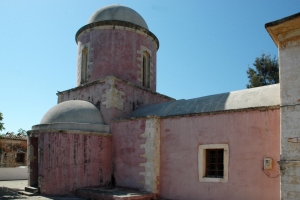
The abandoned monastery of Agios Eleftherios at Mournies is a dependency of Chrysopigi monastery and is located near the General Hospital of Chania, among olive groves, houses and a school. Here was baptized the most important modern Greek politician, Eleftherios Venizelos.

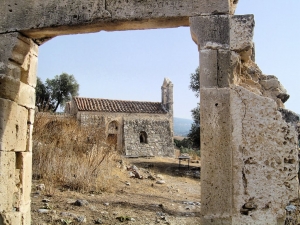
A short distance north of the village Vori there was the monastery of Panagia Kardiotissa, a dependence of Varsamonero monastery. Today the double-nave vaulted church with wall paintings in the south aisle survives. The north wall still hosts an arcosolium.

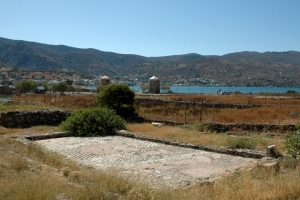
The Early Christian Basilica of Olous (built around 4-5th century AD) is located at position Poros and was excavated in 1937 and 1960. This is a brilliant sample of religious architecture of its time and it is considered to have been the cathedral of the ancient town Olous, which is today submerged in the lagoon of Elounda.

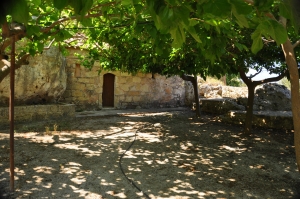
On the main road leading from the village Ravdoucha to the beach, we meet the Byzantine church of Agia Marina with spectacular sea views, built in a rock recess. The church bears frescoes that have suffered considerable damage. As in many churches of the peninsula Rodopou, so here too we see engravings of the travelers of the era.

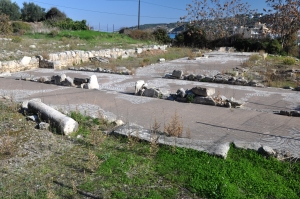
Very close to the main beach of Almirida, Apokoronas, province, we meet the aisled basilica of the second half of the 6th century with a mosaic floor, the foundations of the altar and some pillar capitals. It belongs to the basilica with a transept and a narthex.

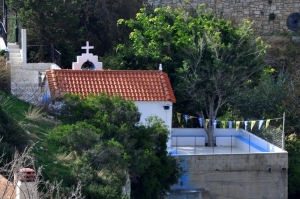
The monastery of Panagia Deligara, Ligaria or Ligariotissa operated at the site that we meet today the church of Panagia (Our Lady) near Ligaria Beach. The monastery is mentioned in a document of 1610 as Panagia Deligara.
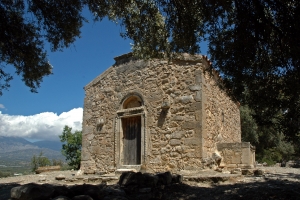
- Home
 Beaches
 Nature
 Past
Past Destinations
 Highlights
 West Crete
- Central Crete
- East Crete
- Towns
- Chania Prefecture
- Chania
- Paleochora
- Kissamos
- Georgioupolis
- Chora Sfakion
- Loutro
- Rethymnon Prefecture
- Rethymnon
- Agia Galini
- Plakias
- Spili
- Anogia
- Heraklion Prefecture
- Heraklion
- Hersonissos
- Malia
- Matala
- Agia Pelagia`
- Archanes
- Kokkinos Pirgos
- Lassithi Prefecture
- Agios Nikolaos
- Elounda
- Sitia
- Ierapetra
- Makrigialos
- Palekastro
- Zakros
- Lassithi Plateau
- Get Prepared


