









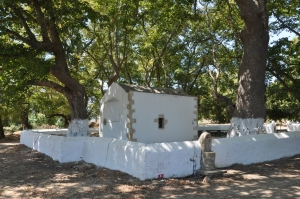
The church of Saint John the Forerunner is located just outside the village of Stylos (Apokoronas province) at position Platanakia. It is one-aisled church built in 1898 and celebrating on August 29 (a big fest takes place then). Around the church there are many plane trees which offer shade to visitors and there are benches and tables making the place ideal for picnics.

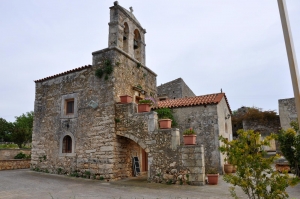
The monastery of Saints Peter and Paul is located at the settlement of Gallos, near the University of Crete. The restored monastery, for which there is no surviving information about its history, is a dependency of the Monastery of Arkadi.

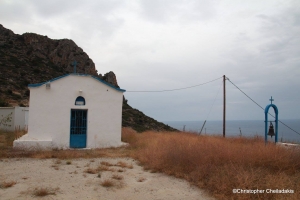
Analipsis is built in a prominent position above the current settlement of Paleochora with spectacular views of the surrounding area. The point of this temple is very important because it is located just behind the sanctuary of the church there is spring with fresh water.
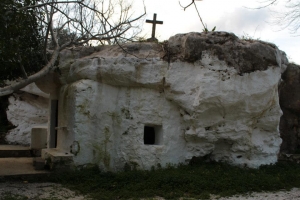
The chapel of Agia Paraskevi is accessed via the road leading to Episkopi, Rethymno, from Dramia village, Apokoronas. It is a very small cavernous rock built at the west bank of Mouselas river, that starts from Argiroupoli springs. It is a weird chapel, with irregular sides, with a unique shape in Crete.

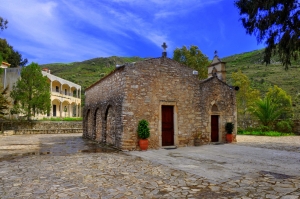
The church of Panagia Almyri (Salty Virgin Mary) belongs to the parish of Megali Vrissi and is one of the largest pilgrimages of Messara Plain. Especially, on the celebration day of the church (feast of Ascension) hundreds of people flock from all corners of Crete.

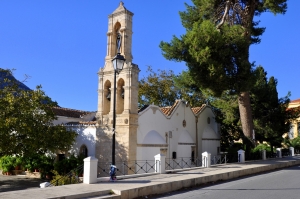
The Venetian church of Virgin Mary (Panagia Kera or Faneromeni) is located near the entrance of the town of Archanes. The name Faneromeni (Revealed) is taken after a legend that writes as follows: Once a girl called Maria saw a light at the point where the miraculous icon of the Virgin Mary was hidden. The girl then built the first temple.
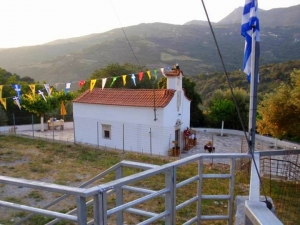
St George Galatas (Milky) at village Asi Gonia is a small single-aisled church. This temple houses one of the famous centuries-old traditions of Crete during the feast of St. on April 23.

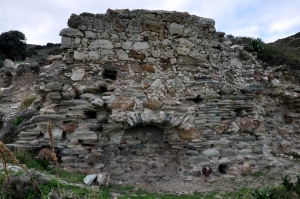
Here you will meet the ruins of the monastery Panagia Fraskia (Faschea) mentioned on almost all maps of the Venetian Era, having been one of the most important monasteries in Venetian Crete. Panagia, mentioned by Buontelmonti in 1415, was founded in the late 12th century at the point where the Venetians used as a natural harbor (the cove of Fraskia).
Also read:
- Home
 Beaches
 Nature
 Past
Past Destinations
 Highlights
 West Crete
- Central Crete
- East Crete
- Towns
- Chania Prefecture
- Chania
- Paleochora
- Kissamos
- Georgioupolis
- Chora Sfakion
- Loutro
- Rethymnon Prefecture
- Rethymnon
- Agia Galini
- Plakias
- Spili
- Anogia
- Heraklion Prefecture
- Heraklion
- Hersonissos
- Malia
- Matala
- Agia Pelagia`
- Archanes
- Kokkinos Pirgos
- Lassithi Prefecture
- Agios Nikolaos
- Elounda
- Sitia
- Ierapetra
- Makrigialos
- Palekastro
- Zakros
- Lassithi Plateau
- Get Prepared


