The Minoan era was one of the most important periods in Crete’s history. During the Bronze Age, a complex society developed on the island, with large palatial centres, organised settlements, extensive maritime networks, advanced technical skills and a rich artistic tradition. The modern name Minoan civilisation comes from Minos, the legendary king of Crete.
The rise of the palatial centres
The first large palaces were built around the beginning of the second millennium BC. They served as centres of administration, trade, worship and production. They contained central courtyards, storerooms, workshops and ceremonial spaces, and used complex systems to manage goods. After the destruction of several palaces around 1700 BC, many were rebuilt on an even grander scale.
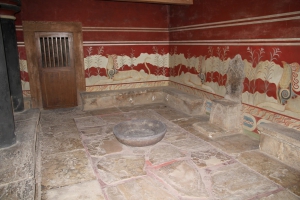
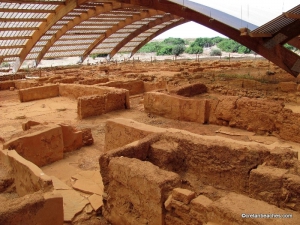
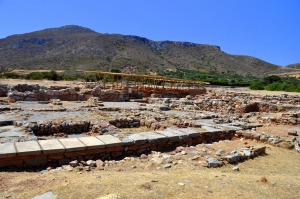
The best-known centres were Knossos, Phaistos, Malia and Zakros. Together with the mountain site of Zominthos and Kydonia, beneath the modern city of Chania, they make up the six Minoan Palatial Centres inscribed on the UNESCO World Heritage List in 2025.
Beyond the major palaces
Other important administrative and regional centres developed at Archanes, Galatas, Tylissos and Monastiraki in Amari. The royal villa of Agia Triada, near Phaistos, preserves important evidence of administration, economic activity and art in the later phases of the Minoan era.
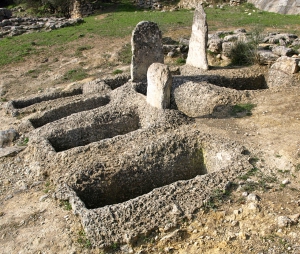
Smaller settlements, farmhouses, workshops, villas, cemeteries and storage facilities have been found across Crete. Their remains show how economic and social life extended well beyond the palaces and adapted to the island’s varied landscapes.
Seafaring and trade
The sea played a central role in the development of Minoan Crete. Ships connected the island with the Cyclades, mainland Greece, Cyprus, Egypt and the shores of the eastern Mediterranean. Metals, pottery, wine, olive oil, timber and luxury goods travelled along these routes, as did technologies, artistic styles and ideas.
Important harbour facilities and coastal settlements have been identified at Kommos, on the islet of Mochlos and at Petras near Sitia. Finds from these sites reveal Crete’s close ties with the wider Mediterranean world.
Writing, administration and art
The Minoans used several writing systems. Cretan Hieroglyphic and Linear A have yet to be fully deciphered, and the Phaistos Disc remains one of archaeology’s best-known puzzles. Linear B, used later by the Mycenaean administration on Crete, records an early form of Greek.
Frescoes, stone vessels, pottery, jewellery, seals and metalwork reveal highly skilled craftsmanship and a recurring interest in nature, movement and ritual. Female figures often occupy a prominent place in Minoan art, particularly in religious and ceremonial scenes.
Religion and sacred landscapes
Minoan worship was closely tied to the landscape. Caves, mountain summits, springs and dedicated spaces within the palaces were used for ceremonies and offerings. Important peak sanctuaries stood on Mount Juktas and Petsofas. Finds from these sites include clay figurines, models of human body parts left as votive offerings, and other ritual objects.
The precise beliefs of the Minoans and the names of their deities remain uncertain. Female figures, horns of consecration, double axes, bulls and sacred trees recur in the imagery associated with their religious practices.
The decline of the Minoan world
The destruction that affected many Cretan centres during the second millennium BC cannot be attributed with certainty to a single cause. Earthquakes, internal upheaval, the eruption of Thera and changes in trade and political networks may all have played a part. Around 1450 BC, many centres were destroyed or abandoned, while there is evidence of Mycenaean administration at Knossos. Elements of Minoan culture continued to influence Crete and the wider Aegean long after the decline of the palatial centres.