Gorges
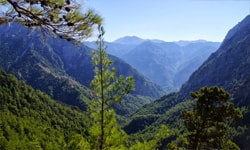
The hundreds of gorges in Crete are among the most distinctive features of the island’s natural landscape. Their formation is connected with the geological evolution of Crete and the gradual uplift of its mountain ranges. At the same time, rivers and streams eroded the limestone rocks over millions of years, creating deep ravines, narrow passages and steep vertical cliffs.
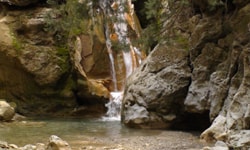
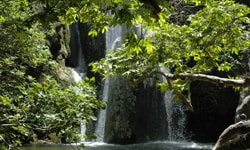
The interior of the gorges supports distinctive ecosystems. Plane trees, cypresses, oleanders and other plants grow along the wetter riverbeds, while the steep slopes provide shelter for birds of prey and many other species of Cretan wildlife. Where the riverbed meets abrupt changes in elevation, impressive waterfalls are formed, most of which carry water after heavy rainfall or during spring.
Many gorges are suitable for ordinary hiking, while others are inaccessible without technical equipment. The technical crossing of gorges, known as canyoning, involves the use of ropes, abseiling, swimming and moving through flowing water. It should only be attempted by properly trained people or under the supervision of experienced and certified guides. The difficulty and safety of each route vary according to the season, weather conditions and water level.
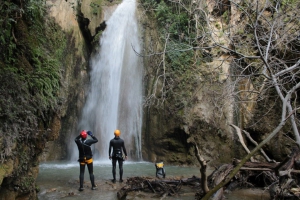
Nearby the lush green and full of water springs Orino village we meet one of the most steep rivers of Crete. Its springs are located high on the plateau Abelia on the slopes of Thripti and Papouri mounts. They shortly form a river which crosses the village square and enters the rugged canyon of Orino.
Read more ...

The gorge of Trypiti is formed at the range Asterousia, to the south of the village Vassiliki. The length of the canyon reaches 4 km and a beautiful pebble beach is formed at its exit. The beach is reached though a dirt road that runs high along the eastern side of the canyon for several kilometers before reaching its riverbed, just before the exit to the sea.
Read more ...

The gorge of Ambas is located 53km south of Heraklion, in Asterousia Mountains. Starting from the small plateau formed near the village Paranymfi (710m altitude), it ends at the beach of Treis Ekklisies. This is a large (4km long) and beautiful canyon with many narrow passages, which is accessible only by experienced canyoners.
Read more ...

Astrakiano and Kounaviano canyons are two lush green gorges by Heraklion that merge near the village Skalani and carry on their united course till Karteros. The total length of the two canyons is about 21 km.
Read more ...
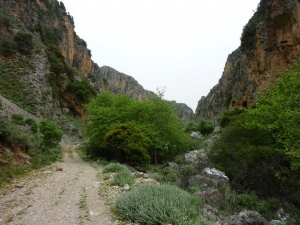
Deliana – Mesavlia Gorge is located 37km west of Chania. Starting from the village Mesavlia it descends to the village Deliana after 5km. Walking in the gorge is very easy (takes about one hour) and is suggested even for children, as it runs along a dirt road.
Read more ...
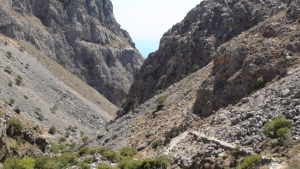
Kallikratis is a relatively small gorge in the southeast region of Lefka Ori (White Mountains) in Chania Prefecture. The gorge connects the mountainous pasture lands with the lowland villages. It is a very pleasant walk, offering great views and rare flowers, but is not very popular with tourists. The Kallikratis Gorge together with the Asfendou Gorge can be a full day’s excursion.
Read more ...
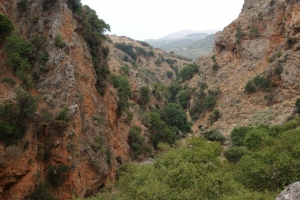
The gorge of Rocca, Roka, Rocka or Rokka is located 32km west of Chania, in the area of Kolymbari. The 2km gorge starts from the village Deliana and ends at the village of Roka. In the settlement there is Trouli hill, where you can still see the ruins of a Byzantine fortress.
Read more ...

The wild and imposing gorge of Kapsas is located 8-9km east of Makrigialos and 33km east of Ierapetra. The gorge is also called Pervolakia, because its northern entrance is near the secluded and picturesque village of Pervolakia. When in the village, you should walk in the nearby traditional village of Pezoulas, with the amazing houses.
Read more ...