








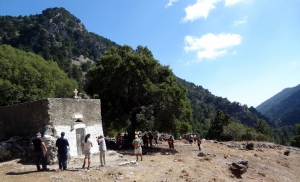
The proposed trekking route in the canyon starts from Niato Plateau (near Askifou Plateau) and runs along the European trail E4. You initially meet the abandoned village of Kali Lakki. From here starts the canyon, which is one of the greenest gorges in Crete, with incredibly interesting flora. Oaks, cypresses, and pines are the main trees in Sfakiano Gorge.
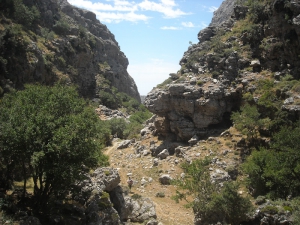
The canyon of Asfendou is one of the many gorges in Sfakia province, starting from deserted hamlet of Asfendou that currently houses some local sheep herders. Along the canyon runs a passable but steep trail, parallel to the streambed. In many places the Libyan sea is visible.
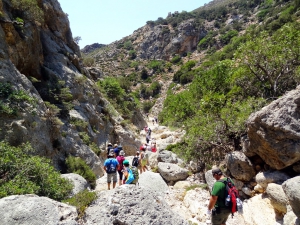
The small but impressive gorge of Anydri is located east of Paleochora. It starts from the village Anidri and after a snaky course, about 3km long, between high cliffs it concludes at the beautiful beach Gialiskari.
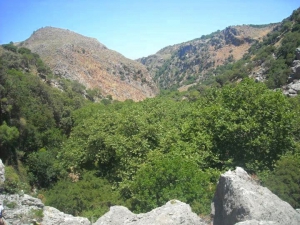
Gorge Chalase or Porofarago starts near the village Sassalos and ends before the village Makronas after 4 hours of course in dense vegetation. Crossing it is not very easy because at one point it has a large scree (chalase) and there is no trail.
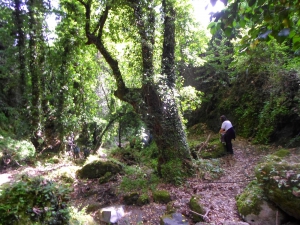
The lush canyon of Boriana (mainly known as Karanou Gorge) starts from the village Boriana and joins the River Mavropiliotis after 1800 meters in a nicely landscaped trail. Along the trail we meet a ruined watermill, caves, entrances of the old iron ore quarries (known locally as quarries of Averof), a charcoal furnace and galleries.
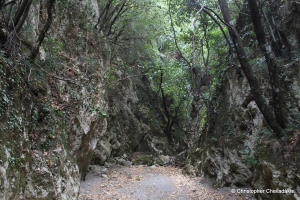
The Gorge Kydoni is a small lush green paradise near the village Karanou, which has been adorned with a beautiful trail and information signage. The trail starts from the fountain of the village and is very easy to walk and appropriate for children.
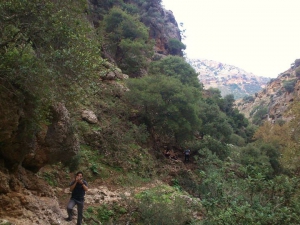
The Gorge of Cyclamen or St George Gorge starts from the settlement Aletrouvari (altitude 300m), passes east of the village of Agios (St) Georgios and ends at the village Vandes (altitude 50 m).

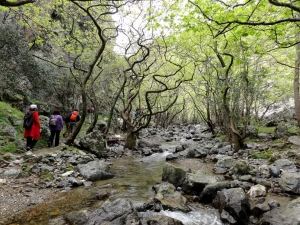
Kollita Gorges, i.e. Twin Ravines are located nearby the picturesque village Argyroupolis, about 22km southwest of Rethymnon city. They are named so, as they consist of two parallel canyons that end near Kato Poros settlement and is part of the E4 trail. The first canyon on the east is called Moudriano Gorge, while the west gorge is Kato Poros Gorge of Vilandredo Gorge, mostly known as the main Kollita Gorge.

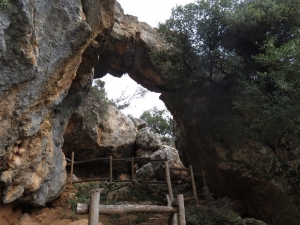
Platania Gorge is located in the Amari valley, 38km southeast of Rethymno, on the western outskirts of Psiloritis. It is a unique trail, with impressive cliffs, vertical limestone rocks, rock roofs and caves. The trail is recommended for experienced mountaineers, although the first part of the trek is quite easy and well pathed, even for children who are physically fit.

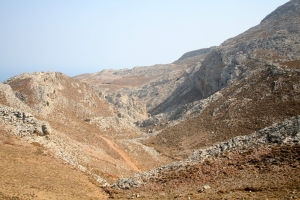
Ligiofarago is one of the few canyons of East Asterousia range that one can walk down to the sea without needing technical equipment. Recently the path has been signed, connecting Achendrias to Maridaki, running through the gorge.
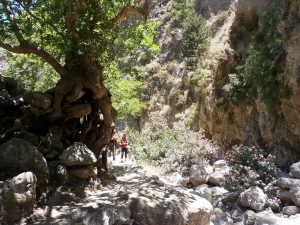
The gorge of Agia Irini is on the west side of the White Mountains, with many vertical passes. It gets its name from the homonym village located near the entrance, 46 km from Chania. Its length is 7.5 km and its crossing takes three hours. The gorge ends up in the seaside village of Sougia.
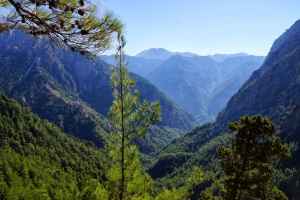
The Samaria Gorge is the longest trekking gorge in Europe and also the most famous of all. Thousands of tourists flock here daily in the summer season to walk from the top to the bottom. For many visitors, it is the sole purpose of their visit to Crete. The length of the gorge reaches 18km and takes almost 4-7 hours to hike from Omalos to Agia Roumeli, depending on trekking speed.
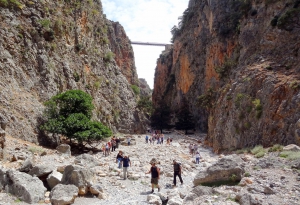
The deepest gorge in Chania is the gorge of Aradena. The 138-meter-deep gorge is ideal not only for sightseeing or hiking but for bungee jumping as well. Trekking inside the canyon till the exit on the majestic Marmara beach is an unforgettable experience for those who attempt the descent of the canyon.
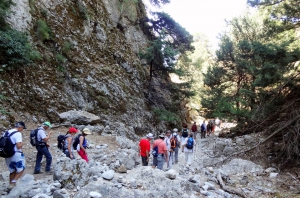
Imbros Gorge is located in the province of Sfakia and is the third most visited gorge in Crete, following Samaria Gorge and Agia Irini by Sougia. The scenery is beautiful and the low difficulty makes the descent of Imbros ideal for families with children. The length of the gorge is 11 km and the course lasts 2-3 hours.
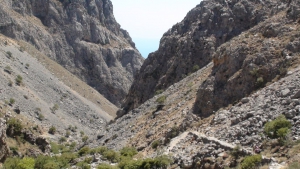
Kallikratis is a relatively small gorge in the southeast region of Lefka Ori (White Mountains) in Chania Prefecture. The gorge connects the mountainous pasture lands with the lowland villages. It is a very pleasant walk, offering great views and rare flowers, but is not very popular with tourists. The Kallikratis Gorge together with the Asfendou Gorge can be a full day’s excursion.
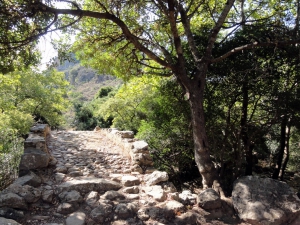
Sirikari is located 55km west of Chania and 17km south of Kissamos, in a lush green area with canyons and water streams. The road to Sirikari is paved and runs through the dense vegetation, indicating the beauty of the area at the very first moment. From here begins the beautiful canyon of Sirikari leading to the settlement of Polirinia, where the ancient town of Polirinia was built.
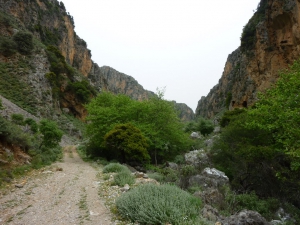
Deliana – Mesavlia Gorge is located 37km west of Chania. Starting from the village Mesavlia it descends to the village Deliana after 5km. Walking in the gorge is very easy (takes about one hour) and is suggested even for children, as it runs along a dirt road.
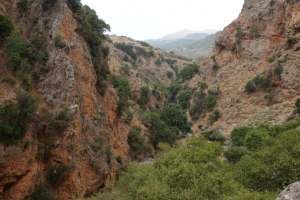
The gorge of Rocca, Roka, Rocka or Rokka is located 32km west of Chania, in the area of Kolymbari. The 2km gorge starts from the village Deliana and ends at the village of Roka. In the settlement there is Trouli hill, where you can still see the ruins of a Byzantine fortress.
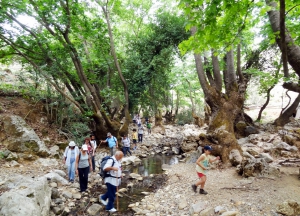
The canyon of Diktamos starts 21km east of Chania, next to the village Katochori at an altitude of 300m, and ends 8km eastern, at the village Faragi, at an altitude of 40m, next to the village of Stylos. Thus, it is also known as Katechori Gorge or Stylos Gorge.
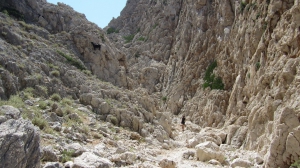
Avlaki gorge is located near the monastery Gouverneto, 16km east of Chania city. It is one of the most important gorges in Crete with a particular religious value, as many monks and hermits found shelter in its caves. Inside the small canyon there is the deserted Katholiko monastery, perhaps the oldest monastery in Crete. Thus, the gorge is also called Katholiko Gorge.
Also read:
- Home
 Beaches
 Nature
 Past
Past Destinations
 Highlights
 West Crete
- Central Crete
- East Crete
- Towns
- Chania Prefecture
- Chania
- Paleochora
- Kissamos
- Georgioupolis
- Chora Sfakion
- Loutro
- Rethymnon Prefecture
- Rethymnon
- Agia Galini
- Plakias
- Spili
- Anogia
- Heraklion Prefecture
- Heraklion
- Hersonissos
- Malia
- Matala
- Agia Pelagia`
- Archanes
- Kokkinos Pirgos
- Lassithi Prefecture
- Agios Nikolaos
- Elounda
- Sitia
- Ierapetra
- Makrigialos
- Palekastro
- Zakros
- Lassithi Plateau
- Get Prepared


