







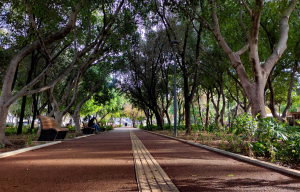
Georgiadis Park is the largest green space in the city of Heraklion. It has been formed next to the Venetian Walls and is bounded by Dimokratias Avenue, Harilaou Trikoupi Street and the Vigla area.

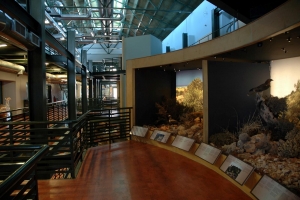
The Natural History Museum of University of Crete demonstrates with an impressive and innovative manner the natural environment of the eastern Mediterranean with a special emphasis on Greece and Crete.

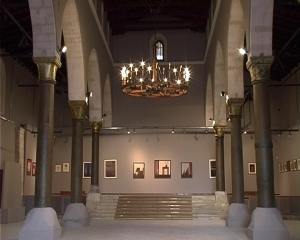
The Municipal Gallery of Heraklion is hosted in the Basilica of Saint Mark in the center of Heraklion, just opposite the famous Lions’ fountain. The basilica was built by the Venetians in 1239, was destroyed by an earthquake in 1303 but restored immediately,

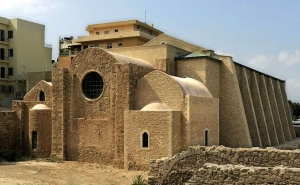
The Church of Sts Peter and Paul was built during the early years of the Venetian domination and served as the main temple of the monastery of Dominican order (Domenicani Predicatori). It is one of the oldest monuments of architecture of the Cistercian monks in the 12th century, both in Europe and in Greece.
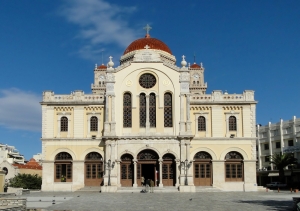
Saint Minas is the patron saint and protector of the Grand Castle (Heraklion) and its past combines legend with tradition and the town's history. It was built in 1862, next to the smaller temple of Saint Minas.
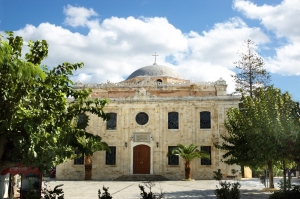
During the second Byzantine period, as the largest and prime official church in the city of Chandax, St. Titus became the seat of the new Orthodox Diocese of Crete. The Venetians later installed a Catholic archbishop and converted the church into a Catholic cathedral.
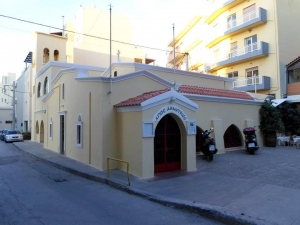
The Church of Saint Demetrius near the Venetian harbor of Heraklion is built on the site of an older church of St. Demetrius, who was the patron saint of the carpenters of Heraklion during the Venetian era (every profession then had its patron saint!). The only surviving part of the initial church is a part of frescoes inside the sanctuary.

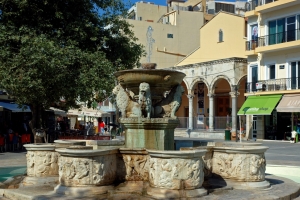
The fountain of Morozini (known as Lions) is one of the nicest Venetian monuments of Candia (current Heraklion). The fountain was watered by the spring of Karidaki and the watered traveled about 15km in a gigantic aqueduct, one of the longest in the then world.
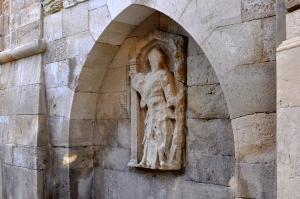
The fountain that we meet today in the north wall of the Venetian Loggia was built by the Duke Jiovani Sagredo during 1602-1604 to serve the nobles who were gathered in the Loggia.

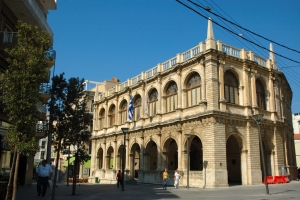
The Venetians used to build a luxurious building in each of their cities, where the nobles could pleasantly spend their time and socialize. In Candia, they built the Loggia (meaning Noble Club) which is now met on the August 25 street.
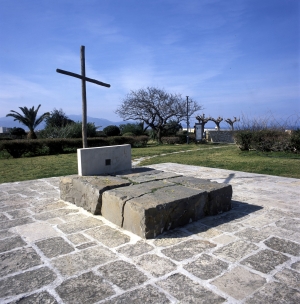
The grave of the important Cretan writer Nikos Kazantzakis (1883-1957) is located at the highest point of the Walls of Heraklion, the Martinengo Bastion, with panoramic views to the ugly, but also historical, concrete jungle of Heraklion.
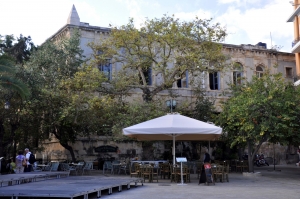
The Venetian armoury (Armeria or Armarento) is situated between the Loggia and St. Titus Square. Although it served a different purpose than the noble's club, the two buildings formed a single complex.

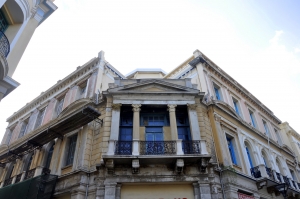
The “Liopyrakis Megaron” is undoubtedly the most important sample of the romantic neoclassical style in Heraklion. It is a work of the architect Dimitris Kyriakou. Its construction began at the end of the first decade of the 20th century. It was one of the most luxurious mansions that were constructed in the first two decades in a very central street, the 25th of August Avenue.

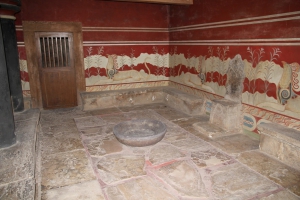
Knossos was the most important city on Crete before the Roman Era and the center of the first brilliant European civilization, the Minoan. The palace of King Minos is the most visited archaeological site in Crete with more than 1.000.000 visitors per year.

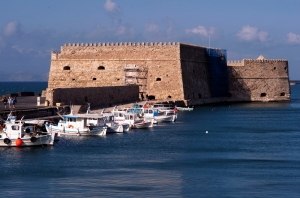
The imposing medieval fortress of Koules still stands at the beginning of the western breakwater of the modern port of Heraklion. Its real name is Rocca al Mare, named so by its Venetian founders. Koules, or the Great Koules like it is called, was not the sole ruler of the port.

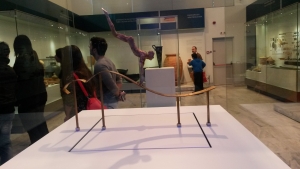
The collection of the Minoan antiquities in the Archaeological Museum of Heraklion is the largest in the world and the museum is considered the main Museum of Minoan civilization. It is classified as one of the largest and most remarkable museums in Greece and one of the most important in Europe.
Also read:
- Home
 Beaches
 Nature
 Past
Past Destinations
 Highlights
 West Crete
- Central Crete
- East Crete
- Towns
- Chania Prefecture
- Chania
- Paleochora
- Kissamos
- Georgioupolis
- Chora Sfakion
- Loutro
- Rethymnon Prefecture
- Rethymnon
- Agia Galini
- Plakias
- Spili
- Anogia
- Heraklion Prefecture
- Heraklion
- Hersonissos
- Malia
- Matala
- Agia Pelagia`
- Archanes
- Kokkinos Pirgos
- Lassithi Prefecture
- Agios Nikolaos
- Elounda
- Sitia
- Ierapetra
- Makrigialos
- Palekastro
- Zakros
- Lassithi Plateau
- Get Prepared


