
Ancient Ierapytna (Ierapetra)
The current city of Ierapetra is built on the site of the ancient city of Ierapytna. Its current name Ierapetra was preceded by other names such as Kyrva, Kamiros, Pytna, and Ierapytna.





Ierapetra lies 30 km south of Agios Nikolaos, near the narrowest part of Crete, and is the southernmost town in Greece.
Ierapetra is a modern and lively coastal town whose economy is based mainly on agriculture and tourism. The fertile plain surrounding the town produces large quantities of early-season vegetables, much of which are exported to European markets. Ierapetra also offers well-developed tourist facilities, with hotels of all sizes, restaurants, cafés and attractive beaches. Its seafront promenade is the liveliest part of the town, particularly on summer evenings.
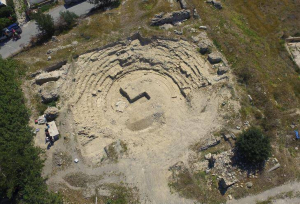
The modern town stands on the site of ancient Hierapytna. Throughout its long history, the settlement was associated with names such as Kyrva, Kamiros, Pytna and Hierapytna. Its strategic position near the narrowest part of Crete and opposite the coast of North Africa encouraged the development of trade and navigation.
One of Hierapytna’s principal rivals in eastern Crete was Praisos, which it destroyed in 155 BC. The city gradually acquired one of the largest territories of any Cretan city-state, extending from the area of Tsoutsouras to Xerokambos. It later competed with the powerful city of Itanos, near present-day Vai.
During the Roman period, Hierapytna flourished and became one of the most important cities in Crete. Its harbour was particularly significant because of its position on the maritime routes towards Egypt and the eastern Mediterranean. The town retained its importance during the First Byzantine period but later suffered destruction during the Arab raids. Under Venetian rule, its defences were strengthened and the fortress of Ierapetra was constructed.
The best-known landmark of the town is the seaside Kales Fortress, situated at the entrance to the old harbour. Its origins date to the Venetian period, although the building underwent later alterations and additions. Today it is an important archaeological site and occasionally hosts cultural events.
Visitors should also explore the small and picturesque Old Town in the district of Kato Mera. One of its most unusual landmarks is the so-called House of Napoleon. According to local tradition, Napoleon Bonaparte stayed there anonymously for one night in July 1798 while travelling to Egypt. The story claims that he left a note the following morning revealing his identity.
Kato Mera is also home to an Ottoman mosque and its accompanying fountain. Near the Town Hall stands the former Ottoman School, built in 1899, which now houses the Archaeological Collection of Ierapetra. Its exhibits originate from ancient Hierapytna and the surrounding region and date from the Bronze Age to the 4th century AD.



 Beaches
 Nature
 Past
 Destinations
 Highlights
 West CreteCentral CreteEast CreteChaniaPaleochoraKissamosGeorgioupolisChora SfakionLoutroRethymnonAgia GaliniPlakiasSpiliAnogiaHeraklionHersonissosMaliaMatalaAgia Pelagia`ArchanesKokkinos PirgosAgios NikolaosEloundaSitiaIerapetraMakrigialosPalekastroZakrosLassithi Plateau


