









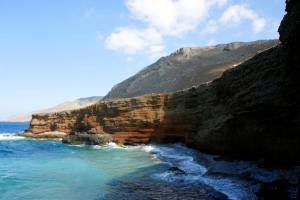
There are several small and rocky bays in the area of Anogia at province Mirabelo. This area is also accessible by car though a wild landscape. One of these beaches is Vlychada Tzavlidon, which has large pebbles. There are impressive layers of conglomerate rocks on the walls of the beach, while on the west end there is a small arch at the base of which there is little spring with fresh water.
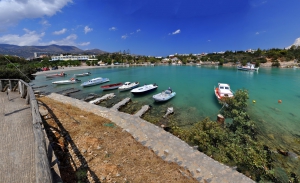
After leaving the sheltered beach of Amoudi behind you and taking the road leading to Elounda, you will soon meet one bay 1km north of the center of Agios Nikolaos, next to Hotel Minos Palace. It is a small pebbly and sandy cove, called Katholiko shaped in a very well protected narrow bay, which is mainly used as a harbor for boats (and thus is not organized).

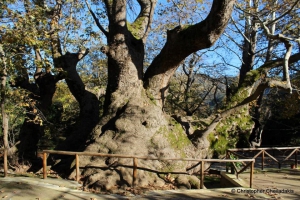
In Vlatos village, district of Kissamos, we meet one of the many huge plane trees of Crete. This specific legendary plane tree has been declared a nature monument by the Greek State.

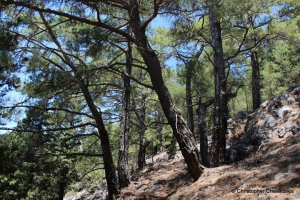
The forest village of Agios Ioannis at Sfakia province is the starting point of one of the most beautiful and best marked trails of Chania prefecture, the trail of Kormokopos. The word Kormokopos means place where trees are cut, due to the dense forest of the area.

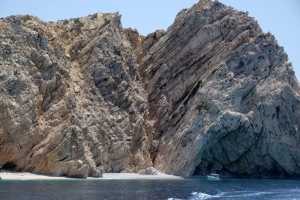
The beach that stands out from all of the west side of Gavdos is Diana. Diana is actually the second southernmost beach in Europe, after Tripiti which is located a few meters to the southeast. The beach stands out from the rest as it is less rocky, has small pebbles and has a massive rock below which you can find shade all day.

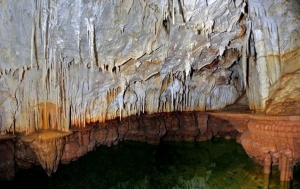
Just a few meters away from the last houses of the village Samonas, road works revealed a small cave in 1994, with rich décor and a small pond. In order to access the main room a ladder is used.

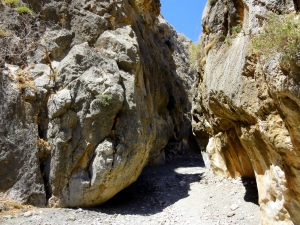
This is a short canyon, easily accessed that leads to the beach of Psili Ammos. The gorge has water till early spring, while it is actually a part of a longer gorge.
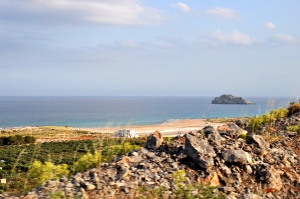
500m east to Xerokambos you will find one of the weirdest landscapes on Crete. Here you will see a large dry lake next to the sea. You may not get very excited on summer, but if you come here in spring or in winter, you will understand why this is so important. In the winter Alatsolimni (Salt Lake), as it is called, is flooded with water, forming a small lagoon.
Also read:



- Home
 Beaches
 Nature
 Past
Past Destinations
 Highlights
 West Crete
- Central Crete
- East Crete
- Towns
- Chania Prefecture
- Chania
- Paleochora
- Kissamos
- Georgioupolis
- Chora Sfakion
- Loutro
- Rethymnon Prefecture
- Rethymnon
- Agia Galini
- Plakias
- Spili
- Anogia
- Heraklion Prefecture
- Heraklion
- Hersonissos
- Malia
- Matala
- Agia Pelagia`
- Archanes
- Kokkinos Pirgos
- Lassithi Prefecture
- Agios Nikolaos
- Elounda
- Sitia
- Ierapetra
- Makrigialos
- Palekastro
- Zakros
- Lassithi Plateau
- Get Prepared


