









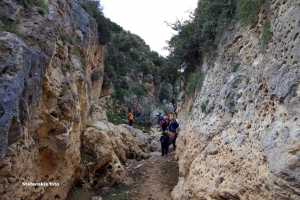
The Gorge of Agia Anastasia starts from Kenourgio Horio, Province Pediada (altitude 160m) and ending at the seaside settlement of Gournes. The name is taken after the cavernous chapel of St. Anastasia, located near its entrance. The vegetation is restricted to oleanders and the walls get narrow in several points. The descent of the gorge takes about three hours.

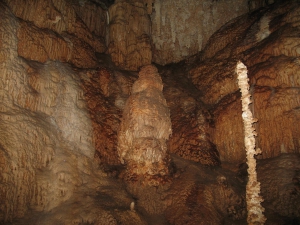
It consists of two rooms with different levels and relatively rich cave decoration. Both surveys revealed pottery of Neolithic and Minoan era. Specifically, the main use of the cave as a residence focuses on Neolithic period (3650/3500 - 2900 BC) and is was reused as shelter during the Late Minoan (1300-1250 BC) period.

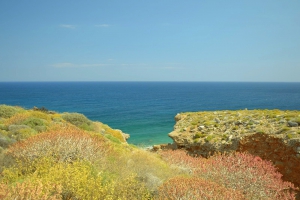
To reach the beach you can walk into the small canyon, until you meet the sea. From Finokalias follow the short path that leads northwards, until you see the bed of the gorge. While walking along this, you will cross one beautiful and wild landscape with bare rocks, low vegetation and numerous spices and herbs.

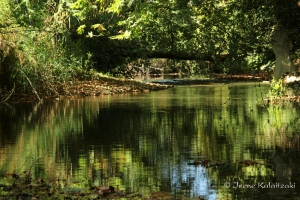
Kyliaris river starts near Stylos village by Apokoronas Province and ends at the beach of Kyani Akti near Kalives. It’s 5km long and is the second largest river in water flow in Crete. The name Kyliaris means the river that carries stones away. It's ancient name was Pyknos (i.e. dense), due to the dense vegetation along its banks.
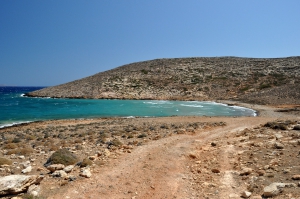
East of the main beach of Hiona, there are several small coves, where you can find a quiet place to swim alone and nude. The first sandy beach is called Bondalaki. Continuing driving along a bad dirt track to the esat, you will soon meet several coves with pebbles and enjoy the eerie landscape with gorges and wild mounts in the background. The last cove is Skaria and is the easternmost beach of Crete. It is highly affected by the sea currents (there is a lot of rubbish). The previous beach, Pilos, is formed in clay ground and is ideal for seclusion.
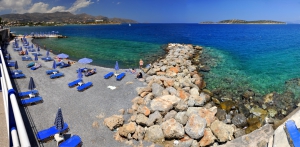
A few yards south of Ammoudi beach, next to the coastal street of Akti Koundourou leading to Lake Voulismeni you will find a small artificial beach with sand. The beach of Akti Koundourou Street is formed between two concrete piers. It is well organized with umbrellas and water sports, while it hosts a diving school.

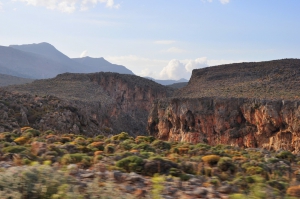
Gorge Katsounaki is located in the dry Eastern Crete, east of Xirokambos settlement. The river passing through the gorge leads to the beach of Xerokampos River, next to the beautiful sand beach of Alona. Hiking in the canyon is easy and the landscape with tall walls is very wild. You can walk upside down from Alona.

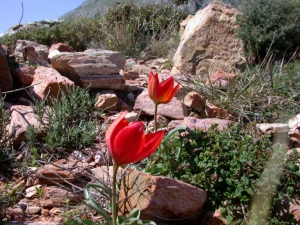
The red tulip of Goulimis (Tulipa goulimyi) is extremely rare in Crete, as the only confirmed population is limited to a very small area of the peninsula Gramvousa. The population of Crete has shrunk too much, mainly because of the cultivation and tourism. Other less endangered populations are found on Kythera, Antikythera and South Peloponnese.
Also read:



- Home
 Beaches
 Nature
 Past
Past Destinations
 Highlights
 West Crete
- Central Crete
- East Crete
- Towns
- Chania Prefecture
- Chania
- Paleochora
- Kissamos
- Georgioupolis
- Chora Sfakion
- Loutro
- Rethymnon Prefecture
- Rethymnon
- Agia Galini
- Plakias
- Spili
- Anogia
- Heraklion Prefecture
- Heraklion
- Hersonissos
- Malia
- Matala
- Agia Pelagia`
- Archanes
- Kokkinos Pirgos
- Lassithi Prefecture
- Agios Nikolaos
- Elounda
- Sitia
- Ierapetra
- Makrigialos
- Palekastro
- Zakros
- Lassithi Plateau
- Get Prepared


