




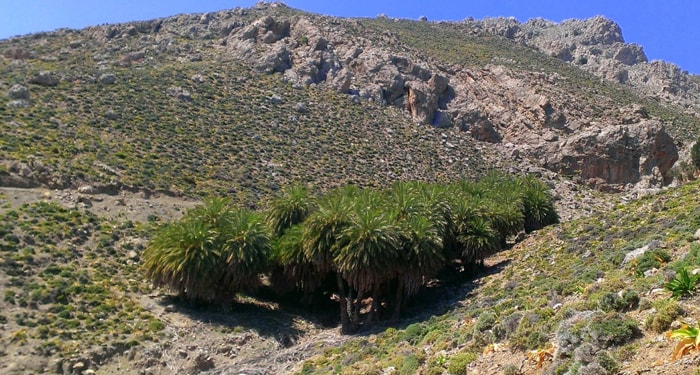





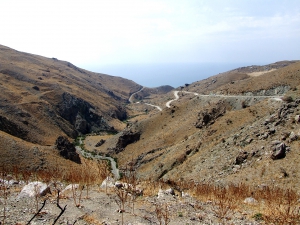
The Gorge of Swallows is located 33km south of town of Rethymno city, next to the famous beach of Preveli with the majestic palm grove and the stunning river. It starts close to the village Drymiskos, runs almost parallel to the canyon of Kourtaliotiko (that of Preveli) and ends at the beach of Drymiskiano Ammoudi. It’s name is taken after the the swallows that arrive in the area every summer.

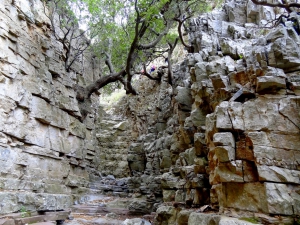
The exit of the gorge Tsigounis is located 1km west of the village Sfaka, Sitia district, on a turn of the main road connecting central Crete to Sitia. The river flowing through the gorge gets its water from the plateau Monokara and is "stingy" (tsigounis means stingy) as it has small quantities of water only in winter.

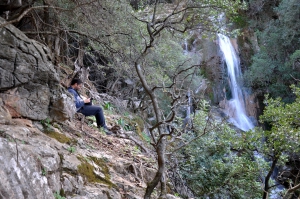
Gorge of Embasa starts its course from the village Kato Kera and ends near the village Gonies, being about 2km long. Its upper part is very steep and in winter several waterfalls are formed, with the highest being about 20m high.
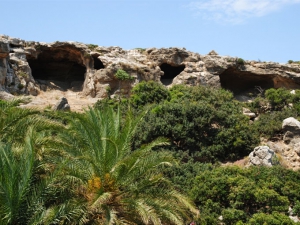
Throughout its short length its hides two key surprises. First, it hosts a small colony of Cretan date palm trees (Theophrastus palm trees), while at the end of it, by the sea, some ponds with fresh water are formed. Especially these springs are an unexpected view in the hot and dry East Crete.

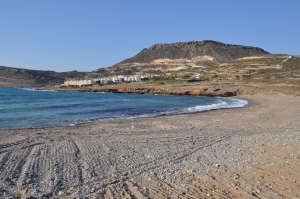
Agia Fotia is located 7km east of Sitia and 76km east of Agios Nikolaos, on the road to Vai. It takes its name after the church of Agia Fotini. In front of the village of the region stretches a long beach with rocks and sand that has attracted several hotels recently. The secluded beaches of Agia Fotia is prone to north winds and you’ll rarely find it peaceful.
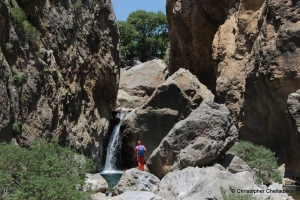
Platys (i.e. wide) river is one of the rivers of foremost importance in Crete, flowing all year round. It gathers almost all water quantities of Amari Valley and leads them to the beach of Agia Galini. At a secret location between the settlements Agia Paraskevi, Vyzari, and Petrohori, the wide river gets narrow and forms two impressive ravines. The first is the small Mesa Faragi (inner gorge), reminding of the gorge of Kourtaliotis.

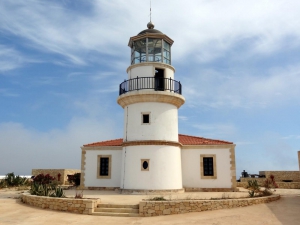
The lighthouse of Gavdos is built a few meters south of the village Ambelos at an altitude of 368m, at the west coastline. Constructed in 1880 by the French Company for Lighthouses and was visible at a distance of 42 miles (the second longest distance in the world since then, after the lighthouse of Tierra del Fuego).

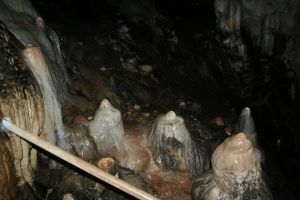
The cave of Vreiko is located about 2km north-east of the village. It is a cave and gulch and the known depth is 25-30 metres. The Entrance is an open and flat place that looks like a threshing floor. In the entrance there are stairs that make the entry and exit to the cave easier. A fig tree has grown at that place and its bouches cover a big gallery which is about 60-70 metres long. At the entry and the end of the gallery there are signs from the Neolithic Era.
Also read:



- Home
 Beaches
 Nature
 Past
Past Destinations
 Highlights
 West Crete
- Central Crete
- East Crete
- Towns
- Chania Prefecture
- Chania
- Paleochora
- Kissamos
- Georgioupolis
- Chora Sfakion
- Loutro
- Rethymnon Prefecture
- Rethymnon
- Agia Galini
- Plakias
- Spili
- Anogia
- Heraklion Prefecture
- Heraklion
- Hersonissos
- Malia
- Matala
- Agia Pelagia`
- Archanes
- Kokkinos Pirgos
- Lassithi Prefecture
- Agios Nikolaos
- Elounda
- Sitia
- Ierapetra
- Makrigialos
- Palekastro
- Zakros
- Lassithi Plateau
- Get Prepared


