




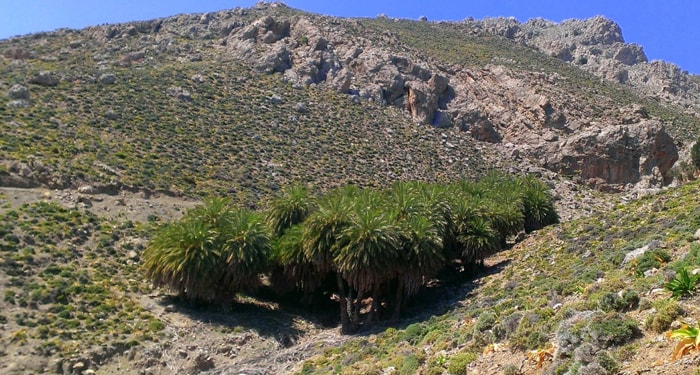





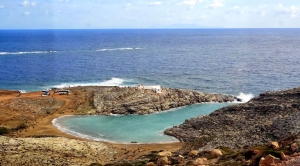
Saint Isidore is located at the northeasternmost tip of Crete, 32km east of Sitia and 99km east of Agios Nikolaos. It is situated at the northernmost point of Cape Sidero, near the Military Naval Station in Kyriamadi. The surrounding area is characterized by a unique landscape of wild beauty, which was shaped by the effect of salt and winds.

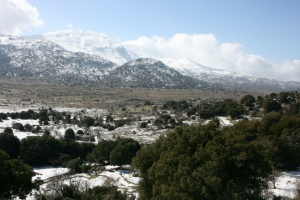
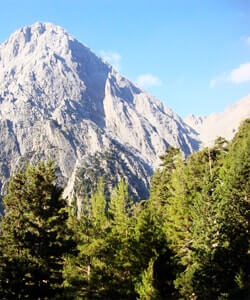
The plateau Katharo lies 26km south of Agios Nikolaos and 16km west of Kritsa, at an altitude of 1150 meters. The waters of the Plateau are transported through the beautiful gorge of Havgas into Lassithi Plateau. Katharo is uninhabited, although there are several farmhouses belonging to the village of Kritsa.

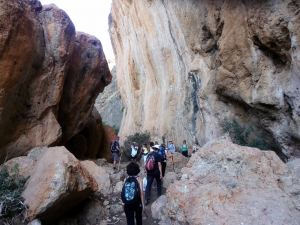
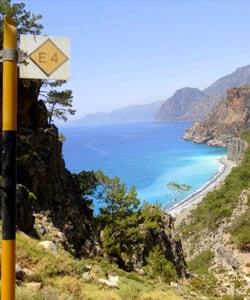
Through the gorge of Lissos passes the trail that connects Sougia to Ancient Lissos. It's a long canyon with imposing towering walls, but the path that leads to ancient Lissos covers only a small part of the route, taking only about 1 hour.

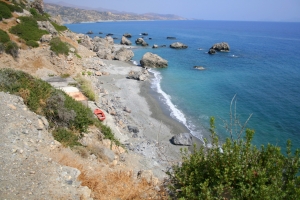
Between Gialopotama and the harbor of Agia Fotini, there are two adjacent beaches with fine pebbles and sand, surrounded by huge rocks. These beaches, called Pirgos, are ideal for snorkeling and nudism. There is a bad dirt track heading to Pirgos, starting 500m north of Gialopotama

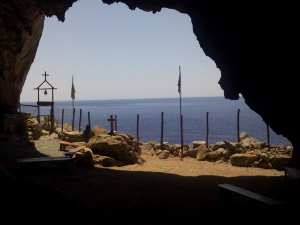
West of Koudoumas Monastery lies Avvakospilio, a cavernous church where, according to tradition, Ossios Kosmas lived as an ascetic during the 7th century and where his remains were buried.

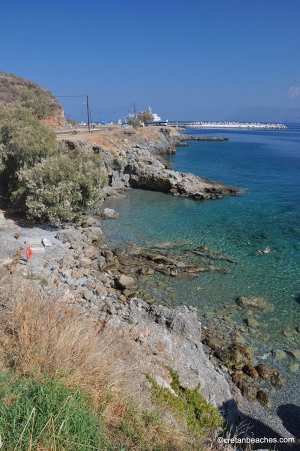
The beach of Damialis is located 1.5km north of Kissamos town and 37km west of Chania. It is situated just off the main road linking Kissamos with Platanos, thus access is very easy.
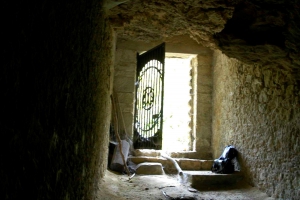
Neraidospilios of Astraki is situated about 23 km from Heraklion, near the village Astraki. The cave is located near the majestic river of Astraki, where the gorge, ending in Karteros, starts. Neraidospilios is a small two-storey cave. According to the archaeologist Paul Faure, it has been the temple of Athena Tritogenia, whose surname is derived from the ancient name of river Karteros, that is Triton (Tritogenia means “coming from Triton”). The cave is one of the springs of the aqueduct of Astraki, which still supplies Heraklion city with water, since the early 20th century.


The Cretan stone marten (scient. Martes foina bunites) is a nice mammal, arboreous, night owl, carnivorous and fruit-eater that lives alone (except for the mating season) in rock fissures, in tree hollows, in raptors’ abandoned nests, in desert underground galleries, in sparse forests, in bushy places and in gorges.
Also read:



- Home
 Beaches
 Nature
 Past
Past Destinations
 Highlights
 West Crete
- Central Crete
- East Crete
- Towns
- Chania Prefecture
- Chania
- Paleochora
- Kissamos
- Georgioupolis
- Chora Sfakion
- Loutro
- Rethymnon Prefecture
- Rethymnon
- Agia Galini
- Plakias
- Spili
- Anogia
- Heraklion Prefecture
- Heraklion
- Hersonissos
- Malia
- Matala
- Agia Pelagia`
- Archanes
- Kokkinos Pirgos
- Lassithi Prefecture
- Agios Nikolaos
- Elounda
- Sitia
- Ierapetra
- Makrigialos
- Palekastro
- Zakros
- Lassithi Plateau
- Get Prepared


