




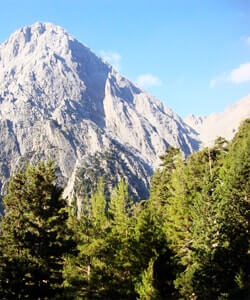




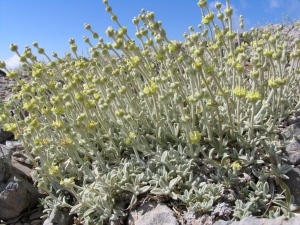
Malotira (Sideritis syriaca), also known as Cretan Mountain tea is a herbaceous plant or shrub, 10-50cm long, which is met at ranges over 900m in West Crete (over 900m). The species is endemic to Crete and the name syriaca (instead of cretica) probably comes from a confusion of the botanist who gave the name.

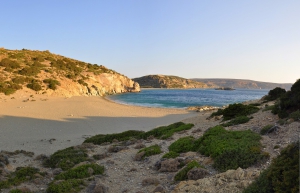
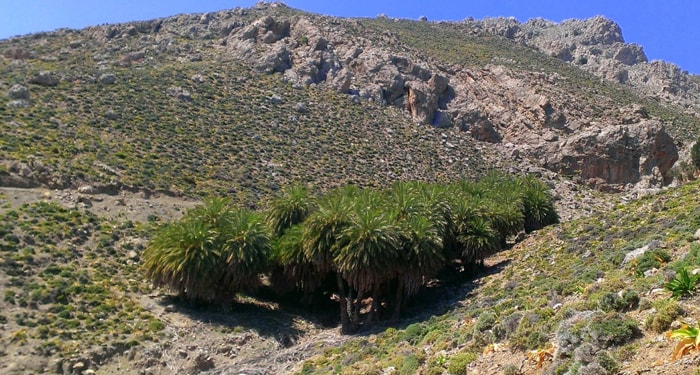
Psili Ammos is located near the famous palmforest of Vai, 95km east of Agios Nikolaos and 25km east of Sitia. It can be accessed via a short footpath that starts in Vai and circles the hill on the east end of Vai. Walking does not exceed 5 minutes and the beach is definitely worth visiting.

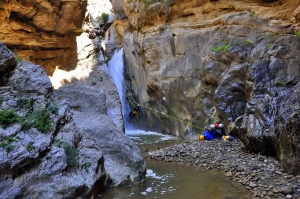
Portela Gorge is located at the south of the prefecture of Iraklion; the canyon starts from Hondros village and its exit is in Keratokambos. It is one of the most dangerous canyons in Greece.
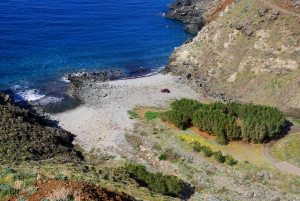
Richtis is located around 20km west of Sitia and 45 east of Agios Nikolaos, in the exit of the homonym Gorge of Richtis that starts from the village Exo Mouliana. In order to reach the beach you can follow the paved road starting from Exo Mouliana. Alternatively, you can trek in the lush gorge.

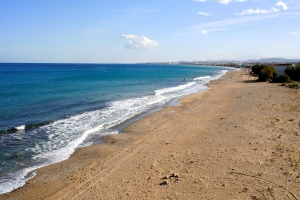
Linoperamata (or Ellinoperamata) is a long sandy beach, that is located 8km west of Heraklion, west of Almiros river. This is actually the west part of the 7km long beach starting at Linoperamata and ending at Pancretan Stadium, 1km west of Heraklion.
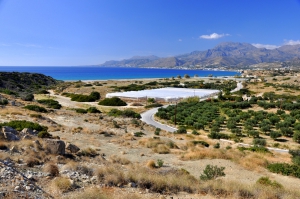
Lagada is located 29km east of Ierapetra and 62km southeast of Agios Nikolaos, near Makrigialos (6km). It is situated in a large fertile valley with many olive groves, which is surrounded by the tall mountains of Makrigialos. During the last years, some hotels and rooms to let have been built, but the beach still retains its remoteness.

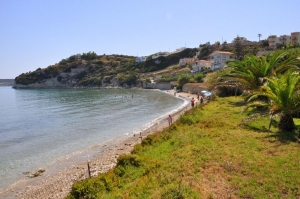
Kera beach is located around 20km east of Chania city, on the south shores of Souda Bay and close to the picturesque village of Plaka. The beach with the soft sand and some pebbles in places is situated in a wonderful landscape, with towering cliffs around.
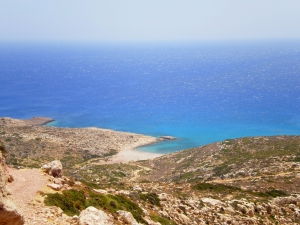
Skinias is a remote area located 94km east of Agios Nikolaos and 20km east of Sitia, in one of the most remote places on Crete. The wild area hosts three nice small coves, ideal for isolation at the exit of Katsara gorge. There are no amenities and trees around, thus you should have water and umbrella with you.
Also read:




- Home
 Beaches
 Nature
 Past
Past Destinations
 Highlights
 West Crete
- Central Crete
- East Crete
- Towns
- Chania Prefecture
- Chania
- Paleochora
- Kissamos
- Georgioupolis
- Chora Sfakion
- Loutro
- Rethymnon Prefecture
- Rethymnon
- Agia Galini
- Plakias
- Spili
- Anogia
- Heraklion Prefecture
- Heraklion
- Hersonissos
- Malia
- Matala
- Agia Pelagia`
- Archanes
- Kokkinos Pirgos
- Lassithi Prefecture
- Agios Nikolaos
- Elounda
- Sitia
- Ierapetra
- Makrigialos
- Palekastro
- Zakros
- Lassithi Plateau
- Get Prepared


