




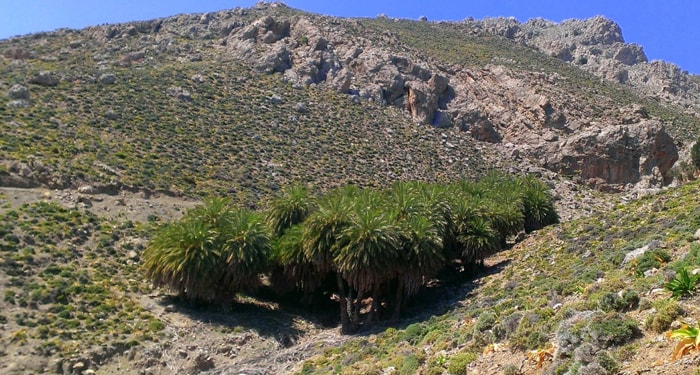




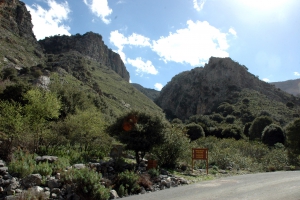
The gorge of Roza is an offshoot of the gorge of Ambelos. It starts from a point near the rural road that crosses the gorge of Ambelos and has east-southeast direction, leading to Kera.

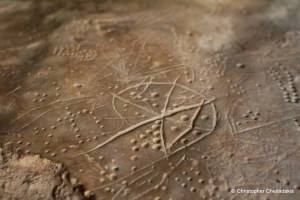
Asfendou cave is located near the village of Sfakia, on a steep slope at position Skordalakia. The road connecting Asfendou with Kallikratis passes nearby and there is a plateau with an area of 2000 square meters in front. Skordoulakia cave is a very small rock shelter without woo much depth that barely fits two people and is located on a hillside at the beginning of the canyon Asfendou.

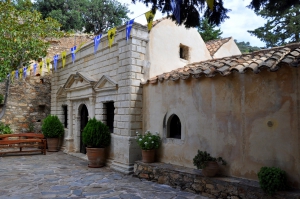
The Monastery Attali or Bai is built over the hill of Agia Ypakoi, west of Bali, with panoramic sea views to the sea and close to the main road connecting Rethymnon to Heraklion. The region was isolated till 1970, when the highway was constructed, and thus monasticism and asceticism flourished till then.

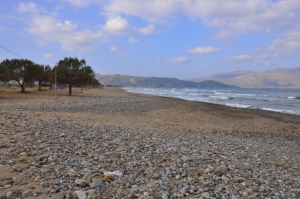
Korfalonas is a nice sandy beach with shallow waters located in the central part of the vast beach that runs from Kissamos to Cape Rodopos. There are a few amenities near the beach, with umbrellas, showers, taverns and hotels included.

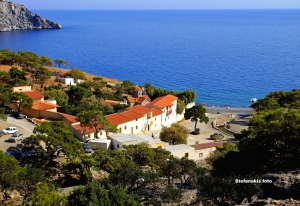
The monastery of Koudoumas is located 74km south of Heraklion, on the western side of Cape Martelos and south of Kofinas Peak (the highest peak of Asterousia Mountains). The whole area is full of cavities where hermits used to live. To reach the monastery, you have to drive in a passable dirt road of 20km, starting from the village Sternes, which descends from an altitude of 1000m to the sea level.
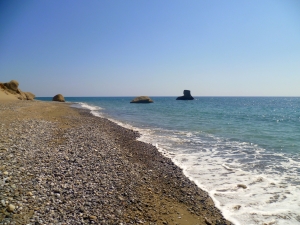
Armenopetra is located 73km southeast of Heraklion and 5km east of the seaside village of Keratokambos. The beach is situated south of town Kapsali and is one of the most beautiful beaches in the region of Keratokambos. The area is quite dry, as it’s name implies (Kapsali means dry and arid).
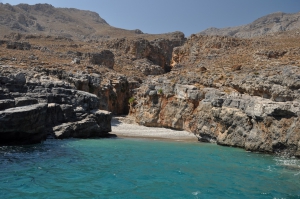
The beach, which is in one of the most isolated areas of the island, has beautiful pebbles and is surrounded by tall vertical cliffs. The beach is mainly accessed by boat, but you could also trek from Agios Nikitas. The surrounding area is ideal for fishing. Moreover, if you come by boat, do not forget to walk in the gorge and admire the rugged landscape, till the dead end with falls that get dry in summer.

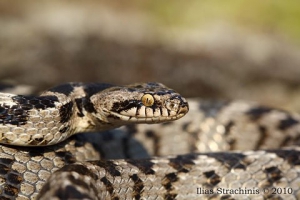
The cat snake (scient. Telescopus fallax) is the only snake in Crete with venom. However, the poison is too weak to hurt humans and is excreted in the back of its mouth, making it actually harmless. The snake feeds on small lizards and uses the poison for relaxing their bodies.
Also read:




- Home
 Beaches
 Nature
 Past
Past Destinations
 Highlights
 West Crete
- Central Crete
- East Crete
- Towns
- Chania Prefecture
- Chania
- Paleochora
- Kissamos
- Georgioupolis
- Chora Sfakion
- Loutro
- Rethymnon Prefecture
- Rethymnon
- Agia Galini
- Plakias
- Spili
- Anogia
- Heraklion Prefecture
- Heraklion
- Hersonissos
- Malia
- Matala
- Agia Pelagia`
- Archanes
- Kokkinos Pirgos
- Lassithi Prefecture
- Agios Nikolaos
- Elounda
- Sitia
- Ierapetra
- Makrigialos
- Palekastro
- Zakros
- Lassithi Plateau
- Get Prepared


