




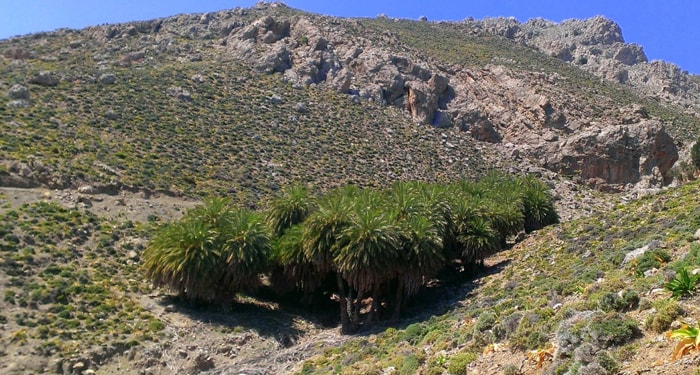
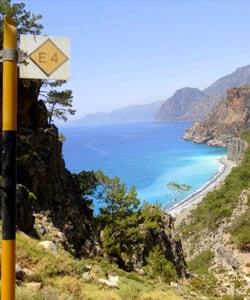




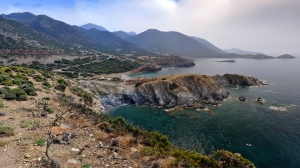
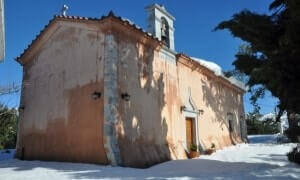
Kalo Horafi is located approximately 37km east of Rethymno and 43km west of Heraklion, at the former position of 318 Agii Pateres (318 Holy Fathers) monastery. The monastery does not survive today, but there is a newer chapel commemorating that. “Kalo Horafi” is the name of the wider area, characterized by the wild Cretan landscape with high mountains and green gorges.

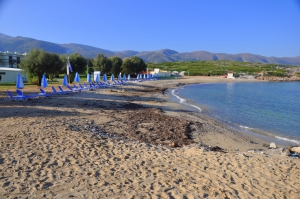
The sandy beach is formed in a small bay in front of the hotel Hellenic Palace. Opposite the bay there is an islet where you can go swimming, but beware for the strong currents. The beach is well organized with umbrellas and sunbeds, and there are several tamarisk trees nearby. Like most beaches in northern Crete, Santa Barbara is vulnerable to winds.

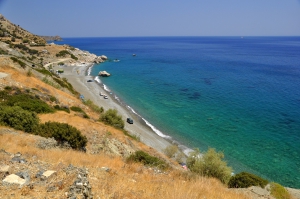
East of the village Platia Peramata you will firstly meet the longest beach of Platia Peramata, called Psili Ammos, which is totally isolated and very beautiful. The beach is not very suitable for camping, as there is no shade from trees. However, at the eastern end there are large white rocks, called Asproharaki, which offer shade to their lucky “occupiers”.

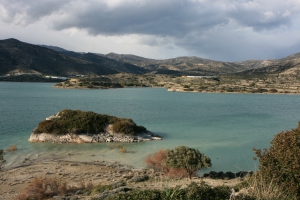
The artificial lake of Bramiana was built in 1986 at Bramiana to meet the 30.000 of the greenhouses of Ierapetra. It is located 5km northwest of the town, in the road connecting Ierapetra and Kalamafka village. The lake covers an area of 1050 acres and has a capacity of 15 million m3, making it the second largest wetland of southern Greece, after Potami Dam at Amari valley.

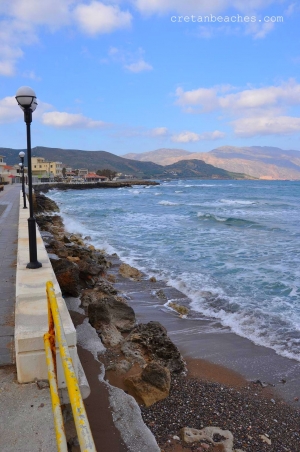
The beach of Telonio (i..e Customs Office) starts east of the main pedestrian road of Kissamos and extends to the local stadium, about 1km eastern. Actually it is the westernmost part of the vast beach that starts from Kissamos and ends in Nopigia, several kilometers eastern.

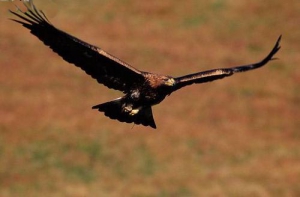
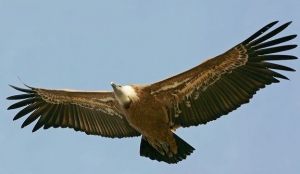
The golden eagle (scient. Aquila chrysaetos) is the most dominant bird of prey in Europe, having a wingspan of 185-220cm and a body length of 75-90cm. Unfortunately, the species in Greece is endangered, with only a few pairs left, mostly in Crete.

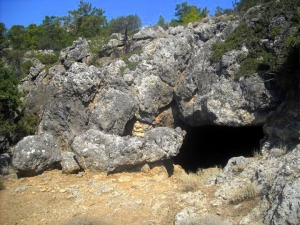
The cave of the Cyclops Polyphemus is located between Sougia and Koustogerako settlements. The cave has no interesting decor, but one marble formation that reminds of a throne. The entrance is divided in two by a large rock, like the rock that was put by Odysseus in the cave of Polyphemus, the one-eyed cannibal Cyclops, before blinding him with a large wooden stick.



- Home
 Beaches
 Nature
 Past
Past Destinations
 Highlights
 West Crete
- Central Crete
- East Crete
- Towns
- Chania Prefecture
- Chania
- Paleochora
- Kissamos
- Georgioupolis
- Chora Sfakion
- Loutro
- Rethymnon Prefecture
- Rethymnon
- Agia Galini
- Plakias
- Spili
- Anogia
- Heraklion Prefecture
- Heraklion
- Hersonissos
- Malia
- Matala
- Agia Pelagia`
- Archanes
- Kokkinos Pirgos
- Lassithi Prefecture
- Agios Nikolaos
- Elounda
- Sitia
- Ierapetra
- Makrigialos
- Palekastro
- Zakros
- Lassithi Plateau
- Get Prepared


