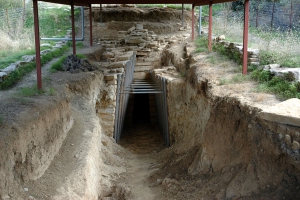
The Cretan landscape preserves numerous ancient cemeteries and funerary monuments, revealing the importance that the island’s inhabitants attached to caring for the dead, honouring their ancestors and preparing for the afterlife. Organised cemeteries began to appear during the Early Bronze Age, although natural caves and rock shelters continued to be used for burials in some regions and periods.
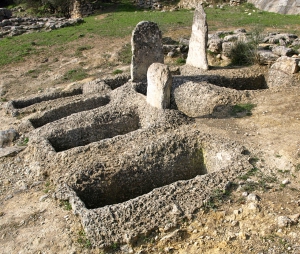
Burial practices were not uniform throughout Crete. They changed according to the period, region, social position of the deceased and traditions of each community. Archaeologists have discovered simple pit graves, rock-cut chamber tombs, rectangular funerary buildings, circular tholos tombs and extensive necropolises containing hundreds of burials.
Burial customs in Minoan Crete
Rectangular funerary buildings, commonly known as house tombs, appeared in eastern Crete during the Early Minoan period. They were generally used for successive collective burials, probably by families or larger kinship groups. Representative examples have been excavated at Gournia, Mochlos and Palaikastro.
The cemetery of Agia Fotia, near Sitia, is particularly important. Dating approximately from 3000 to 2300 BC, it is one of the largest known Early Bronze Age cemeteries in the Aegean, with more than 250 excavated tombs.
Circular tholos tombs became especially widespread in southern and central Crete. These stone-built structures were used over several generations and were often surrounded by areas intended for ceremonies and the deposition of offerings. Important complexes have been discovered at the Prepalatial cemetery of Koumasa, the cemetery of Odigitria and the tholos tomb of Kamilari.
One of the most important Minoan necropolises is the cemetery of Fourni at Archanes, which remained in use for many centuries. It contains tholos and rock-cut tombs, funerary buildings and rich grave goods, providing valuable evidence about Minoan social hierarchy and ritual practices.
Tholos and chamber tombs
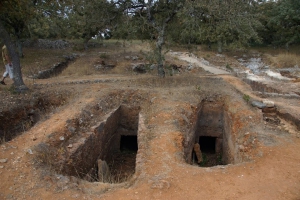
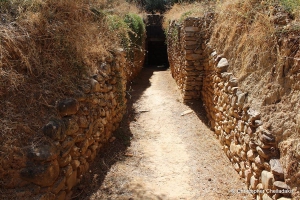
Rock-cut chamber tombs became more widespread during the Late Bronze Age. They were usually approached through a sloping passage and were often used for successive family burials. The extensive Late Minoan cemetery of Armeni, near Rethymno, is one of the best-preserved examples and contains hundreds of family tombs.
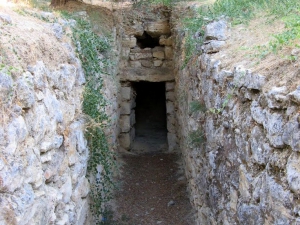
Western Crete also preserves monumental tholos tombs associated with Late Minoan and Mycenaean funerary traditions. Notable examples can be visited at Maleme, Stylos and Fylaki in Apokoronas. Other important funerary monuments survive at Margarites and Apodoulou.
Burials during the historical periods
Funerary customs continued to change during the Geometric, Archaic, Classical, Hellenistic and Roman periods. Cremation was practised alongside inhumation during certain periods. Graves were often accompanied by pottery, jewellery, weapons, tools, figurines, coins and other objects associated with the identity of the deceased or with funerary rituals.
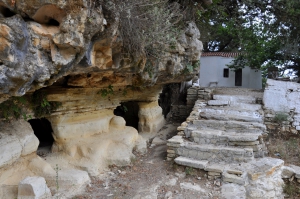
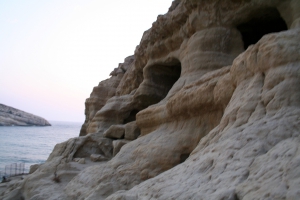
In several parts of Crete, tombs were carved into the island’s soft limestone. The best-known example is found at ancient Matala, where the Roman rock-cut tombs were used many centuries later as dwellings by the hippies. Similar funerary complexes can be seen at Trialonia, in ancient Lappa and at the impressive rock-cut tombs of Gra Mandra near Agios Thomas.
The study of Crete’s ancient cemeteries reveals much more than beliefs about death. Funerary monuments, human remains and grave goods provide evidence about social organisation, diet, disease, trade contacts and the daily lives of the people who inhabited the island over thousands of years.