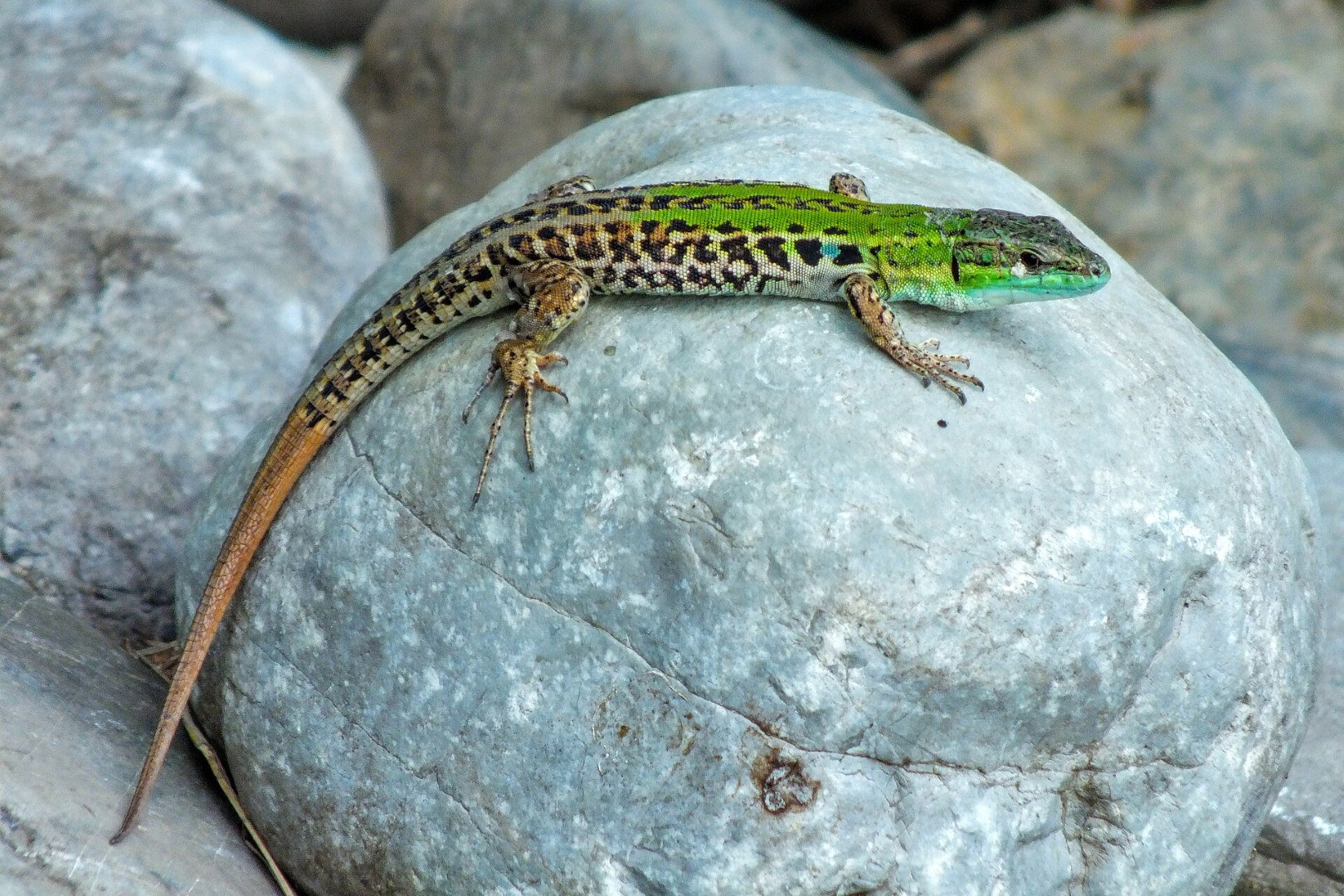
Crete’s lizards inhabit a variety of environments, from coastal areas and farmland to scrublands, dry-stone walls and rocky mountain slopes. Together with geckos, they form an important part of the island’s reptile fauna and feed mainly on insects and other small invertebrates. None of the species found on Crete possesses venom dangerous to humans.
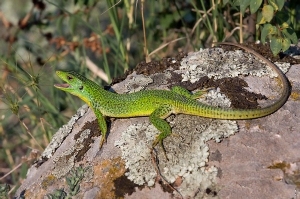
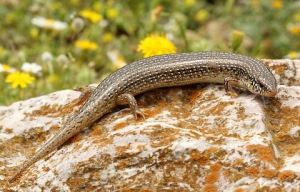
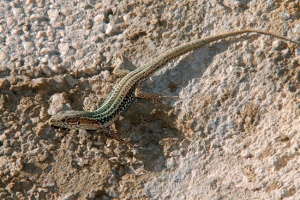
Among them, the Cretan wall lizard (Podarcis cretensis) stands out as a species endemic to Crete and neighbouring islets. The island is also home to the large, green Balkan green lizard (Lacerta trilineata) and the ocellated skink (Chalcides ocellatus), recognisable by its elongated body and small legs. Despite the widespread local belief in its “deadly” bite, the ocellated skink is not venomous.
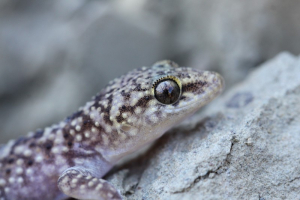
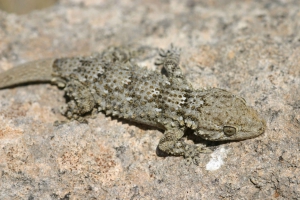
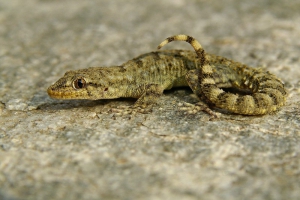
The island’s geckos include the Mediterranean house gecko (Hemidactylus turcicus), the Moorish gecko (Tarentola mauritanica) and the endemic Barton’s thin-toed gecko (Mediodactylus bartoni). Depending on the species, they shelter in buildings, dry-stone walls, rock crevices and other protected places.
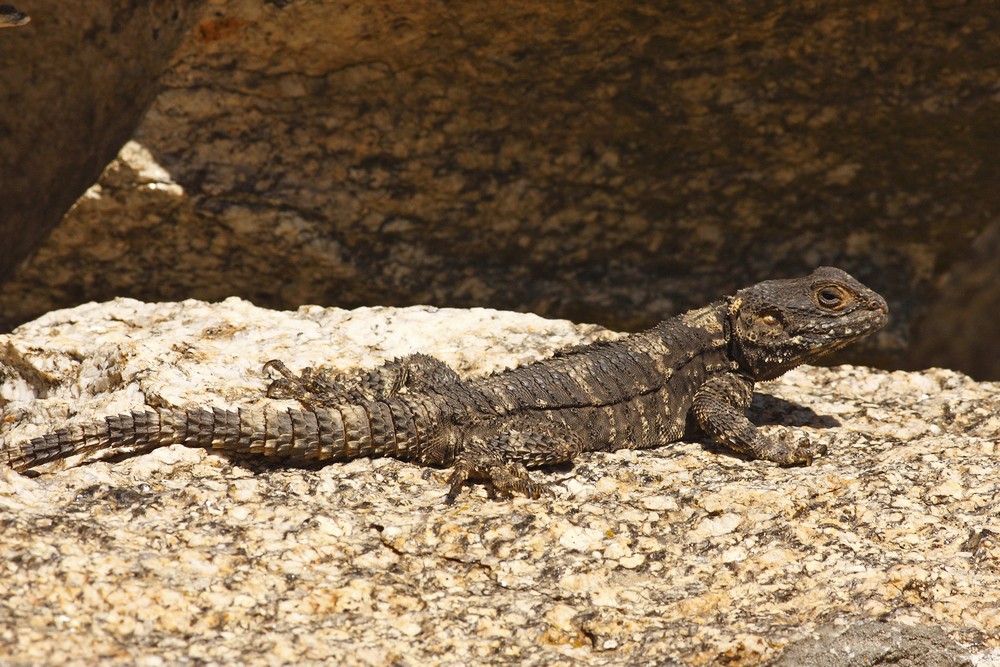
The starred agama (Laudakia stellio, synonym Stellagama stellio), a large lizard with a distinctive spiny appearance, has also been recorded in the Sitia area. The local population is considered to result from human introduction.
The Italian wall lizard (Podarcis siculus), an invasive non-native species, has also become established in Chania. Its presence raises concerns about potential effects on native reptiles, particularly the endemic Cretan wall lizard, as the two species may compete for food and space. Protecting natural habitats and preventing the transport and release of non-native species are important for conserving Crete’s lizards.