








 Mediterranean House Gecko
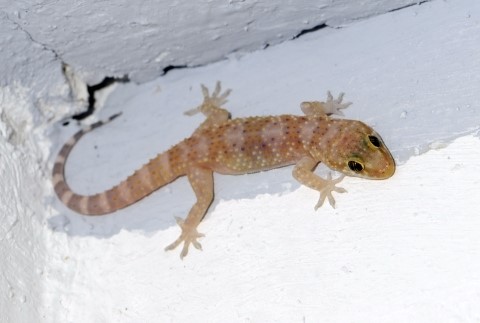
The Mediterranean house gecko (Hemidactylus turcicus), known locally as samiamidi or molyntiri, is a small gecko frequently found in houses and settlements on Crete. At night, it can be seen on walls and near lights, where it hunts insects. It has no venom and is harmless to humans.
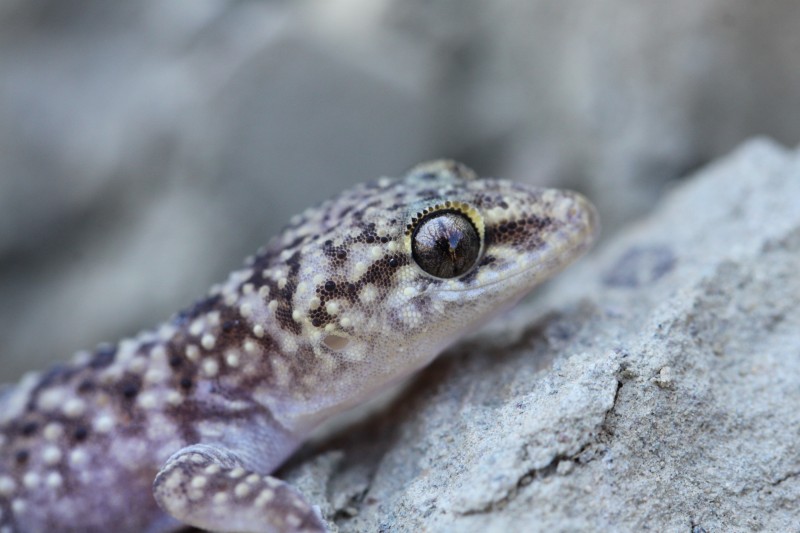
Its total length is usually around 10 centimetres and may reach approximately 12 centimetres, including the tail. It has a slender body, relatively large eyes and pale skin, often with brown spots. At night, it may appear almost translucent, while its colour is usually darker during the day. Compared with the Moorish gecko, it is more slender and less robust.
Its toes have adhesive surfaces and claws, allowing it to climb walls and even move across ceilings. It also inhabits rocky areas, dry-stone walls and other places with crevices and sheltered hiding spots.
It is mainly nocturnal and spends the day hidden. It feeds on insects, spiders and other small arthropods. Its presence near lights is linked to the concentration of prey there. Females usually lay 1–2 eggs at a time, repeating egg-laying during the year.
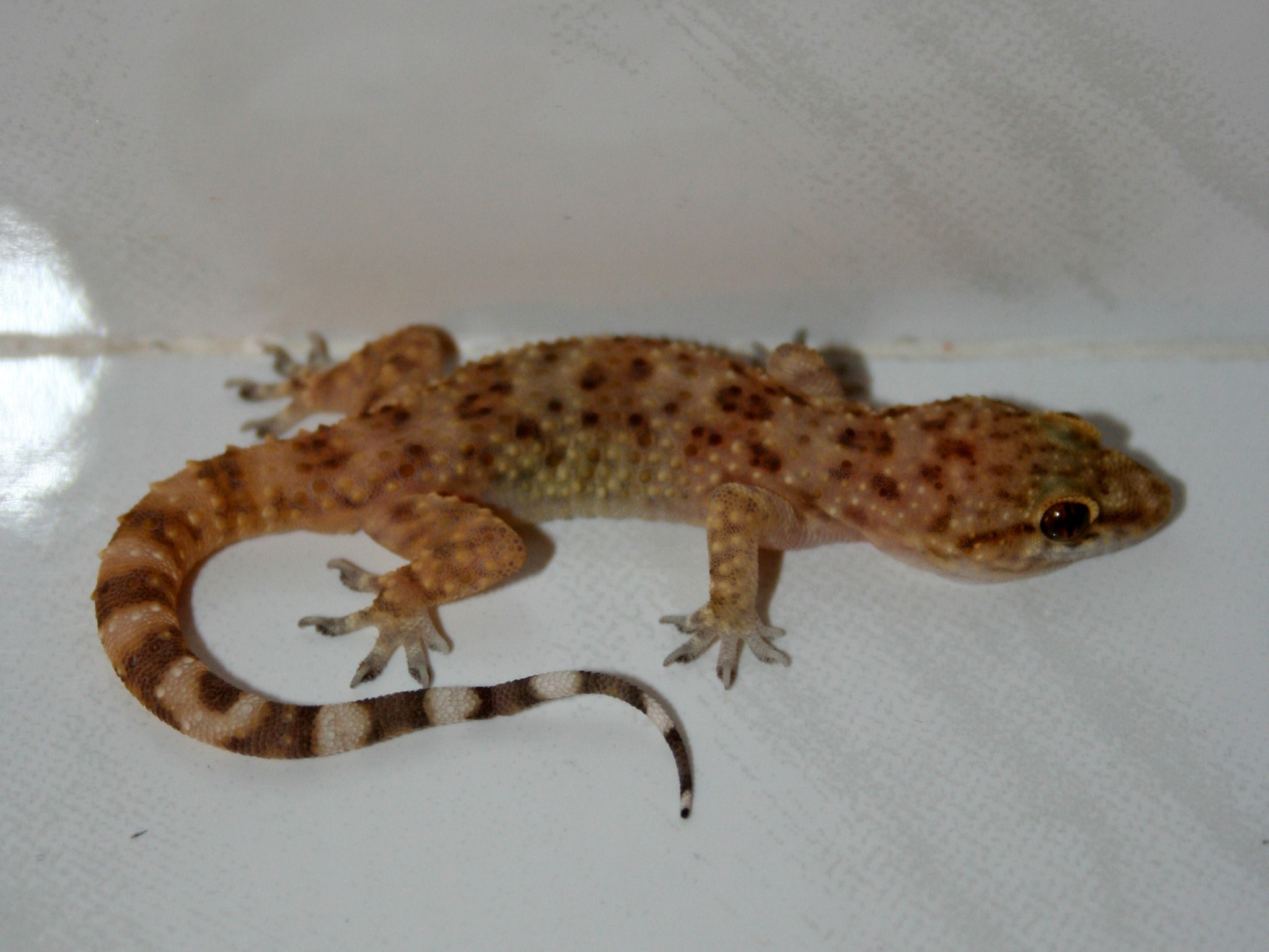
The Mediterranean house gecko communicates through short, distinctive sounds. If caught by a predator, it can shed its tail, which continues moving briefly and distracts the attacker. The tail gradually regenerates, although it may look different from the original. It should never be held by its tail or disturbed to provoke this response.
Local names such as molyntiri and mysaros reflect old misconceptions and do not mean that the animal is venomous. Elsewhere in Greece, names include simeiamidi, samiamithi, samiamithos, salamidi, mionycha, kolopapas, psapsamytis, samniomytas, mysiaros, siamaos and mecharous.


