








 Cretan wall lizard
The Cretan wall lizard (Podarcis cretensis), locally known as silivouti, mikri kolisavra or klostidaki, is endemic to Crete and neighbouring islets. It was recognised as a separate species in 2008, having previously been classified as a subspecies of Erhard’s wall lizard (Podarcis erhardii).
On Crete itself, its distribution is concentrated in the west, mainly west of a north–south axis passing through Rethymno. However, it has a distinctive geographical distribution, also inhabiting several offshore islets, including those east of Crete, where it is absent from the adjacent main island. It occurs from sea level to approximately 2,000 metres above sea level.
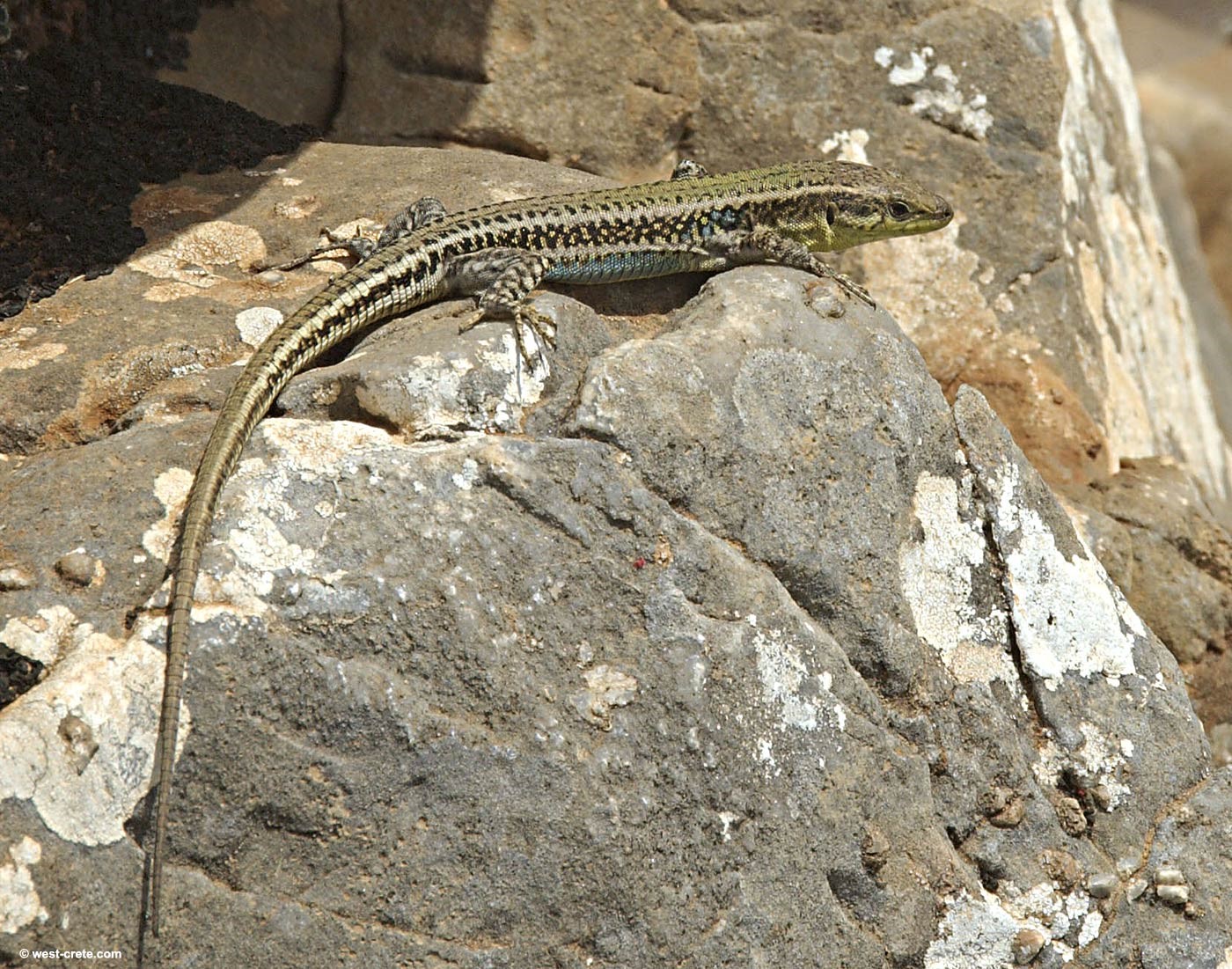
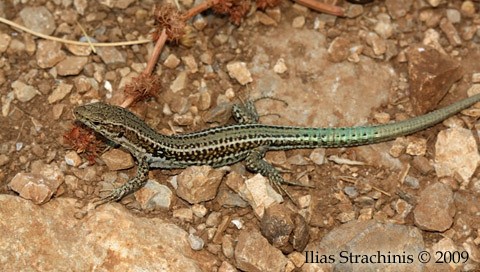
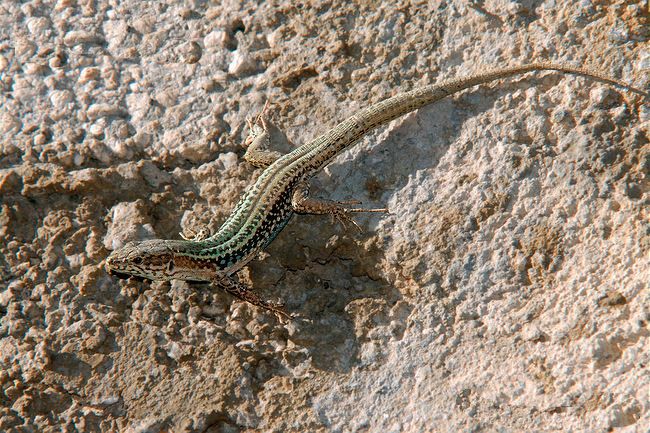
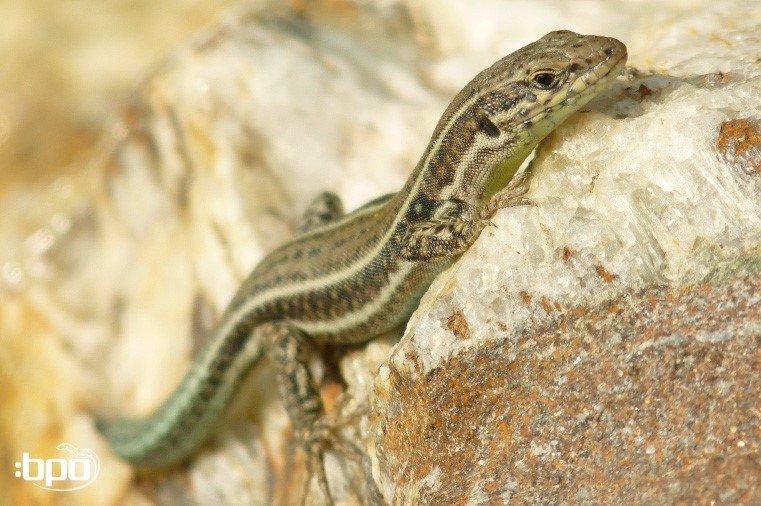
It is a small lizard, with a head-and-body length of up to approximately 7 centimetres and a considerably longer tail. Colouration varies between individuals, sexes and seasons. The back may be brown, greyish, olive or greenish, with dark spots and often pale stripes.
It inhabits phrygana scrublands, rocky slopes, dry-stone walls and sparsely vegetated areas, as well as sandy habitats. It moves mainly on the ground but also climbs rocks and low shrubs. It is active during the day, particularly in the morning and late afternoon during summer, avoiding the intense midday heat.
It feeds mainly on insects, spiders, small snails and other invertebrates. Females usually lay 1–5 eggs, often twice a year. Like many lizards, it can shed part of its tail when caught by a predator, gaining time to escape. It has no venom and is harmless to humans.
Habitat degradation, residential and tourism development, wildfires and predation by cats place pressure on its populations. The establishment of the non-native Italian wall lizard (Podarcis siculus) in Chania raises additional concerns, as it may compete with the Cretan wall lizard. The Natural History Museum of Crete is investigating the potential impacts and implementing measures to control the invasive population.


