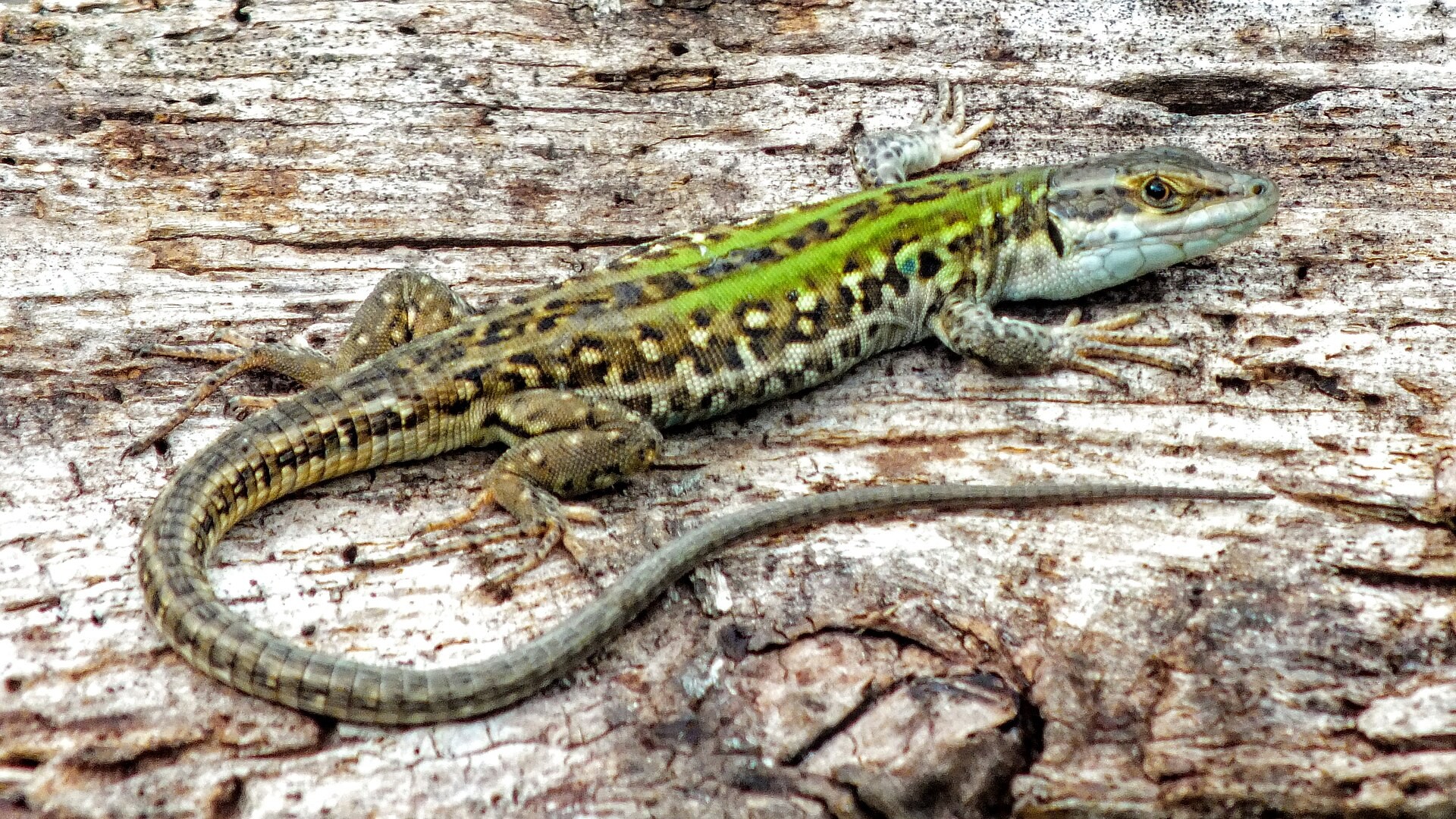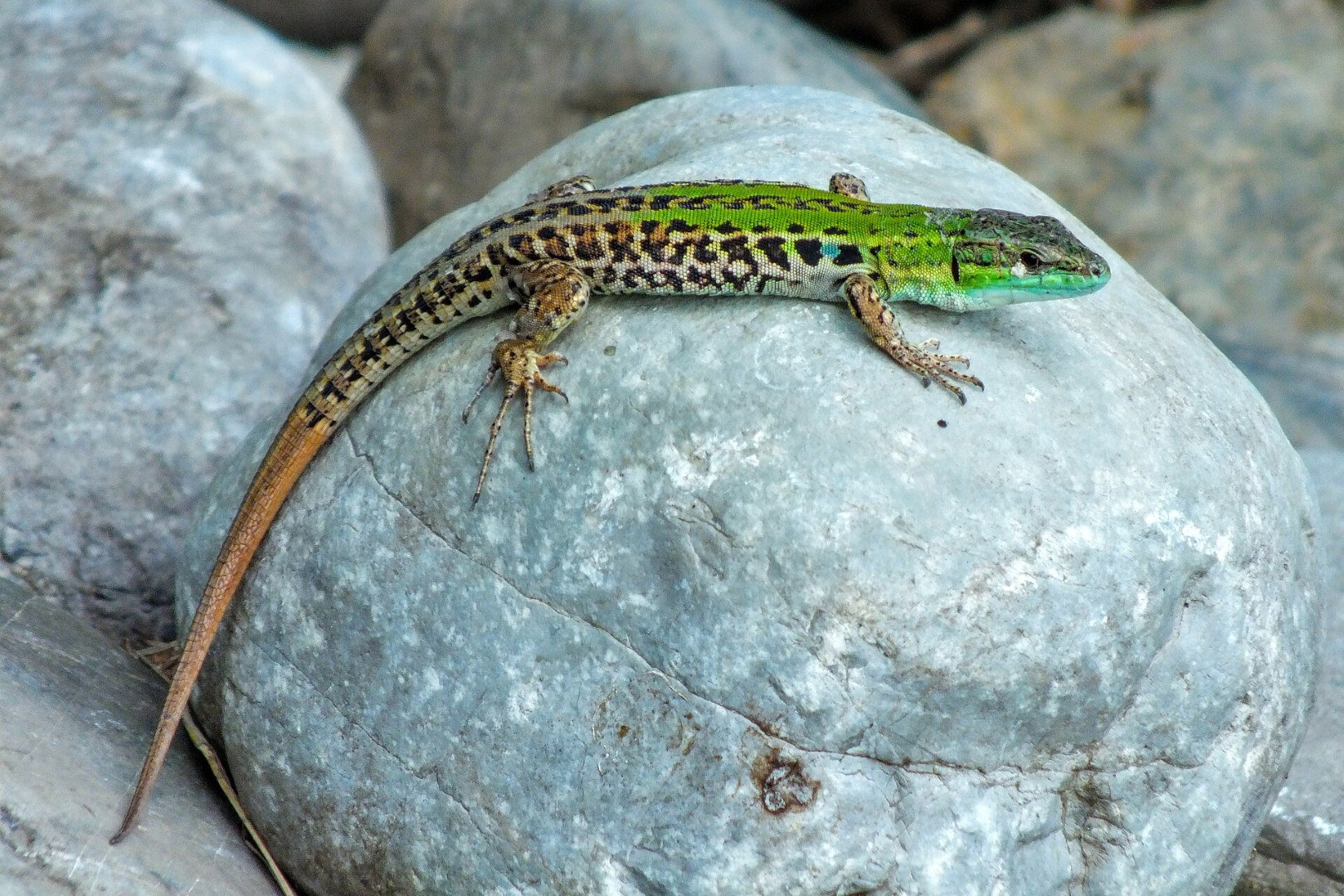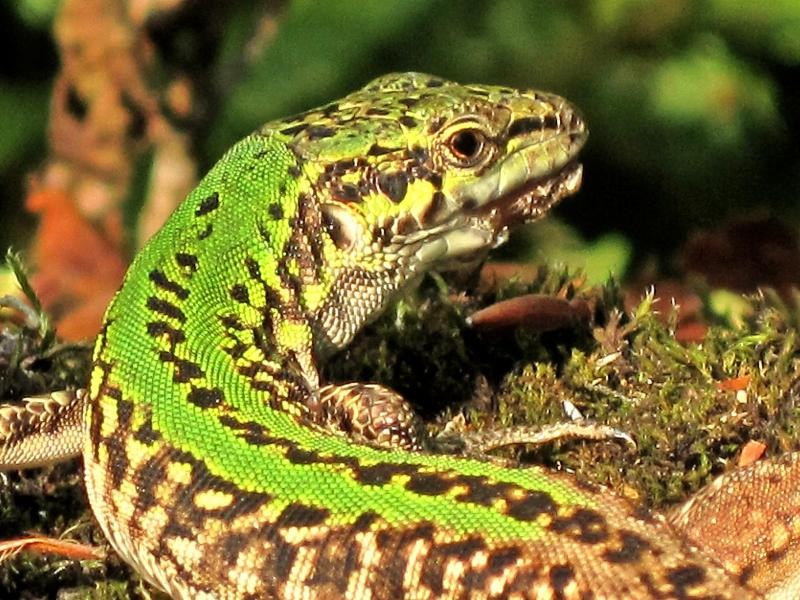

 Italian wall lizard
The Italian wall lizard (Podarcis siculus) is a diurnal lizard introduced to Crete by humans. It has been recorded around Kladissos beach at Daratsos, Chania, and is not native to the island.
It has a long tail and a relatively large head, particularly in males. Its coloration varies, often featuring green or brown tones on the back with dark markings. It moves quickly across the ground and climbs walls and other surfaces. It feeds mainly on insects and other invertebrates, but may also eat smaller lizards.
Its presence in Crete was documented in scientific publications in 2025. A genetic study linked the Cretan population to Sicily, without establishing exactly how or when the lizards reached the island.
This highly adaptable invasive species can compete with native lizards in areas where it has been introduced. In western Crete, its presence raises concerns about possible effects on the endemic Cretan wall lizard (Podarcis cretensis). The University of Crete and the Natural History Museum of Crete are carrying out a programme to study and control the invasive population, aiming to eradicate it wherever feasible.