








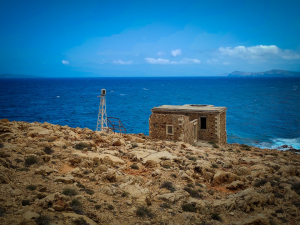
The Lighthouse of Sitia, also known as Exo Fanari, is located on the cape Vamvakia north of Sitia airport. It belongs to the network of lighthouses built by the French Lighthouse Company at the end of the 19th century throughout Crete and was put into operation in 1892.

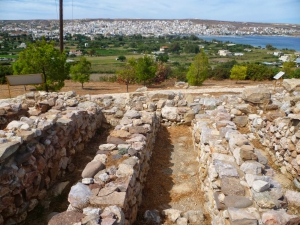
The Minoan settlement of Petras was built on a low hill near the present city of Sitia. It is believed by many researchers that this was the site of ancient Etea or Etida, from where the sage Myson came from.
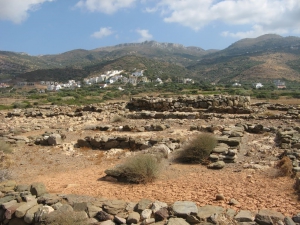
The ruins of the largest Minoan cemetery in Crete have been discovered in this area with 252 graves from the early Minoan period, 1800 vases and many artefacts buried with the dead.

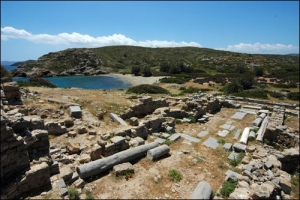
The ancient Itanos was one of the strongest cities in Crete, especially during the Hellenistic and Greco-Roman times. The name comes from its founder Itanos, who came from Phoenicia. Its territory, during its peak, stretched from Cape Samonio (current Cape Sidero) to Cape Erythrae (current Cape Goudouras).
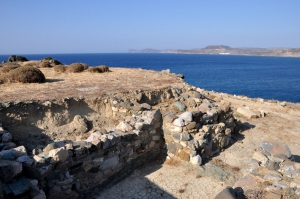
The archaeological site of Trypitos is located on a small peninsula, 3km east of Sitia, near the beach Karavopetra, which has stunning view to Sitia city. It is considered to be the ancient city of Sitia, Itia, which was originally the port of Praesus. The city flourished in the Hellenistic period (350BC-50BC).

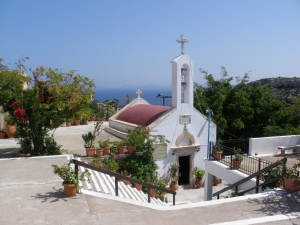
The Monastery of Panagia Faneromeni (Revealed Virgin Mary) in Trachilas area of Sitia is located on the edge of a steep area between the Cape Trachilas and Babakia, about 1.5km away from the sea and 8km west of Sitia town. It is built in a lush green area, next to the small gorge of Agii Pantes (All Saints), ideal for an easy walk.

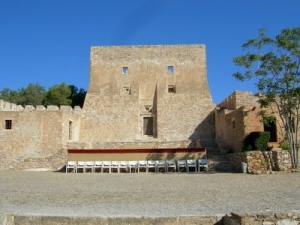
Castle Kazarma (Casa di Arma) is built on a hill near the port of Sitia, reminding of the old times that it protected the town. The fort is the only surviving part of the old town walls, which were destroyed by the Venetians.

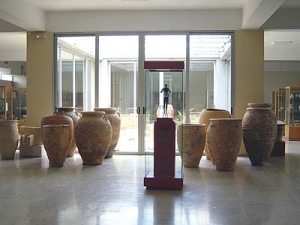
The Archaeological Museum of Sitia operates since 1984 and hosts the most important archaeological finds from eastern Crete (from Sitia, Palekastro, the islets of Mochlos and Psira, the necropolis of St. George, the palace of Zakros, the Hellenistic town of Xerokambos, Ziros, Makrigialos, Lefki island and ancient Itanos).

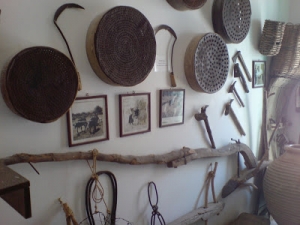
The Folklore Museum of Sitia was founded in 1975 and is housed in a beautiful neo-classical house. The collection refers to the town of Sitia in the second half of the 19th and early 20th century.
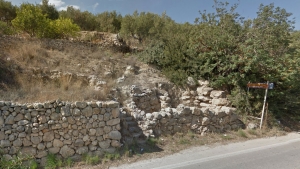
At the road connecting Piskokefalo and Sitia we meet the remains of an excavated two-storey Minoan mansion. We can still discern the remnants of rooms, stairs and the protective boulders coming from the neighbouring river of Pantelopotamos or the sea.

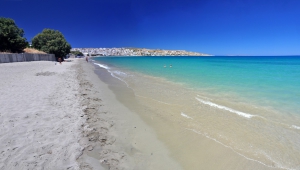
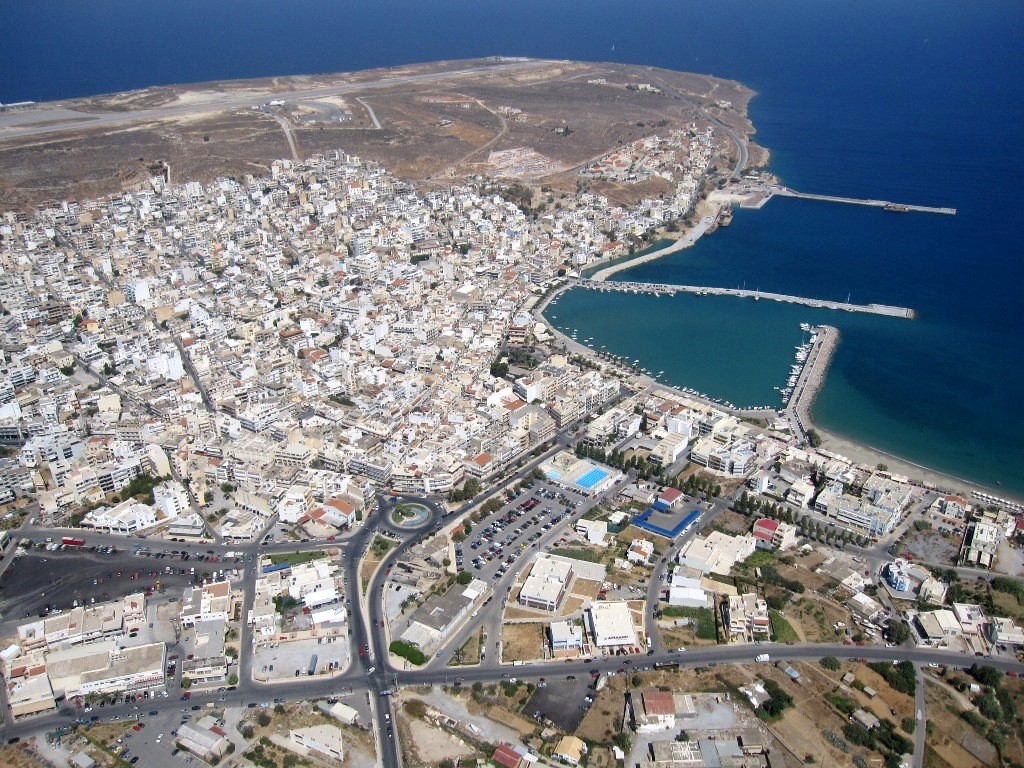
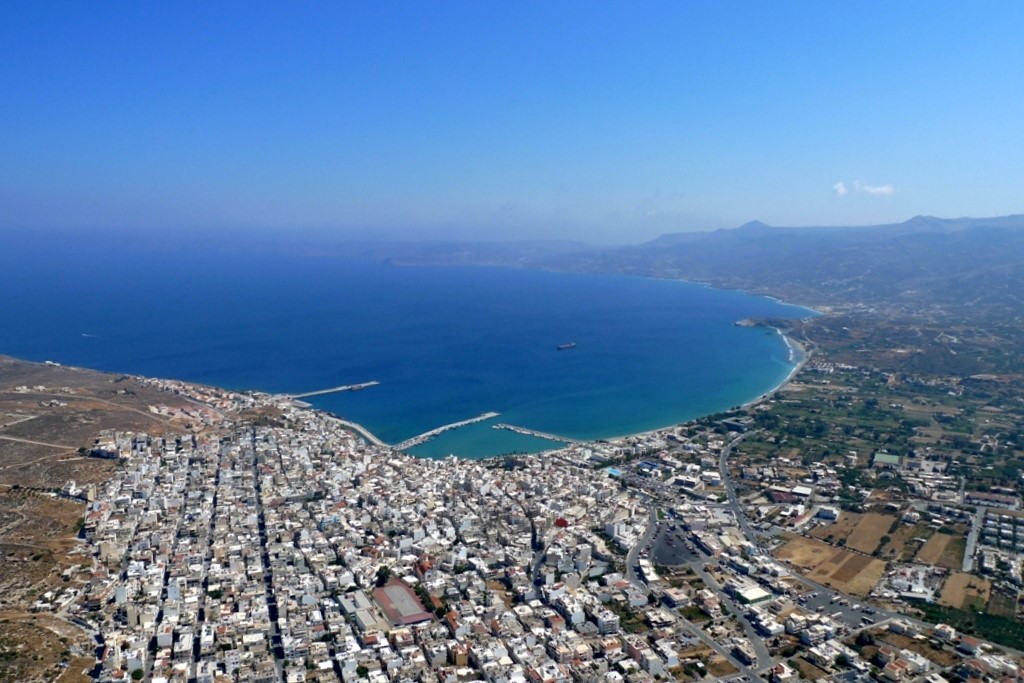
Sitia is the easternmost city on Crete and is located 64km east of Agios Nikolaos. The wider area of Sitia province hosts several small beaches where you can enjoy the sun and the sea. However, some who prefer to stay close to town, can visit the long city beach.

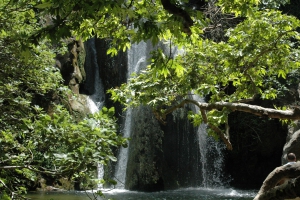
The amazing gorge of Richtis is located in Lasithi Prefecture, on the north side, between Agios Nikolaos and Sitia. It starts just outside the village Exo Mouliana and ends at the Richtis beach, east of the village of Kalabro. The total length of the route is approximately 3 kilometers and the elevation difference between the starting point and the beach is about 350 meters. The gorge, even in summer, has enough water, which is used by locals.
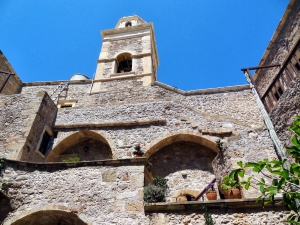
Toplou Monastery is located in the northeastern tip of Crete, at the base of Sidero Cape, 10km east of Sitia and 6km north of Palekastro. The monastery is one of the most historic monasteries of Crete and is known for its vast real property. In religious circles it is known as the Monastery of Panagia Akrotiriani, while the locals just call it the Great Monastery.
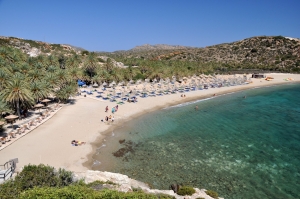
Vai was totally unknown until the early 1970s, when a popular commercial for the Bounty chocolate with coconut was filmed here, using the magical background of palm trees. In the advert, coconuts were falling from trees, however Vai palms produce dates. Consequently coconuts had to be falsely hung to create the right impression. The ad made this unknown earthly paradise renowned throughout the world.
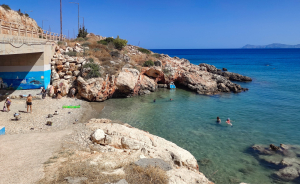
A few meters north of the main port of the city of Sitia, the main road that leads to the airport passes by the Chlouverakis Park. Right next to it is the picturesque cove of Soultanina. Access is very easy either by car or on foot.
Also read:
- Home
 Beaches
 Nature
 Past
Past Destinations
 Highlights
 West Crete
- Central Crete
- East Crete
- Towns
- Chania Prefecture
- Chania
- Paleochora
- Kissamos
- Georgioupolis
- Chora Sfakion
- Loutro
- Rethymnon Prefecture
- Rethymnon
- Agia Galini
- Plakias
- Spili
- Anogia
- Heraklion Prefecture
- Heraklion
- Hersonissos
- Malia
- Matala
- Agia Pelagia`
- Archanes
- Kokkinos Pirgos
- Lassithi Prefecture
- Agios Nikolaos
- Elounda
- Sitia
- Ierapetra
- Makrigialos
- Palekastro
- Zakros
- Lassithi Plateau
- Get Prepared


