







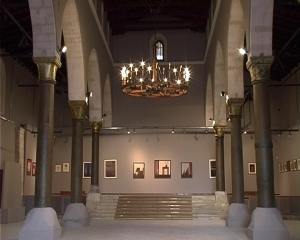
The Municipal Gallery of Heraklion is hosted in the Basilica of Saint Mark in the center of Heraklion, just opposite the famous Lions’ fountain. The basilica was built by the Venetians in 1239, was destroyed by an earthquake in 1303 but restored immediately,

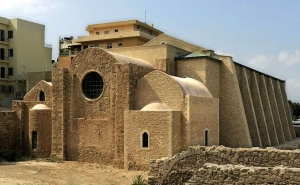
The Church of Sts Peter and Paul was built during the early years of the Venetian domination and served as the main temple of the monastery of Dominican order (Domenicani Predicatori). It is one of the oldest monuments of architecture of the Cistercian monks in the 12th century, both in Europe and in Greece.
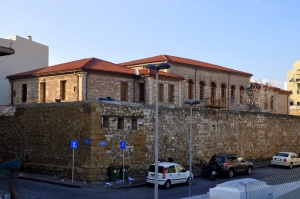
The building operated as a nunnery (Monasterio Greco Madonna Acrotiriani) during the Venetian Era (17th century) and was a dependency of the monastery of Panagia Akrotiriani Toplou by Sitia. A document of 1671 states that the main temple was dedicated to St. John the Theologian, while there was another church dedicated to St. Peter.
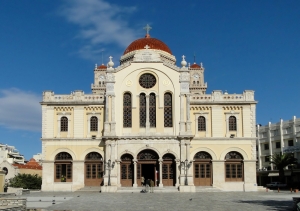
Saint Minas is the patron saint and protector of the Grand Castle (Heraklion) and its past combines legend with tradition and the town's history. It was built in 1862, next to the smaller temple of Saint Minas.
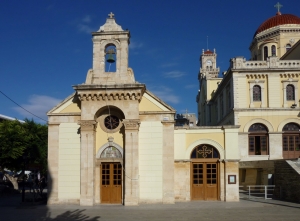
Reference is made to the Chapel of St. Minas and the Virgin Mary Pandanassa in the inventories of Chandax churches in Venetian times. Having fallen into disuse for many years, in 1735 it was renovated to become the cathedral, thenceforth serving as the main centre for the Orthodox Christian faithful in Ottoman Chandax.
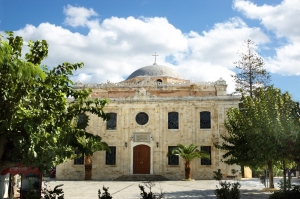
During the second Byzantine period, as the largest and prime official church in the city of Chandax, St. Titus became the seat of the new Orthodox Diocese of Crete. The Venetians later installed a Catholic archbishop and converted the church into a Catholic cathedral.
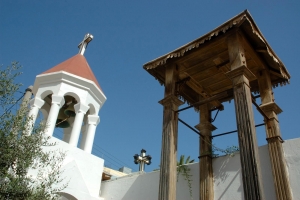
Saint George was a relatively small three-nave church built in the second Byzantine period and ceded to the Armenians who had settled in Heraklion at that time, possibly on the orders of Nicephorus Phocas.
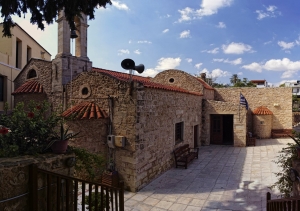
The Orthodox Church of Agios Mattheos (St. Matthew) of Sinai was built in 1508 on the ruins of an earlier Byzantine church. This was the main Christian temple after the conquest of Crete by the Turks, as the Turks converted the monastery of Agia Aikaterini of Sinai to a mosque.
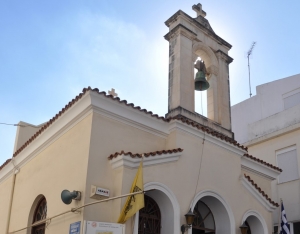
The present-day Church of Saint Paraskevi in Monis Kardiotissis St. was built in the early 20th century and consecrated on 13th June 1910.
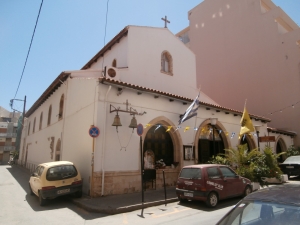
The Virgin Mary of the Crusaders (Crosecchieri) on what is now Markou Moussourou St. was part of the Latin rite Capuchin Monastery. The church was surrounded by monastery buildings and guest rooms for pilgrims and visitors on their way to the Holy Land.
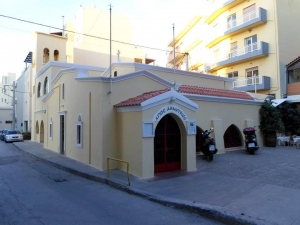
The Church of Saint Demetrius near the Venetian harbor of Heraklion is built on the site of an older church of St. Demetrius, who was the patron saint of the carpenters of Heraklion during the Venetian era (every profession then had its patron saint!). The only surviving part of the initial church is a part of frescoes inside the sanctuary.
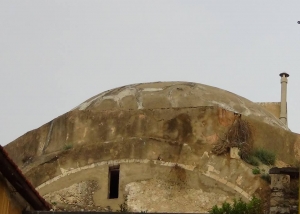
The church of Saint Onuphrius is located in the central market of Heraklion and is completely unknown as it is trapped by various shops of the streets 1866, Tsikritzi and Evans. Today one can see its dome from the market of 1866 street or the roofs of the adjacent buildings, while access to the interior of the church is only possible through Toulis bakery.

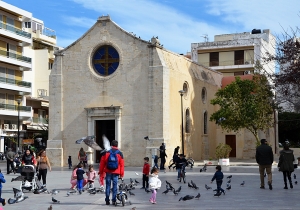
The Museum of Byzantine Icons and Relics of Archdiocese of Crete is located in the Venetian church of St. Catherine of Sinai, in the center of Heraklion and next to the cathedral of Saint Minas.
Also read:
- Home
 Beaches
 Nature
 Past
Past Destinations
 Highlights
 West Crete
- Central Crete
- East Crete
- Towns
- Chania Prefecture
- Chania
- Paleochora
- Kissamos
- Georgioupolis
- Chora Sfakion
- Loutro
- Rethymnon Prefecture
- Rethymnon
- Agia Galini
- Plakias
- Spili
- Anogia
- Heraklion Prefecture
- Heraklion
- Hersonissos
- Malia
- Matala
- Agia Pelagia`
- Archanes
- Kokkinos Pirgos
- Lassithi Prefecture
- Agios Nikolaos
- Elounda
- Sitia
- Ierapetra
- Makrigialos
- Palekastro
- Zakros
- Lassithi Plateau
- Get Prepared


