








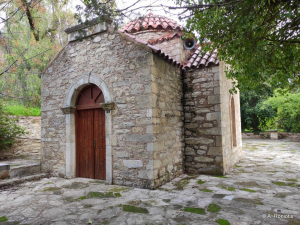
The church of Agia Paraskevi of Meritis is located within the boundaries of the Agricultural School of Messara at the entrance of the village of Ambelouzos. The church is the only surviving remnant of the small monastery that functioned as part of the Monastery of Saint Fanourios in Valsamonero.
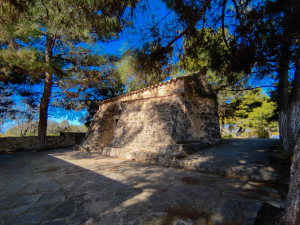
The church of Agios Georgios Kontaras dates back from the 11th-12th century and inside it bears frescoes from the Venetian period.
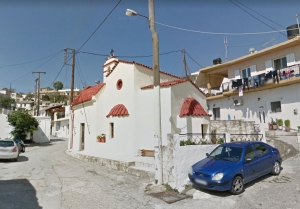
South of the center of the village Ano Moulia there is the small temple of the Holy Apostles, Peter and Paul, in the center of a small graphic square. Externally it looks like a modern temple, but its original construction dates back to the 13th century, as evidenced by the preserved fresco of the Burning Bush.
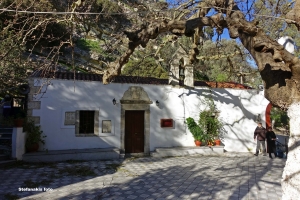
The abandoned settlement of Apolychnos is located at an altitude of 220m, in the beautiful canyon of Apolychnos with springs and plane trees. Above the springs there is the Byzantine church of Saint Panteleimon.
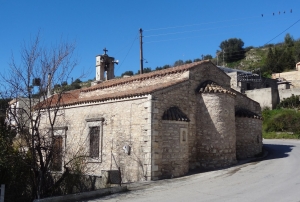
The almost deserted village of Panagia in the province of Kainourgiou was named after the three-aisled Byzantine church of Panagia, which is dedicated to the Dormition of the Mother of God (Koimisis). It is believed that the church originally, in the 15th century, was the center of a religious complex or monastery, which over time evolved into the settlement of Panagia.
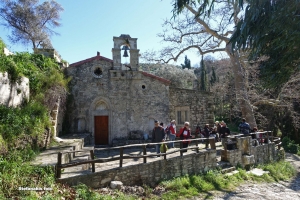
The impressive two-naved church of Agios Charalambos and Panagia is preserved in the green valley with the deserted settlement of Paliama. The temple interior bears fragmentary traces of frescoes, but its main feature is the presence of ancient architectural parts on the walls.
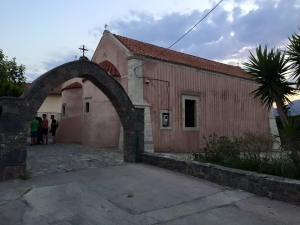
The two-aisled church of Saint Kiriaki (Agia Kyriaki) is one of the oldest in the settlement of Zaros, as one of the two aisles dates back to the 14th century and the second to the 17th century. The temple has undergone modern interventions and its interior does not bear frescoes.

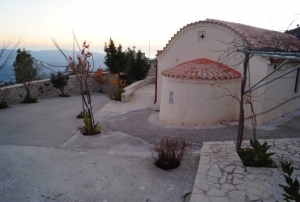
The Monastery of Agios Nikolaos is a small dependency of Vrondisi monastery, built on Mount Sanida above the village Skourvoula. The old ruined monastery was restored by the monk Iosif Androulakis and reoperated in 2014. The interior of the temple is adorned with nice modern frescoes, while from the courtyard one can admire the nice view to the shores of Messara.
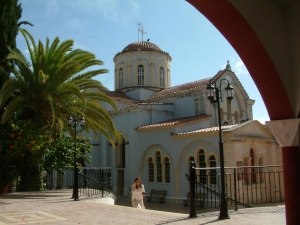
The Monastery of Panagia Kalyviani is located at an altitude of 80m around 60km south of Heraklion, next to Mires and Kalyvia villages. It is a relatively new monastery which was built on the ruins of an older one.
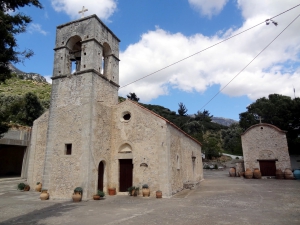
Vrontissi monastery is located 49km southwest of Heraklion, near Vorizia Gorge, between the villages of Zaros and Vorizia. The area has panoramic views of Vorizia village and the plain of Messara. The monastery is dedicated to Saint Anthony and is one of the oldest monasteries in Crete.
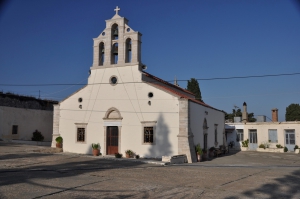
The Monastery of St. Anthony in Apezanes or Apezana is built on a rocky plateau of Asterousia Mountains, at an altitude of 440m, approximately 63km south of Heraklion. From there starts a short valley that leads from Antiskari village to the beachfront of Platia Peramata.
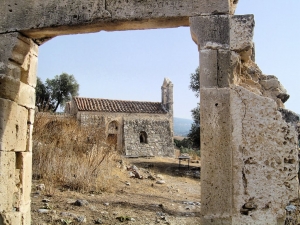
A short distance north of the village Vori there was the monastery of Panagia Kardiotissa, a dependence of Varsamonero monastery. Today the double-nave vaulted church with wall paintings in the south aisle survives. The north wall still hosts an arcosolium.
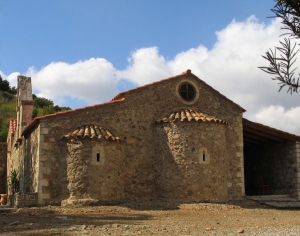
The deserted monastery of Varsamonero is located about 53km southwest of Heraklion, on the southern slopes of Psiloritis Range. It was built in a panoramic area near Vorizia village, overlooking the plain of Messara.
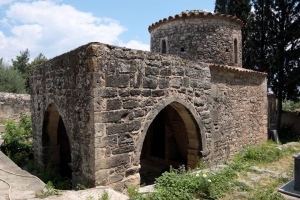
The Baptistery of St. Paul is located at the entrance of the village Agios Ioannis (St John), near Phaestus. According to tradition, when the Apostle Paul came to Crete and headed to the capital of the island (Gortyn) passed from the point where he taught Christianity for two days.
>
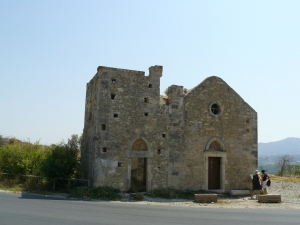
The church of St. George at F(a)landra position is located near Phaistos and was the temple of a small monastery. Next to the church are preserved tombs of the Venetian Era (1581).
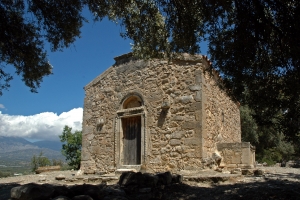
The church of Agios Georgios by the village Agia Triada dates back to the Byzantine era and bears frescoes dating back from the 13th to 14th century.
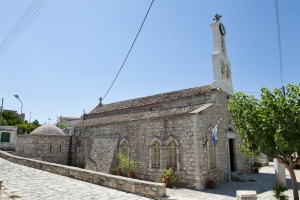
The village Agii Deka (Ten Saints) is named after the ten Cretan Christians that martyred there during the persecutions carried out by Decius in 250 AD. At the point where they martyred, at position Alonion, there is the three-aisled basilica of the 12th century.
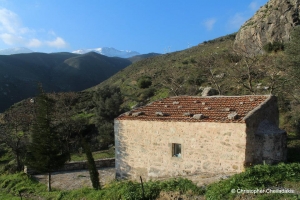
Just outside the charming village Panassos we meet the chapel of St. John Rigologos. St. John is accessed via a rough dirt road crossing a region with ancient olive trees and strange rocks formations full of ancient carvings. The area hosts the remains of a Minoan farmhouse and ancient stone quarries.
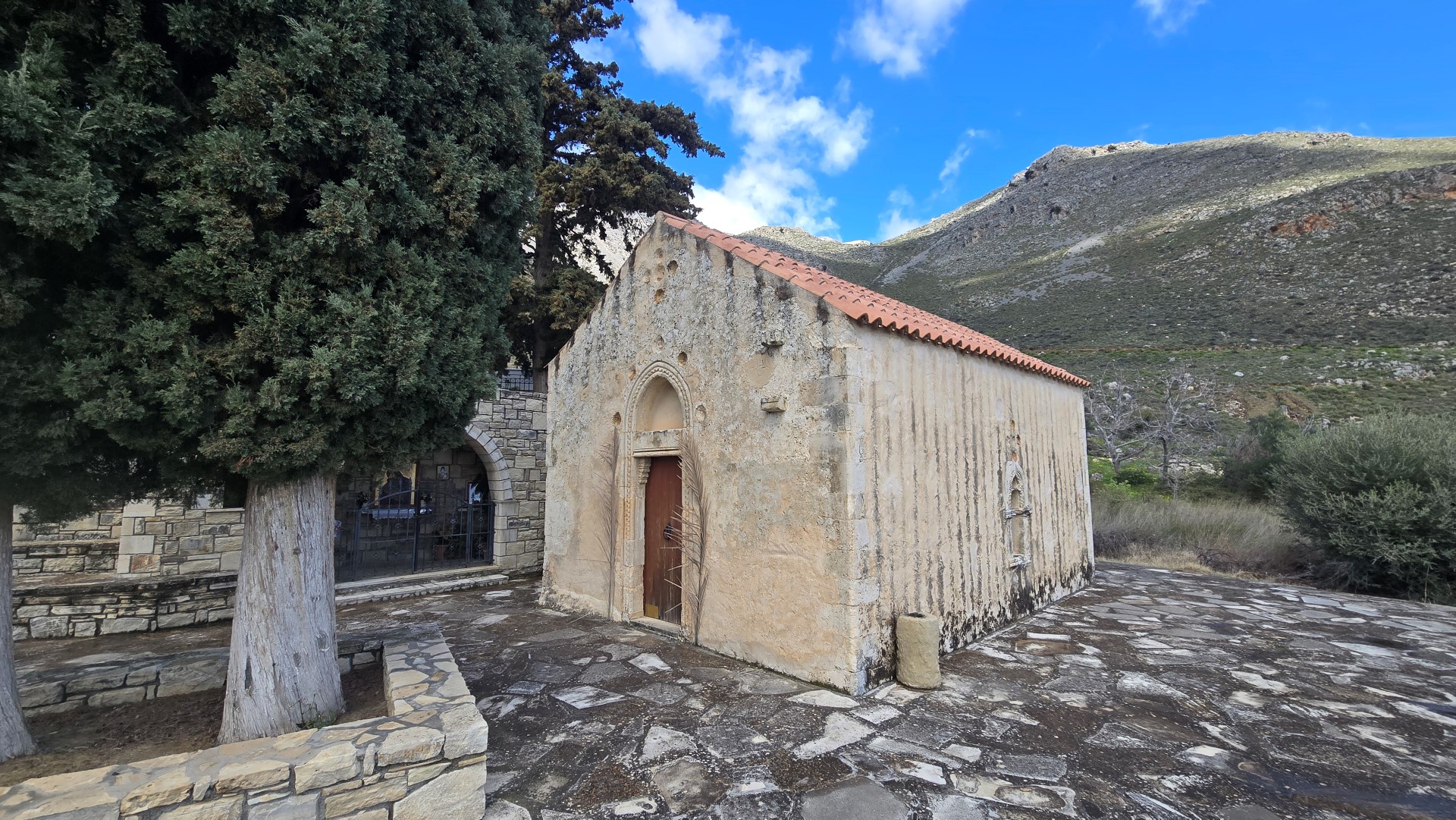
The church of Panagia Kera or Chanoutia is located in the western (newer) cemetery of Gergeri and is a small single-nave vaulted church from 1443 that bears 15th-century fresco decoration. The frescoes are smoked, probably from an Ottoman raid.
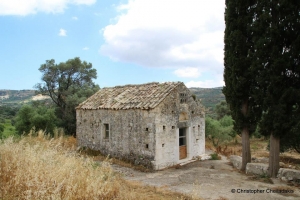
The church of St. John was built during the Venetian period in Crete and it probably was full of frescoes. The frescoes were unfortunately whitewashed. A few years ago the Archaeological Service uncovered some parts of the original hagiographic decoration. The walls however even today remain whitewashed.
- 1
- 2
Also read:
- Home
 Beaches
 Nature
 Past
Past Destinations
 Highlights
 West Crete
- Central Crete
- East Crete
- Towns
- Chania Prefecture
- Chania
- Paleochora
- Kissamos
- Georgioupolis
- Chora Sfakion
- Loutro
- Rethymnon Prefecture
- Rethymnon
- Agia Galini
- Plakias
- Spili
- Anogia
- Heraklion Prefecture
- Heraklion
- Hersonissos
- Malia
- Matala
- Agia Pelagia`
- Archanes
- Kokkinos Pirgos
- Lassithi Prefecture
- Agios Nikolaos
- Elounda
- Sitia
- Ierapetra
- Makrigialos
- Palekastro
- Zakros
- Lassithi Plateau
- Get Prepared


