






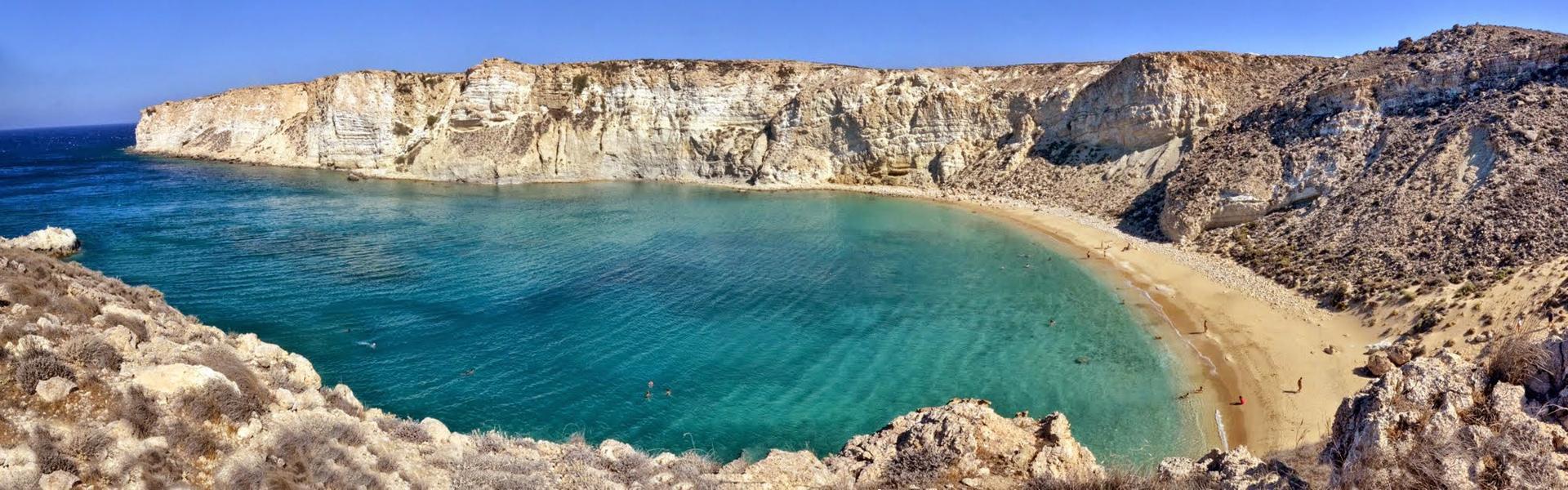

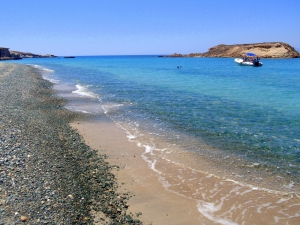
Kamarelles Beach, opposite the small islet of Marmaro and next to the ancient Roman Theatre, is an amazing sandy beach. It is very interesting to watch ancient pillars while snorkeling! On the south end of the beach, we meet two impressive natural arches, called Kamarelles.
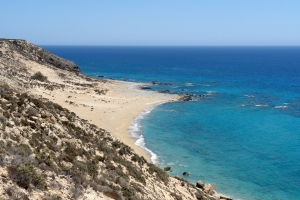
The longest beach at Koufonissi lies in the southeast part of the islet, overlooking Africa! Amazing clean water, rocky seabed ideal for snorkeling, and smooth sand ideal for playing beach tennis. The only problem is the lack of shade.

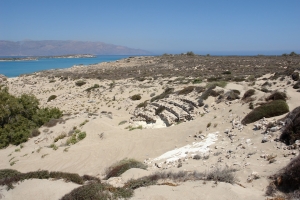
Koufonissi was an economic and cultural center from the Minoan until the Greco-Roman Times and was claimed by all major cities of the region. As recorded on the inscription of the Magnites currently embeded on the facade of the Toplou monastery church, there was a great dispute between Itanos and Ierapytna about Lefki island. In 132BAD the island was owned by Itanos.

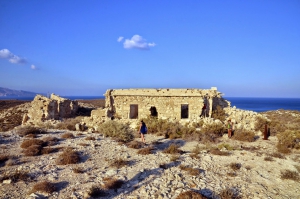
At the middle of the southeast shores of Lefki or Koufonissi island, at 75m altitude, we meet the ruined lighthouse of the island. There was found a temple, which unfortunately has suffered from predatory looting from the authorities (in 1920) in order to build the huge lighthouse, only 5m from the eastern short side of the temple where the entrance would have been, even though another stepped entrance was found on the north side.

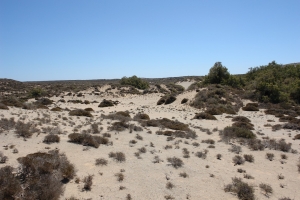
The desert region bears the place name Elia by a centuries-old olive tree, the only tree in the area and is one of the 4 total olive trees (!) that we meet throughout the island. The existence of this secret desert does not seem in any beach of the island shows how close the island is located to the African climate and continent.

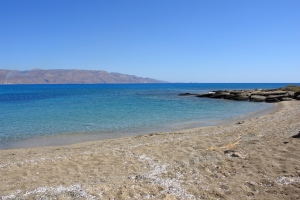
Within walking distance from the sea, on the north coast of Koufonissi islet, we meet the scenic chapel of Saint Nicholas, the patron saint of the sailors. Here several sandy beaches are formed.
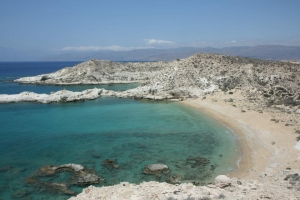
Southwest of the Roman theater of Lefki, the two beautiful beaches of Papaloukas are formed, Ano (upper) and Kato (lower) Papaloukas.
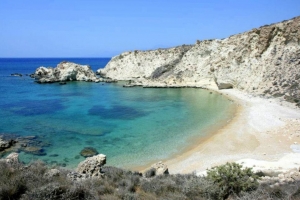
On the west coast of Koufonissi, in the area where we meet the characteristic white clay of the island, the beautiful beach of Akritamos is formed.
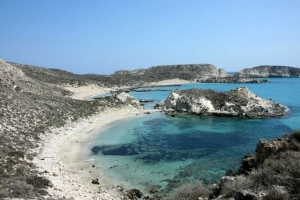
At the southeastern tip of the island Koufonissi, between the beach of Hiliaderfia and the narrowest part of Trahilas Cape (called Diakofti), we meet the location called Halasma.
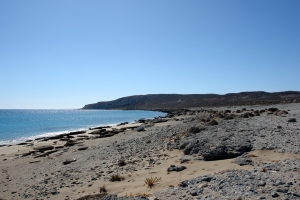
The beautiful beachfront facing east and extending from the northernmost point of Koufonisi to the small well beneath the outpost of the island is called Anemertia. Anemertia's northern part is sandy, while the south is mainly rocky.
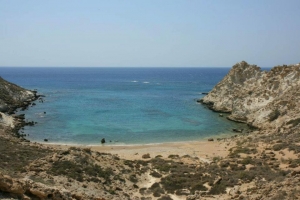
At the westernmost point of Koufonissi islet, north of the cliffs of Hiliaderfia and south of Asprougas, is formed a wonderful secluded beach. Due to its location at the western end of the island, it is called Plevro (which means side in Greek).
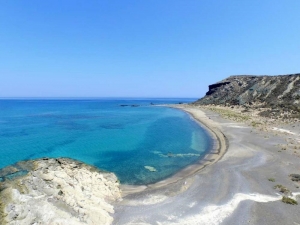
At the tip of the easternmost cape of Koufonissi, an imposing towering rock with characteristic rock layers is formed. Either side of that rock hosts some really beautiful beaches with sand and rocks in places. The nicest beach at Greos is the one facing north.
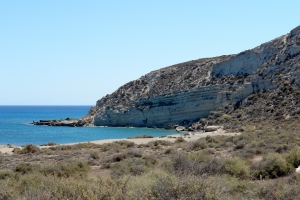
Beneath the church of Saint Nicholas in Koufonisi islet and a little east of the well of the island, we meet the steep cliff of Pilavas that blocks our access to the east beachfront of the area. Right next to the cliff the small beach Perasma is formed, with sandy and fairly rocky bottom.
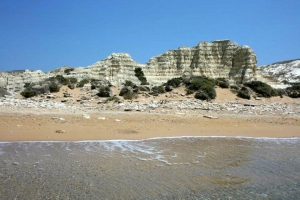
The area of Asprougas could easily be described as an open-air geological museum, full of fossils (one slope of the area is fully covered with fossils from an extinct species of snail). Besides the rich fossils, the morphology of the whole area with the white and stripped rocks scattered everywhere is amazing.
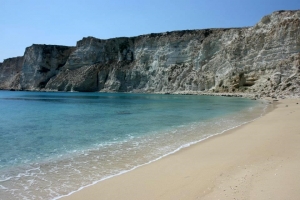
In the southeastern part of the magic island is formed Chiliaderfia Bay with 4 beaches and 2-3 islets colored by the characteristic white color of the rocks of the area, which in ancient times gave the island its name Lefki (i.e. white). All beaches have shallow water, as clear as anywhere in Crete, and fine golden sand.
Also read:
- Home
 Beaches
 Nature
 Past
Past Destinations
 Highlights
 West Crete
- Central Crete
- East Crete
- Towns
- Chania Prefecture
- Chania
- Paleochora
- Kissamos
- Georgioupolis
- Chora Sfakion
- Loutro
- Rethymnon Prefecture
- Rethymnon
- Agia Galini
- Plakias
- Spili
- Anogia
- Heraklion Prefecture
- Heraklion
- Hersonissos
- Malia
- Matala
- Agia Pelagia`
- Archanes
- Kokkinos Pirgos
- Lassithi Prefecture
- Agios Nikolaos
- Elounda
- Sitia
- Ierapetra
- Makrigialos
- Palekastro
- Zakros
- Lassithi Plateau
- Get Prepared


