








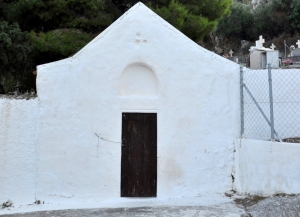
The church of Zoodochos Pigi is located at the position Sfakias and serves as the cemeterial church of the village Kavoussi. It is dedicated to the Theotokos and has the name of the Life giving Spring (Zoodochos Pigi), referring to the Marian pilgrimage of the same name in Constantinople.

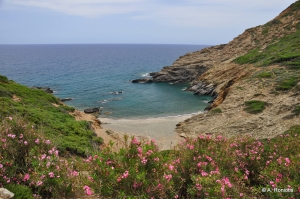
Agios Nikolaos beach is located in a remote area just west of Bali, province Mylopotamos. The name comes after the Byzantine double-nave church of Saint Nicholas, which is located in a green creek that leads to a beautiful cove.

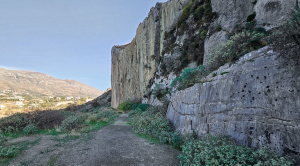
At the eastern end of the sandy beach of Plakias, at the base of the Karavos peninsula, the impressive limestone rock of Paligremnos is formed. Paligremnos is a geological fault with a great height and extremely smooth surface that exceeds 80 meters.

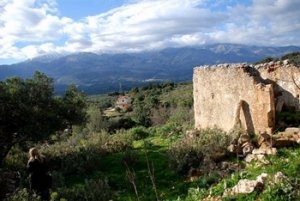
The tower of Aga at Tsifliki is located in a privileged position in Elounda lagoon, on the road leading to Plaka. In fact, the settlement Tsifliki owes its name to this residence, which was the base of the chiftlik (Turkish system of land management) of the region.

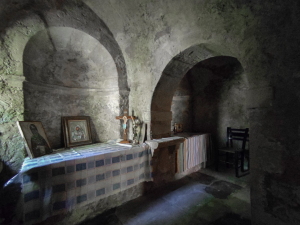
The cavernous church of St. Anthony (Agios Antonios), maybe a former monastery, is located above the starting point of the gorge of Kato Asites, at a beautiful green location with plane trees and springs.
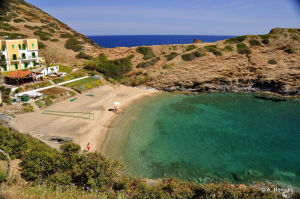
Karavostasis is the last beach you meet, at the northernmost tip of Bali Bay. It is regarded as the most beautiful beach in the area. It is much smaller than the other bays, which makes it almost always seem crowded. It's well organized but less than the rest ones.
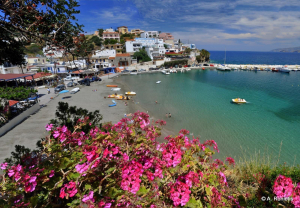
At the end of the main street in Bali, you reach the picturesque port, which is next to a clean beach. Limani, as it is called in Greek, is organized and close to many restaurants and shops

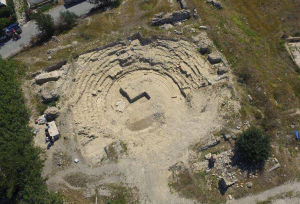
The current city of Ierapetra is built on the site of the ancient city of Ierapytna. Its current name Ierapetra was preceded by other names such as Kyrva, Kamiros, Pytna, and Ierapytna.

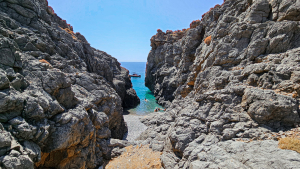
Pikrovlychada (or Petrovlychada) beach is formed at the exit of a small steep canyon with technical descents that starts at an altitude of about 900 meters south of the village Ethia.

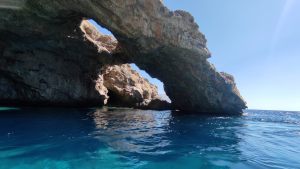
The Katsikali sea cave is located on one of the steepest coasts of Asterousia, between the Koudoumas monastery and the beach of Tris Ekklisies and within the administrative district of the village of Paranymfi.

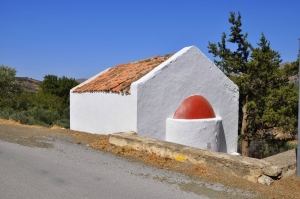
The church of Agios Georgios is located in the plane of Ano Viannos, on the road that leads to the Monastery of Agia Moni. It is a small vaulted and single-aisled church with its interior bearing frescoes of Ioannis Mousouros, dating back to the beginning of the 15th century (there is the date 1401). The temple was built at the expense of Georgios Damoro.

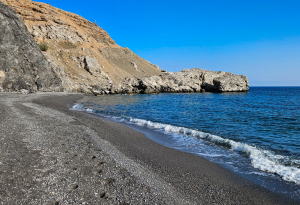
The beach Krygia Vlychada is located to the east of the village Tris Ekklisies in the Asterousia Mountains. The name means Cold Water Spring and is taken after the spring with sweet water that exists where the road ends and today gives life to dozens of oleanders.
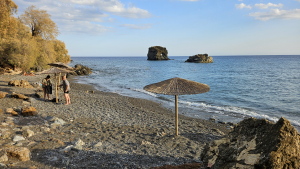
The small beach of the Elephant (Elefantas) is located between Cape Psamidomouri and the beach Petrakis in Lendas and directly below the Levinthos hotel, through which there is access.

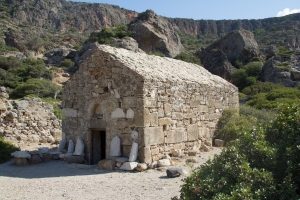
At the site of the ancient seaside town of Lissos, west of Sougia, there are the remains of two 6th-century triple-aisle wooden-roof basilicas with a slightly protruding transverse aisle, which were discovered in 1955 by archaeologist N. Padouvas.
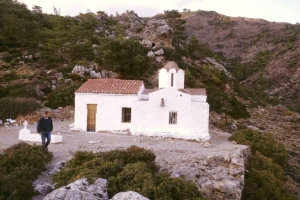
To the north of the Sougia settlement, the church of Saint Irene (Agia Irini) is preserved in the architectural type of the single-nave church with a dome, to which an arched-roof narthex was added in a second stage, which survives as a late reconstruction of its dome.
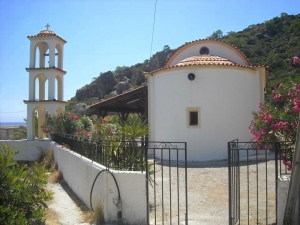
The present-day settlement of Sougia is built on the site of ancient Syia, which flourished mainly in the late Roman times. Underneath the surviving cemeterial temple of Saint Panteleimon there are the remains of a three-aisled basilica with a 20.80m x 12.40m narthex, which has been excavated by A. Orlandos.
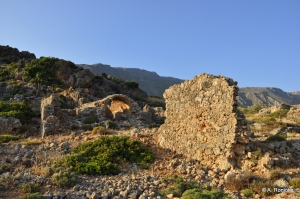
The bay where today's Loutro settlement is built was the port of ancient towns Anopolis and Aradena. This port is mentioned in ancient texts as Phoenix or Katopolis. The gods Zeus and Apollo were worshiped in Phoenix.

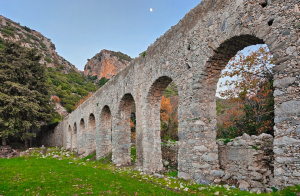
The watermill of Agia Fotia is located below the church of Saint Photini (Agia Fotia), at the exit of the Agia Fotia Gorge at the foot of Mount Vorizis and very close to Spili.

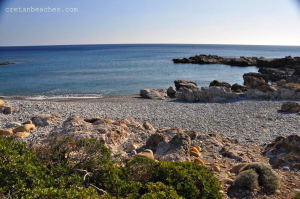
Plakaki is the westernmost cove formed between Paleochora and Grammenos. It is hidden by the rocks and well protected from the winds.
- Home
 Beaches
 Nature
 Past
Past Destinations
 Highlights
 West Crete
- Central Crete
- East Crete
- Towns
- Chania Prefecture
- Chania
- Paleochora
- Kissamos
- Georgioupolis
- Chora Sfakion
- Loutro
- Rethymnon Prefecture
- Rethymnon
- Agia Galini
- Plakias
- Spili
- Anogia
- Heraklion Prefecture
- Heraklion
- Hersonissos
- Malia
- Matala
- Agia Pelagia`
- Archanes
- Kokkinos Pirgos
- Lassithi Prefecture
- Agios Nikolaos
- Elounda
- Sitia
- Ierapetra
- Makrigialos
- Palekastro
- Zakros
- Lassithi Plateau
- Get Prepared


