








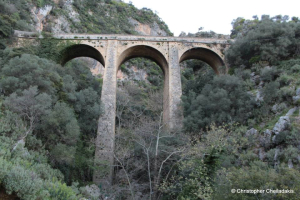
The bridge of Simas in Prasses, Rethymnon is the highest stone built bridge in Crete and is a construction miracle for the time it was built. It is located on the south side of Vrysinas Mount.
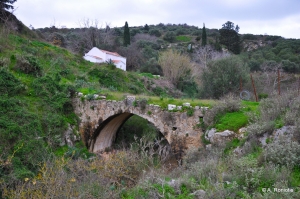
This is a small stone bridge that connects the two sides of a small canyon that locals call Sambathiano Chavgoudaki (small gorge of Sambas). Next to the bridge there is the church of Agios Mamas.

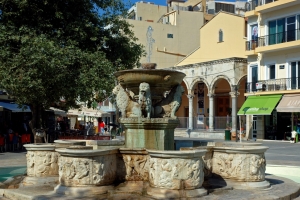
The fountain of Morozini (known as Lions) is one of the nicest Venetian monuments of Candia (current Heraklion). The fountain was watered by the spring of Karidaki and the watered traveled about 15km in a gigantic aqueduct, one of the longest in the then world.
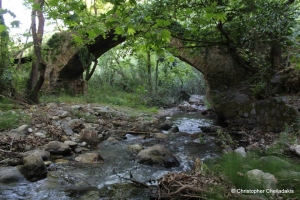
In 1903, the independent Cretan State built a single arched bridge called Kamara that collapsed in 2018. It was 10m wide and very inclined. The place can be accessed by a dirt road that stops here. It was very tough to locate the bridge due to the lush vegetation.
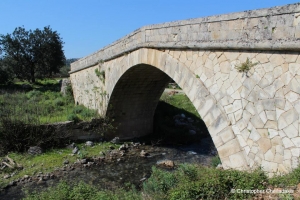
One of the least known stone bridges of Crete is the bridge of Boutakas located between the villages Vrises, Embrosneros and Vafes at province Apokoronas. It is the newest of two stone bridges of that area (there is also the famous bridge Elliniki Kamara which is more than 2000 years old). The bridge is still in use by cars and was built during the last decade of the 19th century by local craftsmen.
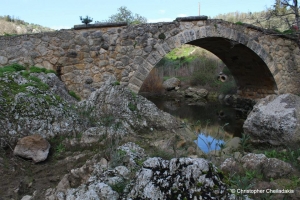
The bridge of the village Kato Astraki is called Astrakiani Kamara (Arch of Astraki) and is located a few meters away from the village, on the banks of the River Karteros. Astrakiani Kamara is a magnificent and well preserved arched stone bridge built in the 16th century and is one of the most beautiful of Crete. The bridge was built to connect Astraki with Sgourokefali and the villages of the eastern side of the river Karteros.
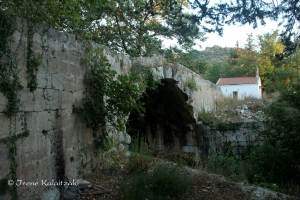
Elliniki Kamara (i.e. Greek Arch) is an arched bridge built in the Hellenistic Era with some later additions (Venetian and Ottoman Era). The name comes from Hellenistic Kamara. The opening of the arc is 11.10m long, 8.40m high and has a width of 3.00m.

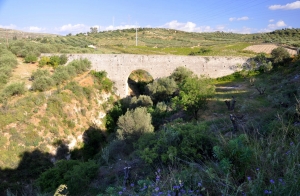
It is one of the aqueducts of the 15km long Venetian aqueduct starting from Archanes and carrying water to the Fountain of Lions, in the center of Heraklion. There is one emblem and an inscription at the central part of the bridge.
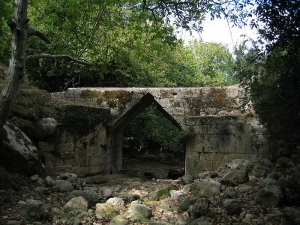
The ancient bridge of Eleftherna was built in the first half of the 4th century and is preserved in excellent condition, crossing the torrent Chalopotas. Nearby there was another twin bridge that has not survived. It has a length of 9.5 meters and a width of 5.25 meters. It has a characteristic shape, as there is no arch, but a triangular opening (ekforic architecture).
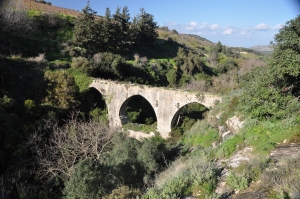
Here we meet the imposing Venetian aqueduct of Morosini at position Karydaki, which crosses the river that runs through Sylamos Gorge and ends at Knossos. If you cross the bridge you can visit the ruined church of Panagia Karydakiani monastery, on the opposite site.
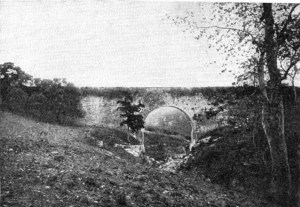
Inside the ravine formed northeast to Silamos village, we meet the traces of the second-in-row bridge of the colossal Venetian aqueduct of Morozini. The aqueduct transferred the water of the springs of Archanes to Candia, the current town of Heraklion. Unfortunately, almost nothing is preserved from the bridge.
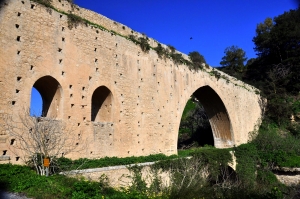
At the area of Agia Irini, Spilia, there is the largest of the aqueduct bridges built in Crete. The aqueduct was built in 1830-40 by the Egyptians after the discovery of the ancient aqueduct of Knossos that had a tunnel of 1150m. Therefore, tunnel was cleaned and reused.
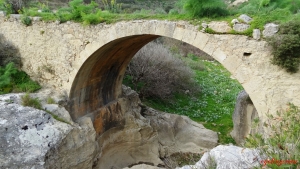
A small stone bridge at the upper part of Astrakiano gorge. The bridge was once crossed by people who wanted to reach Agarathos monastery from Astraki.
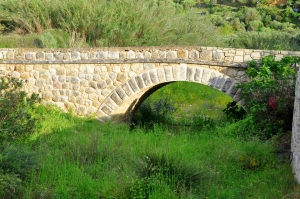
On the road leading from Galipe to Smari we meet the single-arched bridge of Galifa, which bridges River Galifianos. The arch was built in 1900 to serve the needs of the residents, mainly from Galifa.
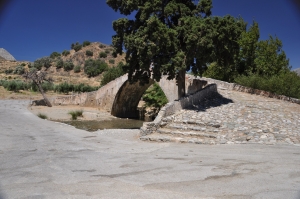
The beautiful arched bridge of Prevelis is met on the way to the homonym monastery and crosses Megas River which empties at the famous beach of Preveli. It was built in the 18th century by monks of the monastery.
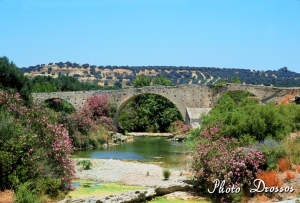
Near the village of Demati there is a wonderful arched bridge, built by the locals to cross the longest river of Crete, Anapodaris.
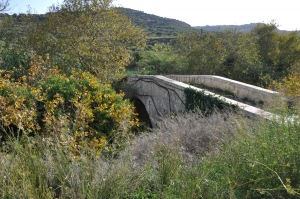
The stone built bridge and the watermill at Kakia Rahi position are both monuments protected by the Greek State. They are landmarks in the area, associated with memories of the locals. They are both special constructions that combine rigorous morphological solutions.
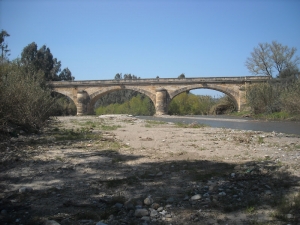
The Bridge on the River Keritis is made of stone with three arches and was built in 1908. Adjacent to it, on 1 August 1941 the Germans executed 118 men (with disabled among them) under the despicable charge of resistance against the German invasion in Crete.
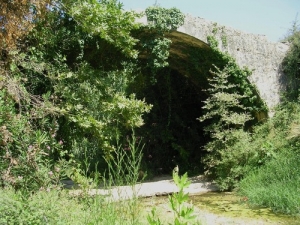
Between the villages Koxare and Atsipades we meet the wonderful stone arched bridge of Koxare (named Old Arch), which served the residents of the two villages in past times. The river below the bridge runs through the canyon Kourtaliotis and ends at Preveli beach.
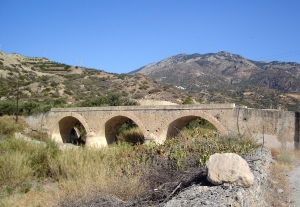
The stone bridge of Kryopotamos, near Myrtos, was built in 1884 and has three large arches. It is such a masterful construction, so that it has been declared as a work of art.
- 1
- 2
Also read:
- Home
 Beaches
 Nature
 Past
Past Destinations
 Highlights
 West Crete
- Central Crete
- East Crete
- Towns
- Chania Prefecture
- Chania
- Paleochora
- Kissamos
- Georgioupolis
- Chora Sfakion
- Loutro
- Rethymnon Prefecture
- Rethymnon
- Agia Galini
- Plakias
- Spili
- Anogia
- Heraklion Prefecture
- Heraklion
- Hersonissos
- Malia
- Matala
- Agia Pelagia`
- Archanes
- Kokkinos Pirgos
- Lassithi Prefecture
- Agios Nikolaos
- Elounda
- Sitia
- Ierapetra
- Makrigialos
- Palekastro
- Zakros
- Lassithi Plateau
- Get Prepared


