Lakes
Crete has few large natural lakes, but it supports a diverse range of wetlands: permanent and seasonal lakes, small ponds, springs and artificial reservoirs. Rainfall is concentrated mainly in winter, while the island's karst geology allows significant quantities of water to seep underground and feed aquifers and springs.
The largest natural freshwater lake in Crete is Lake Kournas in Apokoronas. Smaller natural or seasonal bodies of water occur at Maherida near Tersanas, Mochos, Thrapsano, Ziros, Omalos of Viannos and Achentrias. Other interesting examples include Lake Digenis near Gergeri and the seasonal lakes at Orne, Parakalouri and Stroumboulas. Seasonal lakes fill during the rainy months and shrink or dry out in summer.
The island also has artificial lakes and reservoirs, including Agia, Votomos at Zaros, and the reservoirs of Bramiana, Aposelemis, Faneromeni and Potamon. Many have developed into important wetlands, providing refuge for waterbirds, migratory birds, amphibians and other wildlife. Protecting them from pollution, unauthorised intervention, excessive water extraction and prolonged drought is essential.
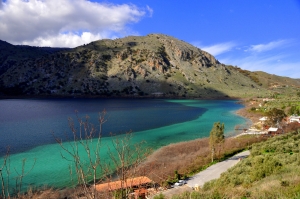
Lake Kournas and its surroundings constitute a very important ecosystem for Greece. Kournas is one of the very few areas of Crete where plenty of fresh water is stored throughout the year. For this reason, it is protected under the Natura 2000 program.
Read more ...
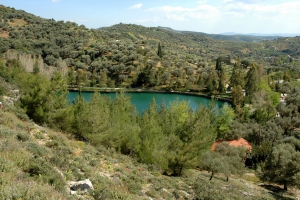
The artificial lake of Zaros or Votomos is located on the southern slopes of Psiloritis, just 1km north of Zaros and 45km southwest of Iraklion. The area was a small wetland before 1987, which was shaped in the crater of Votomos Spring. It took its current form in 1987 when the Forest Service created an artificial lake where the spring water is stored.
Read more ...
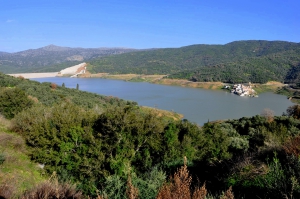
The dam of Aposelemis river was a very tough project that was eventually completed in 2012. At the bottom of the lake there is the village Sfendyli, the few residents of which were moved to another place.
Read more ...
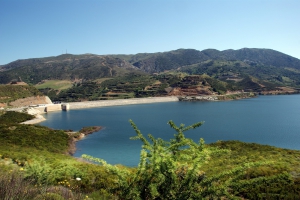
The quite new lake has a capacity of 23 million cubic meters and is expected to become one of the most important wetlands in the southeast Mediterranean. Already, many species of birds and animals have appeared in the area. Visitors of the wider area visit the dam and admire the beautiful scenery.
Read more ...
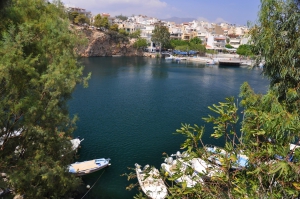
Trademark of St. Nicholas is the picturesque Lake Voulismeni, a small lagoon in the center of the town, used as a small harbor where fishing boats stop. Dozens of legends are associated with it, mainly because of its very deep waters (e.g. that it has no bottom).
Read more ...
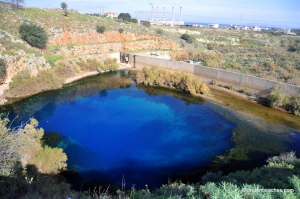
Almiros spring can probably most satisfactory explain the term paradox. This spring is located at the northeastern side of Psiloritis, a few hundred meters far from the sea and the city of Heraklion, and it runs off the highest water quantity in Crete directly into the sea through the homonym river of Almiros! The water of the spring is brackish because somewhere quite deep it is mixed with seawater.
Read more ...
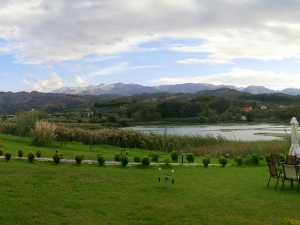
The artificial lake of Agia (Ayia) is located near the village of Agia, 9 km west of Chania. It is a small lake of 450 acres, which is close to the valley of Fasas. This valley is considered as the most humid of Crete. Agia lake receives water from underground springs and the river Xekolomenos.
Read more ...
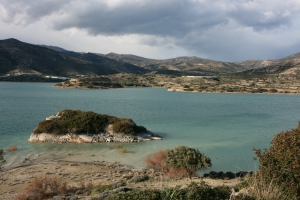
The artificial lake of Bramiana was built in 1986 at Bramiana to meet the 30.000 of the greenhouses of Ierapetra. It is located 5km northwest of the town, in the road connecting Ierapetra and Kalamafka village. The lake covers an area of 1050 acres and has a capacity of 15 million m3, making it the second largest wetland of southern Greece, after Potami Dam at Amari valley.
Read more ...