








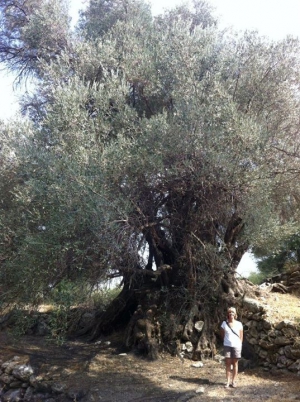
The olive tree has been declared by the Association of Cretan Olive Municipalities as a natural monument due to its size, shape and relief trunk. The name of the site is Gre Ele which means Old Olive and refers to this tree. Its variety is throumboelia and is grafted on a rootstock of a wild olive tree. It is estimated to have been planted in 650-500BC and is located very close to the archaeological site of Eleftherna.

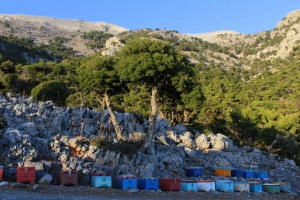
The pine grove of Pefkias is the densest wood in Psiloritis Mount (denser than the forest of Rouvas) and apart from the great pines that dominate the area, you will also meet cypress and oak trees. In Pefkias, you will meet many bee hives as it is one of the most important areas in the prefecture of Heraklion for apiaries after the forests of the province of Viannos.
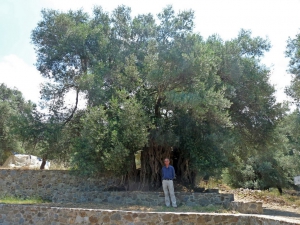
The olive tree of Saint George is one of the many ancient olive trees in the areas Anisaraki and Vardaliana near Kandanos village. It has been declared as a memorial by the Association of Cretan Olive Municipalities due to its flattened shape and textured trunk.

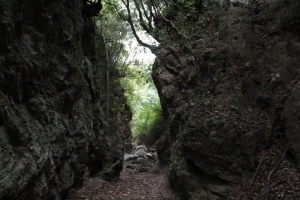
Trahinos Gorge starts close to Trahinos hamlet and is relatively short. It is one of the greenest gorges of Crete, while its walls are very narrow, being almost invisible from the air. The dense vegetation in many places darkens the riverbed. Like Vavouledo, Trahinos Gorge has a trail in it.
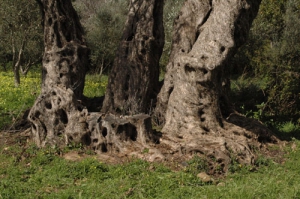
The olive tree at position Kardamiana, near Genna, has been declared by the Association of Cretan Olive Municipalities as a natural monument due to shape and relief trunk. Its variety is called throumbolia and is grafted on a rootstock of a wild olive tree.

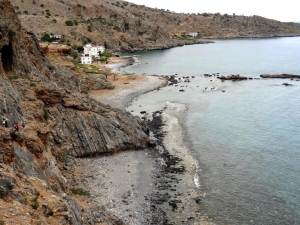
The beach of Lykos is quite rocky in relation to the nearby Finikas and hosts a small pier where the boats stop, but is open to the south winds. Generally, it is not something special as a beach, but absolute tranquility and rich seabed make exploring this isolated place a nice experience.

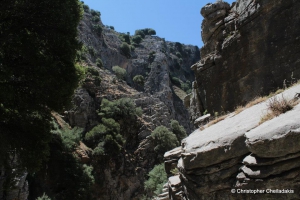
One of the most impressive and longest canyons of the entire island of Crete is the canyon with the cacophonous name Psoraris (Greek: someone who suffers from scabies). Its exit is located at the mountains of Dikti, above the village Geraki and it starts from the plateau Parasyrta. There are three different mountain roads, all of unique beauty: from Lassithi plateau (village Kaminaki), from Geraki and Katofygi by Viannos.

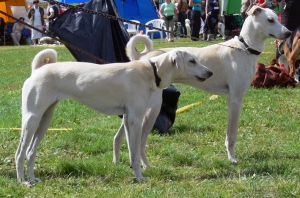
The Cretan Hound or Cretan Tracer is the oldest hunting breed of dog in Europe, with more than 4000 years of history on the island of Crete. It is believed to originate from the ancient breed of hound Basentzi in Egypt, introduced to the island’s particular conditions. By the middle of the last century, only a few purebred dogs were remaining, mostly in east Crete, but today the situation has improved considerably.
Also read:



- Home
 Beaches
 Nature
 Past
Past Destinations
 Highlights
 West Crete
- Central Crete
- East Crete
- Towns
- Chania Prefecture
- Chania
- Paleochora
- Kissamos
- Georgioupolis
- Chora Sfakion
- Loutro
- Rethymnon Prefecture
- Rethymnon
- Agia Galini
- Plakias
- Spili
- Anogia
- Heraklion Prefecture
- Heraklion
- Hersonissos
- Malia
- Matala
- Agia Pelagia`
- Archanes
- Kokkinos Pirgos
- Lassithi Prefecture
- Agios Nikolaos
- Elounda
- Sitia
- Ierapetra
- Makrigialos
- Palekastro
- Zakros
- Lassithi Plateau
- Get Prepared


