








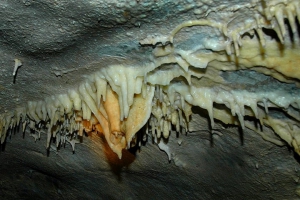
The Cave Chainospilios is located 200 meters away from the village Kamaraki. The cave is also called Marmarospilios, while many locals call it "Labyrinth". It is a long narrow cave with galleries that are part of an old underground river bed. The cave is still active in most parts. Its length is 200 meters and there is a parallel gallery with a length of 120 meters, which is richly decorated.

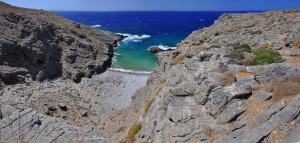
If you head west of Papadiokambos settlement, especially on windless days (very rare!), it is worth leaving your car off the road, cross the wire fence and walk 2 minutes to the exit of the gorge starting close to Liopetro area and ending at the beautiful beach of Charkomatas, at position Roussa Limni. You’ll get impressed by the amazing formations of the gorge, shaped by laminated sheets of limestone.

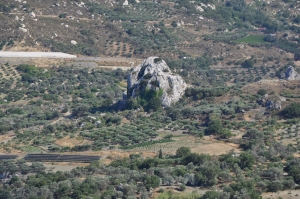
Near Agia Varvara, at position Plakota Harakia, we meet some very special rock formations, reminiscent of huge round pies or hamburgers. Indeed, the locals call them Gria’ (Old Woman’s) Pies or Cheeses. Next to it there is a very large vertical rock, Votiros.
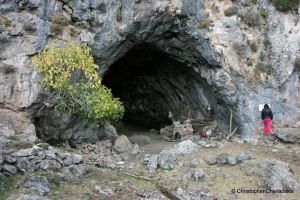
The spring and the cave of Kormokopos is located northwest of Agios Ioannis, on the east side of the canyon Eligia. The path from Agios Ioannis needs about 1.5 hour. It starts as a beautiful walk through the forest of old pine and cypress trees, and ends, almost suddenly in a wild and imposing landscape.

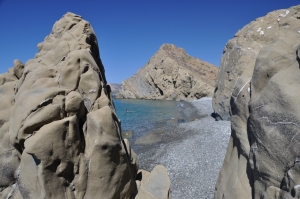
West of Platia Peramata village, there is another smaller settlement called Krigioi. In front of Krigi, there is a small cove with fine pebble and crystal clear water. Krigi beach is ideal for seclusion, snorkeling and fishing. West of Krigi, you'll reach another pebbly remote beach. Some more meters on the west you'll find the three consecutive beaches of Kokkines Plakes (i.e. Red Rocks), named after the reddish rocks around and accessed mainly through sea.

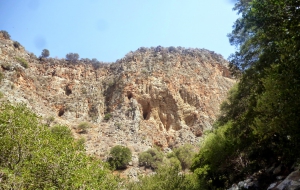
The name Havgas and its corruptions (eg Chavgoudi, Ha) is very common in the gorges of East Crete. Thus, one more Cretan gorge named Havgas is located above Plaka, by Elounda. The gorge starts east of Fourni, passes below the village Havgas and exits at Plaka.

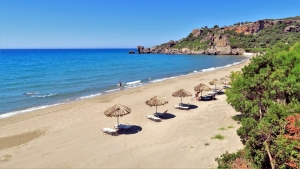
Half a kilometer to the west of Rodakino's main beach, Korakas, we meet the beach of Polirizos, surrounded by dense olive groves. To get here, you have to follow the paved road leading west from Korakas, along the shore.

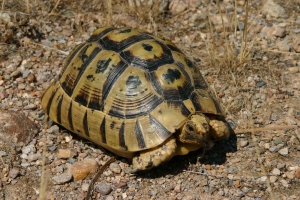
The Greek tortoise (scient. Testudo graeca) or spur-thighed tortoise is a species of land turtle, which has been introduced to the island of Crete by humans and has survived with remarkable ease. It is found near the wetlands of the island and in shady humid forests.
Also read:


- Home
 Beaches
 Nature
 Past
Past Destinations
 Highlights
 West Crete
- Central Crete
- East Crete
- Towns
- Chania Prefecture
- Chania
- Paleochora
- Kissamos
- Georgioupolis
- Chora Sfakion
- Loutro
- Rethymnon Prefecture
- Rethymnon
- Agia Galini
- Plakias
- Spili
- Anogia
- Heraklion Prefecture
- Heraklion
- Hersonissos
- Malia
- Matala
- Agia Pelagia`
- Archanes
- Kokkinos Pirgos
- Lassithi Prefecture
- Agios Nikolaos
- Elounda
- Sitia
- Ierapetra
- Makrigialos
- Palekastro
- Zakros
- Lassithi Plateau
- Get Prepared


