Folklore Museums
In Crete’s folklore museums, a loom, a packsaddle or a festive garment can show how people lived and worked on the island. The exhibits connect life at home, in the fields and in the workshop with local customs and celebrations. Sometimes the building itself is part of the experience, as in the traditional house with a stone arch in Gavalochori or the Venetian mansion that houses the Historical and Folklore Museum of Rethymnon.
In Hersonissos, the Lychnostatis Open-Air Museum features examples of rural and urban Cretan homes, workshops for traditional trades and gardens with aromatic plants. At the Museum of Cretan Ethnology in Voroi, food, weaving and customs are presented together to give a fuller picture of life in the Cretan countryside.
Local collections also highlight crafts with a particular place in their communities. The Historical and Folklore Museum of Gavalochori features kopaneli, lace made with wooden bobbins. At the Folklore Museum of Sitia, woven textiles, embroidery and traditional clothing show how people dressed and decorated their homes.
Other collections focus on a particular aspect of everyday life. The Vouves Olive Museum brings together traditional tools used in olive cultivation. The School Life Museum, housed in the old primary school of Nerokourou, explores everyday life in the classroom. In Houdetsi, the instrument collection at the Labyrinth Musical Workshop introduces visitors to musical traditions from Crete and beyond.

The Open-air Museum Lychnostatis was founded in 1992 by the doctor and collector George Makrakis. The buildings themselves are some of the main exhibits as they were built thoroughly with the prevalent raw materials (stone-wood-clay).
Read more ...

The museum of the painter Domenikos Theotokopoulos (El Greco) is located opposite the Byzantine Church of Panagia at position Theotokiana, by Fodele.
Read more ...
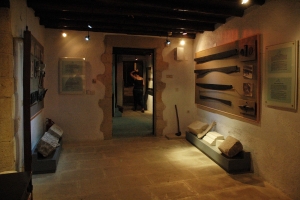
The museum was founded in 1968 and was officially opened in September 1993. It is housed in a building that is a typical sample of the local architecture and is housed on two floors: the ground floor with a balcony, internal yard, an arched house with auxiliary rooms and a mezzanine.
Read more ...
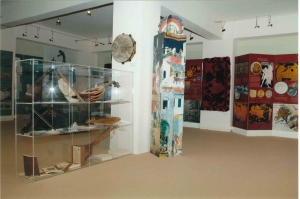
The museum of Acritans of Europe is housed in the center of Paleochora town, in the old boarding house. It was established on July 2006 and funded by the program "Culture 2000».
Read more ...
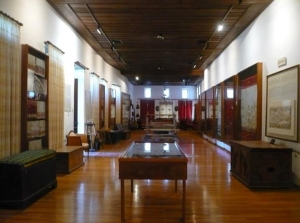
The Historical and Folklore Museum of Rethymnon was founded in 1974 and is housed in a Venetian building (17th century) that is a wonderful example of urban residence of the last phase of the Venetian occupation of Crete, in Renaissance.
Read more ...
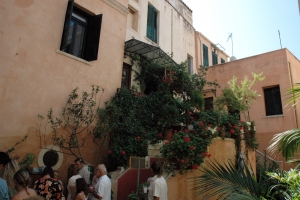
In the old city center there is the private Folk Museum "Cretan House" which was founded by the passion of two women, Aspasia Bikaki and Irini Koumandraki.
Read more ...
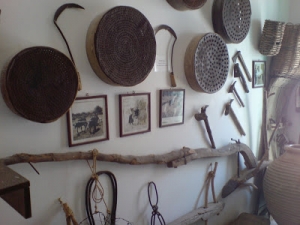
The Folklore Museum of Sitia was founded in 1975 and is housed in a beautiful neo-classical house. The collection refers to the town of Sitia in the second half of the 19th and early 20th century.
Read more ...

The Museum of Maritime Heritage and Tradition of Fishing (Fisheries Museum) started as an idea in 2000 and the work was completed in 2001. It started its journey as a permanent exhibition in August 2005.
Read more ...