

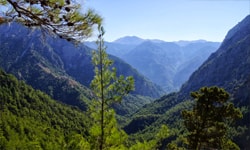

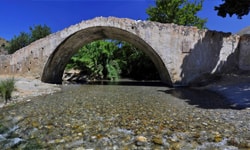

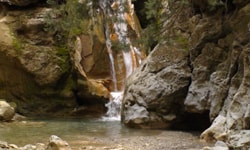


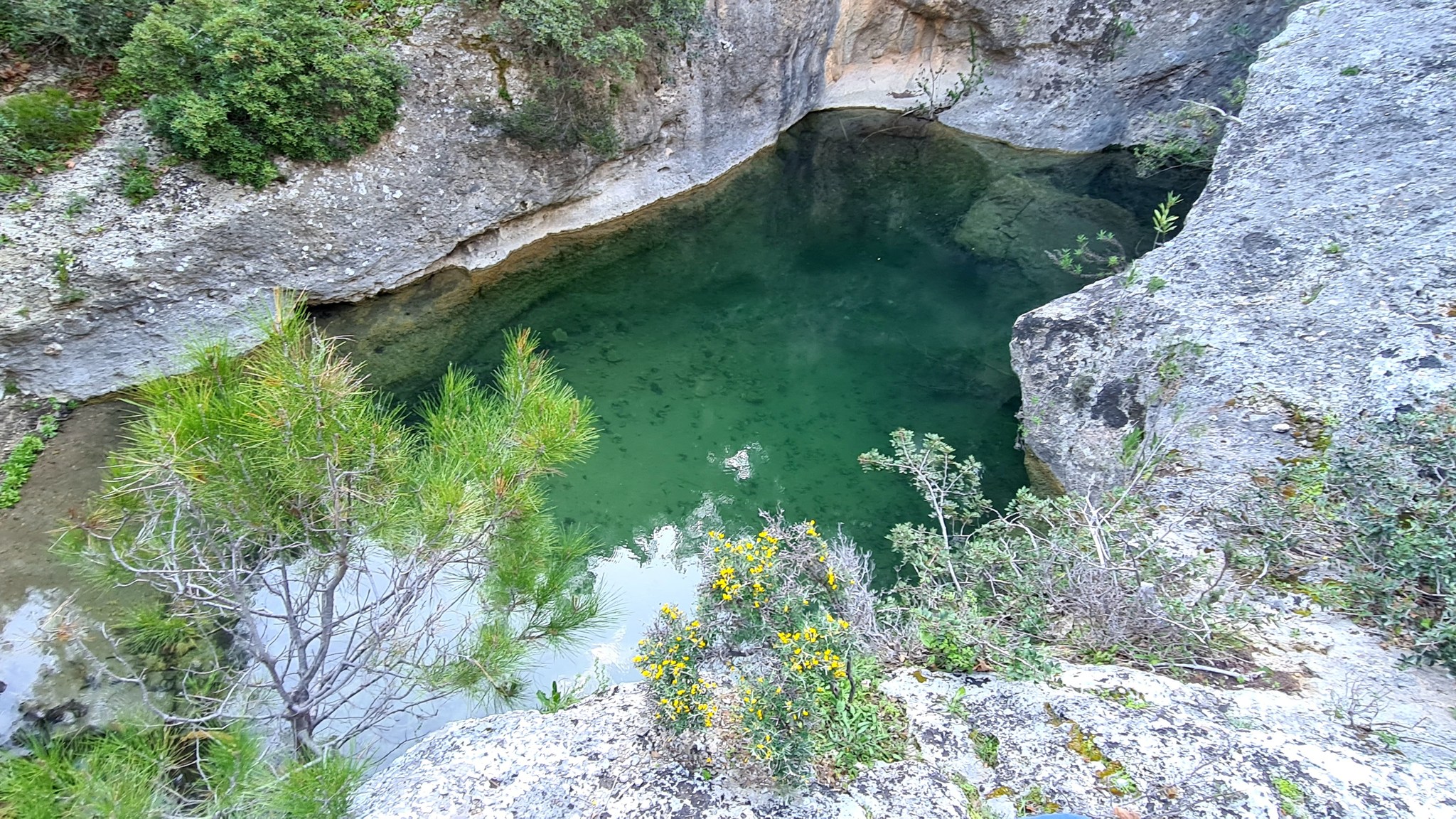
In the eastern part of the area of Agios Nikolaos and between Kalo Chorio and Prina, the gorge of Katsikandara is formed. It is a route that combines water, shade and lush vegetation with impressive rocky passages.

Vibrant Cracks
Crete, with more than 95% of it's soil
consisting of limestone, is a land of canyons
Gorge Hiking | Canyoning | Samaria Gorge | The E4 European Path




For millions of years, the geological upheavals are reflected strongly in the intense relief of Crete. While mountains rose, the river water continued its corrosional route through the limestone terrain, forming today's "land of gorges", Crete. With more than 400 canyons, Crete hosts the largest number of gorges in Greece. Many travel agencies offer packages for gorge trekking and there is are several hiking and mountaineering clubs based in Heraklion, Chania, Rethymnon, Agios Nikolaos, Sitia, Ierapetra and Mires.
Cretan rivers meet large faults and steep descents during their course through the canyons, forming hundreds of small and high waterfalls. Crossing gorges of Crete with high waterfalls is possible only by using technical equipment. Appropriate training in canyoneering techniques can be offered by specialist companies on the island. The most popular technical canyons of Crete include the imposing gorge Ha, Tsoutsouras, Kalami, the gorge of Arvi (which after an 80m high fall turns into a dark underground river) and many more.


 Beaches
 Nature
 Past
Past Destinations
 Highlights
 West CreteCentral CreteEast CreteChaniaPaleochoraKissamosGeorgioupolisChora SfakionLoutroRethymnonAgia GaliniPlakiasSpiliAnogiaHeraklionHersonissosMaliaMatalaAgia Pelagia`ArchanesKokkinos PirgosAgios NikolaosEloundaSitiaIerapetraMakrigialosPalekastroZakrosLassithi Plateau


