








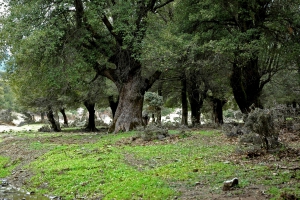
The Plateau of Vromonero or Lakkos Limas is located at an altitude of 1300m, 10km west of the village Kroussonas, in an amazing location east of the summit Skinakas of Psiloritis Mt, where the homonym observatory of the University of Crete is located. It can be accessed via a dirt track running through the gorge of Halasia, which starts from Livadi plateau and ends in Krousonas.

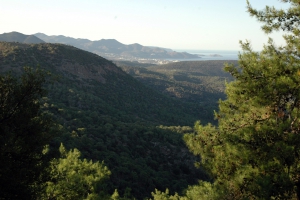
Prina Village is located 24 km SE of Agios Nikolaos and 14 km N of Ierapetra. The hills of Prina are covered by a very important pine forest, which sadly has been burnt several times recently.
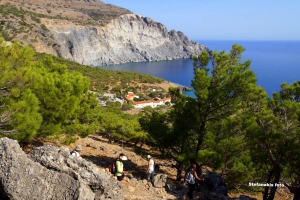
The monastery of Koudoumas is located 74km south of Heraklion, on the western side of Cape Martelos and south of Kofinas Peak (the highest peak of Asterousia Mountains). The whole area is full of cavities where hermits used to live. To reach the monastery, you have to drive in a passable dirt road of 20km, starting from the village Sternes, which descends from an altitude of 1000m to the sea level. The views during the descent are shocking and could cause vertigo! The route passes between pine and cypress trees, many of which are bent by the wind..
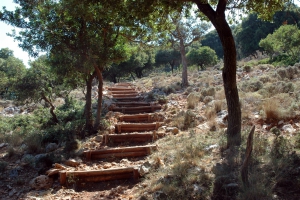
Chamoprina wood is a wood with low oak trees, located 4km south of Malia town. It can be accessed very easily from Malia, because it is located on the road connecting the old village of Malia with Krasi village.
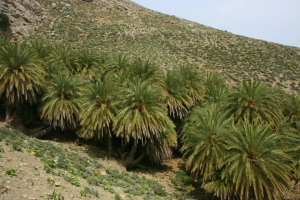
The small palm grove of Saint Anthony is located next to the Monastery of St. Nikitas, in one of the most inaccessible places in Crete. An oasis in the middle of nowhere, the palm grove is now protected by goats and is studied under scientific research.
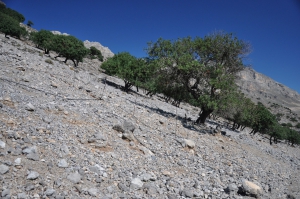
The carob wood of Tris Ekklisies is located 64km south of Heraklion, next to the village of Tris Ekklisies. The area, one of the most secluded in Europe, is very difficult to reach, as a very rough dirt road 10km long starts from the village Paranymi, runs across the wild Asterousia Mountains and ends at the beach level.
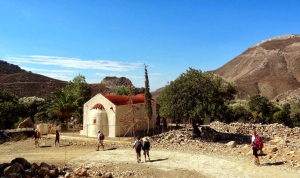
The Gorge of St. Savvas is the natural continuation of the canyon Trypiti, in the wild and imposing Asterousia mountains. In the arid landscape of Asteroussia Mts, the dense forest of the wild olive and carob trees looks like an oasis in the desert.
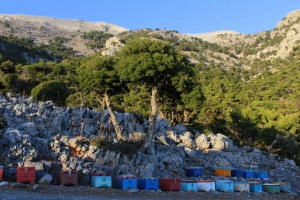
The pine grove of Pefkias is the densest wood in Psiloritis Mount (denser than the forest of Rouvas) and apart from the great pines that dominate the area, you will also meet cypress and oak trees. In Pefkias, you will meet many bee hives as it is one of the most important areas in the prefecture of Heraklion for apiaries after the forests of the province of Viannos.
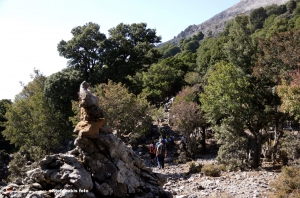
Just below the famous Kamares cave, above the village Kamares we meet a sizable wood. Kamares wood covers the region on the south side of Mavri peak and reaches up to an altitude of 1600-1700 meters. Its area reaches almost till the position Koutsounares where the Voriza canyon starts and continues above the village Vorizia.
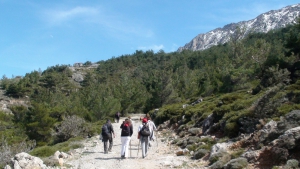
Thripti pine wood is located at an altitude of 850m, near Pahia Ammos in Lassithi Prefecture. The scenic village of Thripti, the green landscapes and the unique pine forest in the mountains of Sitia, are some of the things that you will never forget when you come here.
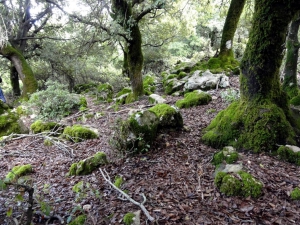
The holm oak wood (Azilakodasos) is located 11km west of Vrachasi and 9km south of Malia, in the foothills of Mount Selena. The small forest can be accessed either by walking the smooth path from Krassi village or by following the trail from Malia that runs uphill. There is also a small network of forest dirt roads in the area.
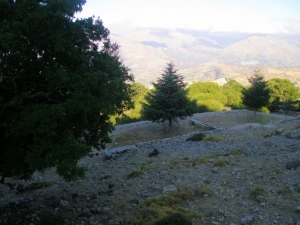
The Forest Pardi is one of the finest remaining holly woods of Crete, near the village Kouroutes, 53km southeast of Rethymno. Here the steep western slopes of Psiloritis meet with the plain of Amari, creating a magical and unknown majestic landscape.
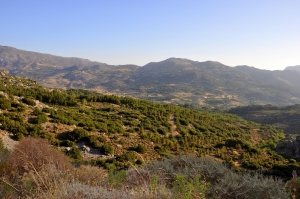
Vatolakki is located near the village of Kissos, 33km southeast of Rethymno city, close to the exit of Kissano Gorge. The forest covers an area of 600 acres and is an important green “lung” in the area of Kedros Mount.
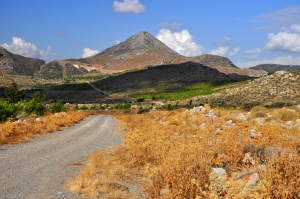
Keri grove is located at an altitude of 300 meters, 9km west of Heraklion, near Voulismeno Aloni and south of the gorge Almyros. It can be accessed via a short dirt road that starts about 300m after Voulismeno Aloni.
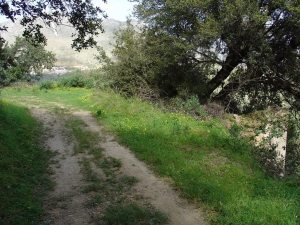
Paschaligo is a small grove located 1.5 km southwest of Neapolis town, on the northern slopes of Mt Kavalaras. The existence of the forest is related to the history of the region, which was named after the Venetian feudal lord Fillipo Pasqualigo, who lived in a tower that was built here.

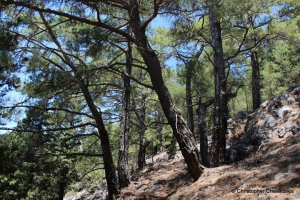
The forest village of Agios Ioannis at Sfakia province is the starting point of one of the most beautiful and best marked trails of Chania prefecture, the trail of Kormokopos. The word Kormokopos means place where trees are cut, due to the dense forest of the area.
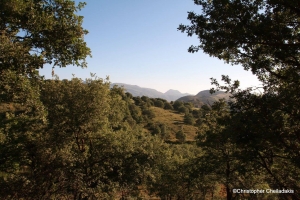
Almost all villages of central Rethymnon have an oak grove around. The oak trees are inherent in the landscape of central Rethymno and consist a very important green lung in the heart of the island. One of these forests is met at position Sochores by village Fotinos.

The area aroung the village Zourva by Chania hosts the most impressive wood of West Crete. The name of it is Paradisos (paradise) and stretches from Pises Gorge and Aliakes. The tree that dominates the area is the cypress tree, the most typical tree in the forests that cover the White Mountains. Through the forest of Paradise comes the old trail that climbs steeply from Zourva to springs of Tromarissa and continues up to the peaks of Madara.
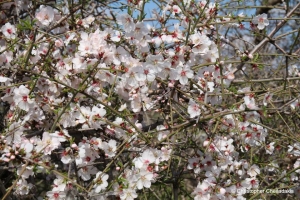
Near Alikambos we come across a forest with maquis vegetation comprising many of wild almonds and bushes. The wood is the largest in Crete wood of wild almonds trees (prunus webbii), which very rarely form woods. The trees grow among other shrubs and reach a height of 2-3 meters. In spring the whole area offers a truly unusual sight as the almond blossom and the slopes of the region look like snow.
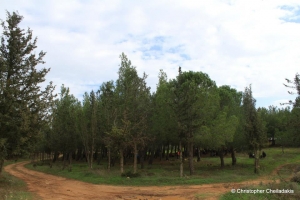
On the hill above the village Lefkochori (Voutoufou) at Heraklion we meet the wood of Lefkochori. it covers an area of 72 acres and is a green oasis in the center of Heraklion prefecture. The artificial wood mainly consists of pines and cypress trees. The place can be reached through the road that starts from the village.
- 1
- 2
Also read:
- Home
 Beaches
 Nature
 Past
Past Destinations
 Highlights
 West Crete
- Central Crete
- East Crete
- Towns
- Chania Prefecture
- Chania
- Paleochora
- Kissamos
- Georgioupolis
- Chora Sfakion
- Loutro
- Rethymnon Prefecture
- Rethymnon
- Agia Galini
- Plakias
- Spili
- Anogia
- Heraklion Prefecture
- Heraklion
- Hersonissos
- Malia
- Matala
- Agia Pelagia`
- Archanes
- Kokkinos Pirgos
- Lassithi Prefecture
- Agios Nikolaos
- Elounda
- Sitia
- Ierapetra
- Makrigialos
- Palekastro
- Zakros
- Lassithi Plateau
- Get Prepared


