








xxxxxxxxxxxxxx
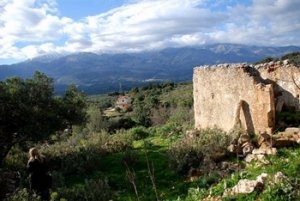
The tower of Aga at Tsifliki is located in a privileged position in Elounda lagoon, on the road leading to Plaka. In fact, the settlement Tsifliki owes its name to this residence, which was the base of the chiftlik (Turkish system of land management) of the region.
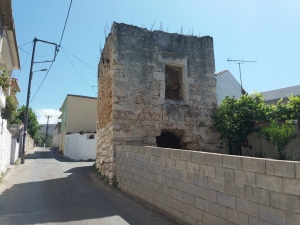
At position Pirgos of the village Gerani and within the boundaries of private property we meet the remains of the initally four-storey tower of Gerani. The small tower is believed to have functioned as a Medieval phrycotry to send messages by fire to other towers of the province of Rethymnon during the Venetian rule. Today only the first floor is preserved from the tower, as the two highest floors have collapsed.
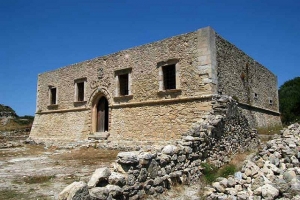
Etia is an deserted medieval village, located near Lithines of Sitia province, which in its heyday was the largest village of the area with more than 500 residents. It is worth strolling among the Venetian buildings of the village. Here in the late 15th century, the Venetian master Pietro Dei Mezzo, which was the feudal lord of the surrounding area, built the mansion De Mezzo, known as Villa De Mezzo or Seraglio.
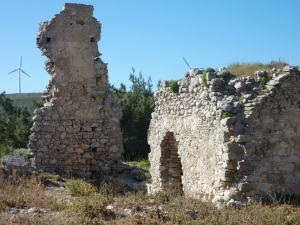
The fort, according to a Turkish inscription on its outside walls, was built in 1740-1741. It was presumably founded by an Islamized Venetian nobleman who belonged to the family of Zeni, and was named Tsin Ali or Tzinalis. Tzinalis is a real historical person and was one of the toughest janissaries of Sitia.
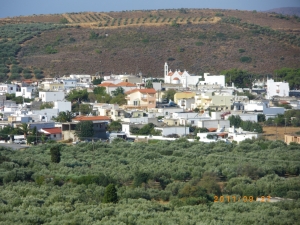
In the middle of the village there was a three-storey Venetian tower, built by the Venetians to secure their dominance over the wider region. It is considered that the tower belonged to the feudal family of Francesco Vlachos, as the crest of the Vlachos family is still surviving on a tomb in Agios Athanasios position (next to the village). When the Turks conquered the region of Sitia, they found the tower in excellent condition and used it immediately so as to oversee the area.
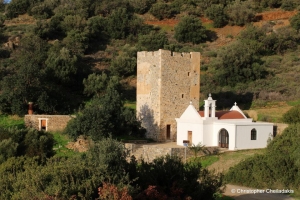
The Tower of Kornaros is located at a lush green and quiet position northeast of Myrsine village, 24km west of Sitia. It is a small square stone-built tower probably of the 15th century that was used as a lookout during the period of the Venetian and the Ottoman rule, which has good views to the north coast.
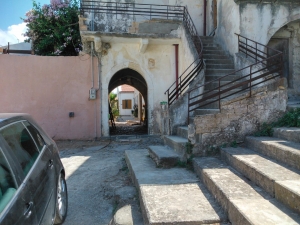
In Neapolis town, in Agios Dimitrios area and next to the old aqueduct there was the house of the janissary Maslum Karakasis, which served as a tower. It was said to have 100 doors, one imposing central gate (called Portela today) and 30 arches. Portela gate closed in the same way of the castle Rumeli Hisar in Constantinople. The building was firstly constructed by the Venetian feudal lord Rasqualigo.
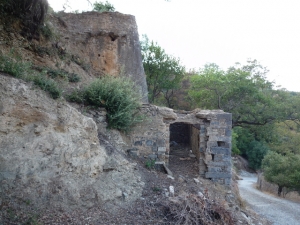
One mile southwest of Neapolis town, on the northern slopes of Mount Kavalaras, there is the beautiful grove of Pashaligo. The small forest takes its name after the Venetian feudal lord Fillipo Pasqualigo, the military governor of Candia (1592-1600), who used to live in a nearby Tower.
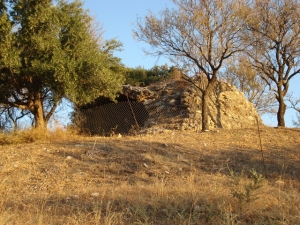
Inside the Kritsa village, at position Ambela, we meet the ruins of a small medieval tower with one arch still standing. Apparently the tower was used for overseeing the crops of the region, but also for controlling the passage to Kritsa.
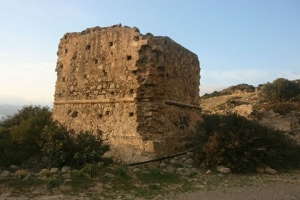
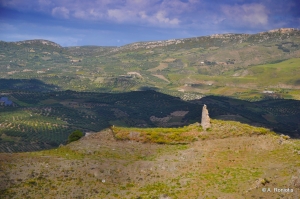
Above the village Vainia of Ierapetra you will meet the top of Stavros (Cross) with the white chapel of the Holy Cross in panoramic point that controls the entire isthmus of Ierapetra. Just a few meters away from the chapel at position Pirgos (i.e. tower) there is an unknown and forgotten Venetian tower. Its square shape surrounds a semicircular prominence, like as artistic edging.
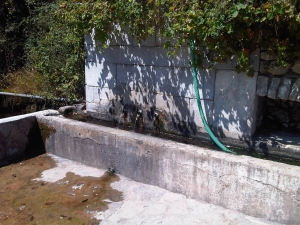
The tower of Magoulas, in Lassithi plateau, was the summer konak (house) - tower of Chanialis, who stayed there during summers. Chanialis was a Turk janissary who oppressed a great region of East Crete. He was the founder of the family of Chanialis and was an Islamized Christian from Chania (Chania -> Chanialis). His real name was Zade Ahmet Aga.
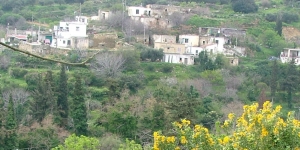
The Tower of St. George was built at the homonym village of Sitia province, which was then called Tourtouli. It was the residence of ordakayasi (Turkish commander) of Sitia, Ibrahim Afentakis or Afentakakis. It was an complete tower with a large courtyard and prisons.
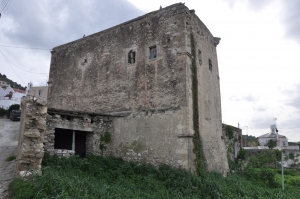
The village Kouses is located west of Pompia and 62km southwest of Heraklion. Here lived the crypto-Christian family of Kourmoulis, numbering around 100 families in 1821.
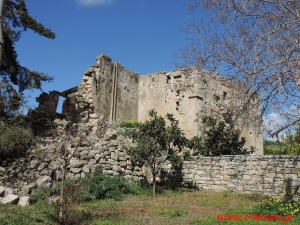
Agriolidis was a terrible janissary in Messara plain, who lived during the Greek revolutions of 1821. He resided in a 17th century chateau in the village of Agios Ioannis, near Phaestus, which still survives.
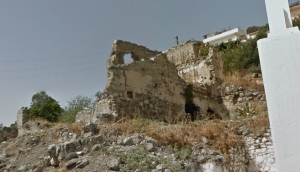
Ano Viannos during the Venetian era was the largest village in the province of Belvedere. It was therefore necessary for the Venetians to fortify the area very well. As we can see even today, there are some ruins of a Venetian tower found on the western part of the village, which was also used by the Turks.
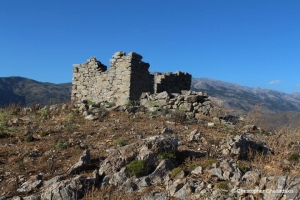
A bit south of Hondros viilage, Viannos district, there is Pirgos peak. Despite the fact that it is not too high, it offers panoramic views to the bay of Keratokambos and the villages of West Viannos. At this hill that is naturally fortified, there is an ancient settlement as there are meny traces of pottery and building bases around.
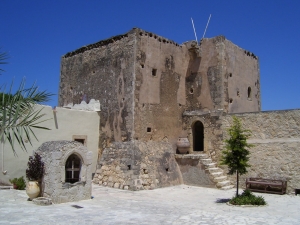
Xopateras or Xopapas (nickname of John Markakis from Manousiana village) was one of the greatest revolutionary figures of Crete. His existence is closely associated with the monastery of Odigitria near Sivas.
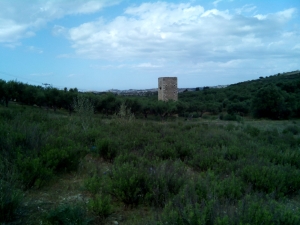
A few meters east of Fortetsa settlement in Heraklion city, amid a fertile valley with olive and vineyards, we meet a small 7m high tower overlooking the area to the sea. The tower was not defensive, as it was built during the Second World War by locals and was used as an Electric Power Station.
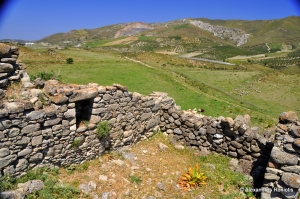
Southeast of the Monastery of St. George Epanosifis, till 1671, there was the settlement of Livadia. The village was a fief of the Patriarchate of Constantinople, which was leased to various lords of the area. Two names of the leasees that have survived in time are George Dalaporta (1332) and Stephen Foscarini (1450).
Also read:
- Home
 Beaches
 Nature
 Past
Past Destinations
 Highlights
 West Crete
- Central Crete
- East Crete
- Towns
- Chania Prefecture
- Chania
- Paleochora
- Kissamos
- Georgioupolis
- Chora Sfakion
- Loutro
- Rethymnon Prefecture
- Rethymnon
- Agia Galini
- Plakias
- Spili
- Anogia
- Heraklion Prefecture
- Heraklion
- Hersonissos
- Malia
- Matala
- Agia Pelagia`
- Archanes
- Kokkinos Pirgos
- Lassithi Prefecture
- Agios Nikolaos
- Elounda
- Sitia
- Ierapetra
- Makrigialos
- Palekastro
- Zakros
- Lassithi Plateau
- Get Prepared


